
UK’s electric vehicle registration grew 17.8% in 2023

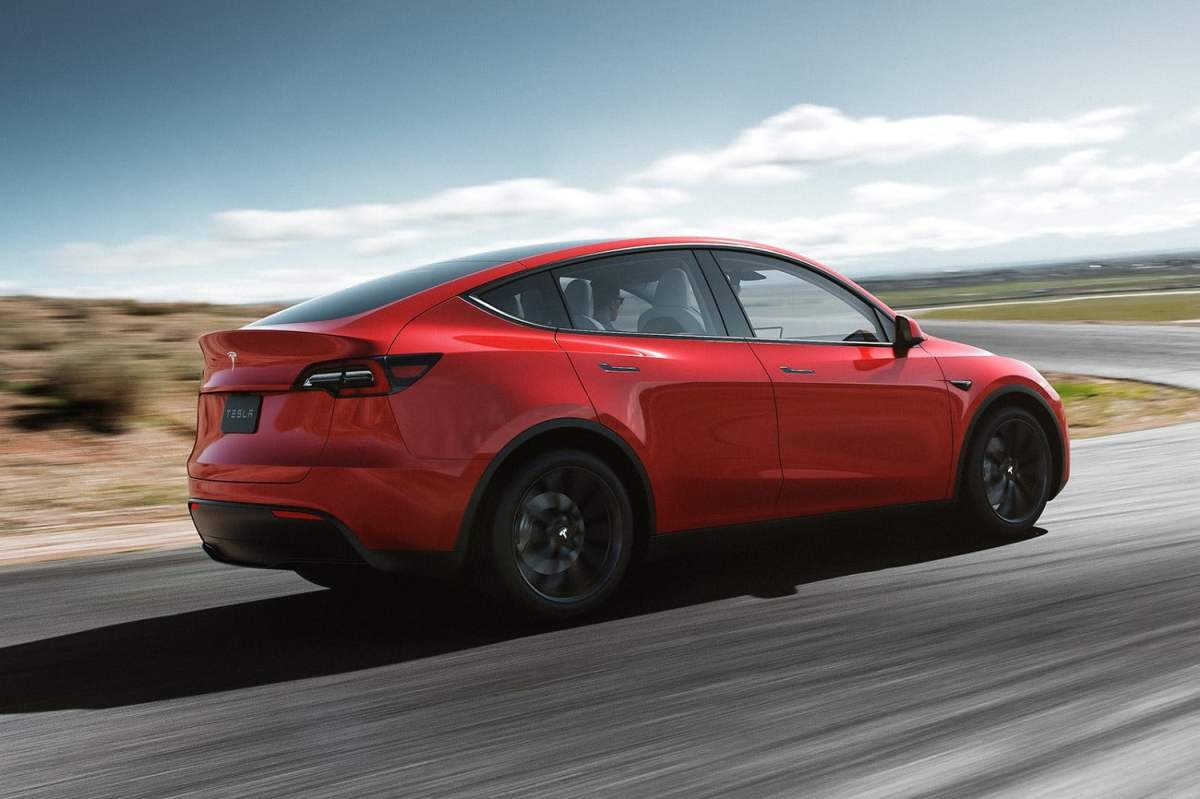
Header image courtesy of Tesla

In a win for sustainable mobility, the number of BEVs registered in the UK grew in 2023 by 17.8 percent, despite a dip in sales in December, according to figures from the SMMT.

Car buyers registered almost 315,000 electric vehicles in the UK last year, out of a total registration of 1.9 million units, a growth of 17.8 percent compared to 2022. This means one in six UK car buyers went electric. The jump is noteworthy because EV sales in December 2023 dropped 34.2 percent to 27,841 from 42,285 in December 2022.

According to the Society of Motor Manufacturers and Traders (SMMT), the surge in EV sales was driven primarily by professional fleets and businesses choosing zero-emission mobility, as only one out of eleven private buyers opted for a BEV.

The number of private EV buyers is expected to rise, however, even though EV subsidies in the UK have ended. This is because carmakers now have to ensure a certain percentage of their sales is purely electric. The percentage will increase from 22 percent this year to 80 percent in 2030 for cars and from 10 percent to 70 percent for vans. The percentage jumps to 100 percent five years later.

Breaking down the UK’s EV sales in 2023, the Tesla Model Y was the fifth best-selling car, with nearly 5,000 sold in December alone and 35,899 for the year. The second-best EV was the MG4 with 21,715 units for the year, followed by the Audi q4 e-tron with 16,757 units sold.

Work starts on £2.4bn UK-German interconnector

Header image courtesy of Prysmian.

Construction work has commenced on a crucial link between the two largest European energy markets, as reported by ReNewz. The 1400 MW NeuConnect project will connect the UK and Germany when completed.

Horizontal directional drilling (HDD) works have been kicked off by Prysmian, a cabling contractor on the UK side on the Isle of Grain in Kent. The HDD will link the subsea cables to land. The company has also started working on attenuation ponds and an access road to the new electricity converter station, handled by Siemens Energy.

The first stage of cable installation will start next year. However, the manufacturing of the 725 km of cabling required for the interconnector has started at Prysmian’s Italian factory and Sumitomo’s Japanese plant.

NeuConnect will become one of the world’s largest interconnectors, with electricity flowing both ways between the UK and Germany. The interconnector is expected to boost energy resilience, security, and renewable energy integration in both countries.

The German end of the interconnector is located in the Wilhelmshaven region in Lower Saxony. The cables will pass through British, Dutch, and German waters.

NeuConnect is expected to come online by 2028.

Lord Johnson, UK Minister for Investment, said: “This £2.4bn project doesn’t just demonstrate continued global investor confidence in the UK, but also the successful work we are doing with our European neighbours to drive investment and deliver vital new infrastructure. The first spade in the ground is a significant milestone on a project of national importance, so I offer my congratulations to NeuConnect and its investors.”

Miguel Berger, German Ambassador to the United Kingdom, added: “NeuConnect is a key project to support Germany and the UK in achieving their climate targets and to boost energy security. It is the largest Anglo-German infrastructure project and will enable us to share excess power – preventing renewable energy from being wasted.”