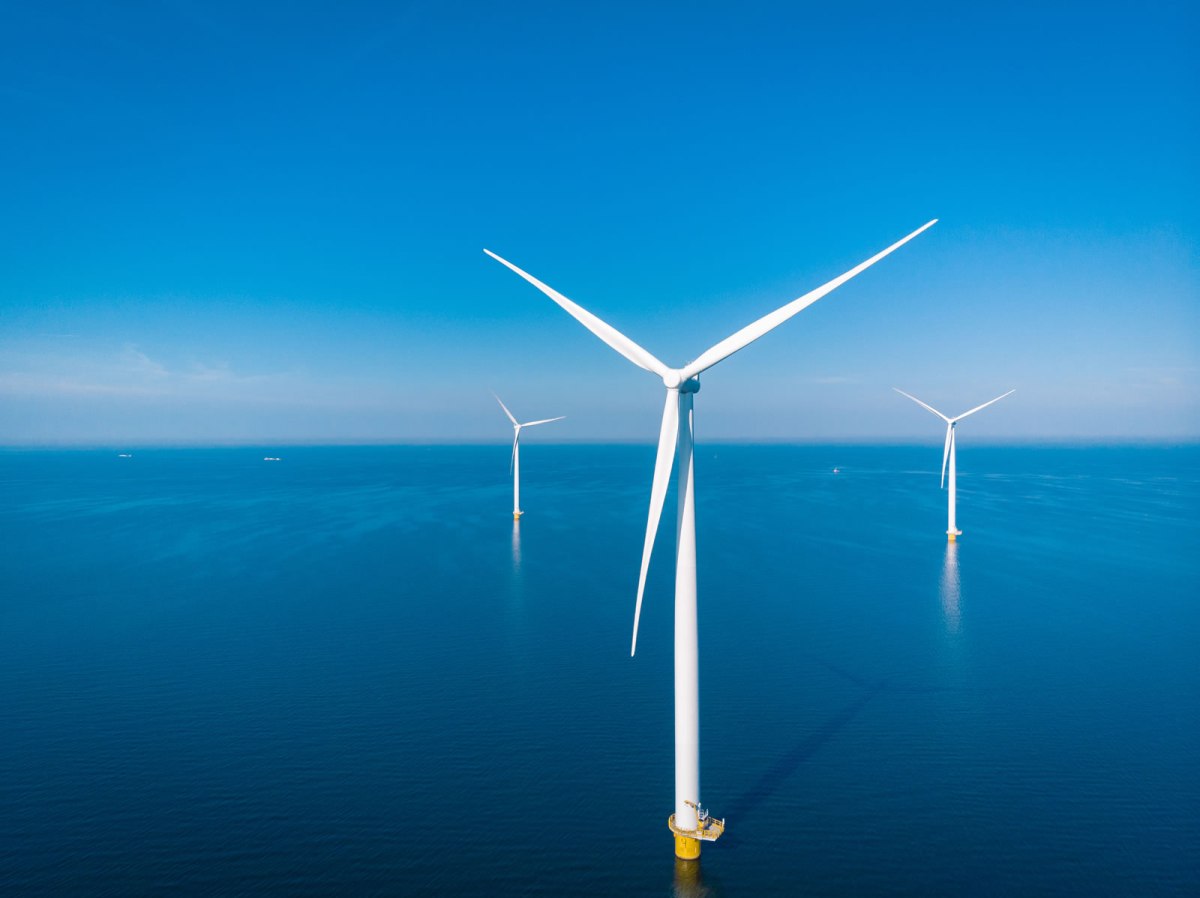
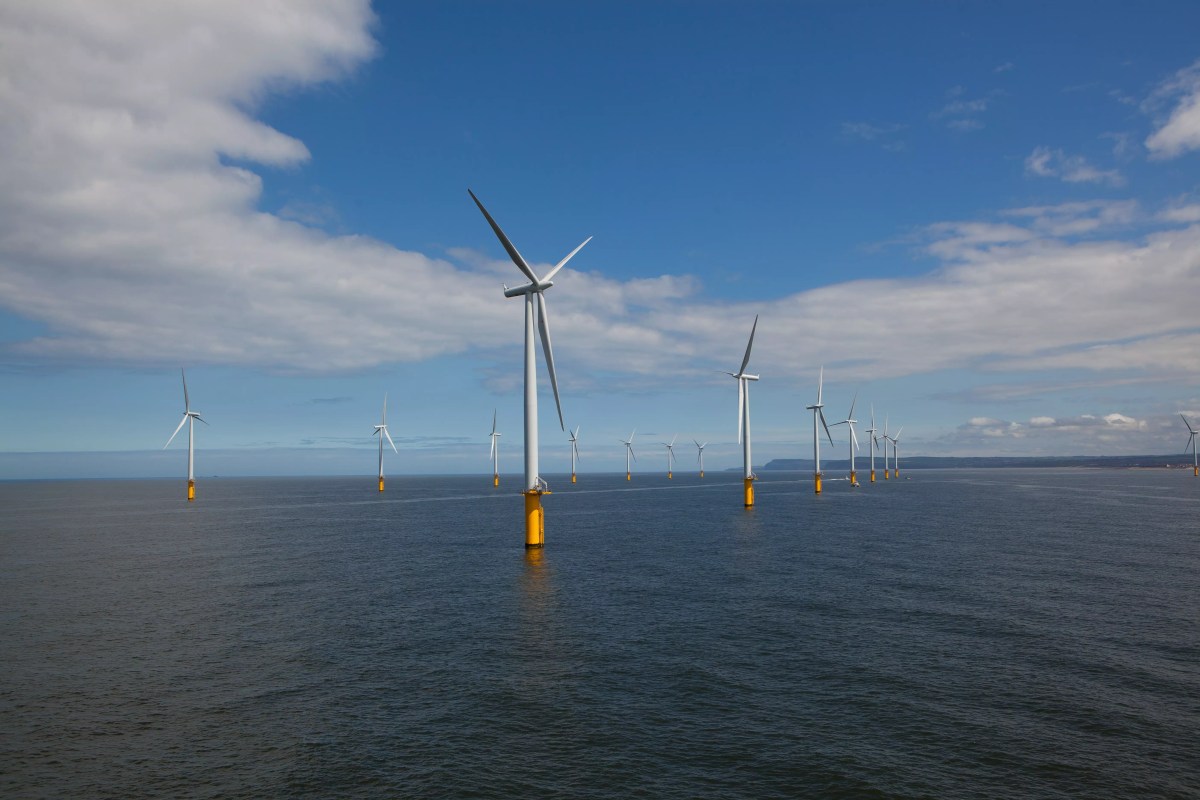
Vattenfall’s Vesterhav Nord offshore wind farm has started sending electricity to the grid, as reported by Renews.biz. The 176 MW came online a month after the company’s Vesterhav Syd began producing electricity.
Vattenfall will connect all 21 wind turbines in the Danish farm to the grid before the end of Q1 2024, with a total output enough to supply 180,000 households with zero-emissions electricity.
The Vesterhav Nord farm experienced a delay to the December 31, 2023, deadline for full connection and is still in talks for an extension with the Danish Energy Agency.
The offshore farm uses a new system for minimizing visual disruption based on radar, meaning the turbines’ warning lights would only come on when the farm is approached by an aircraft. However, the new systems will not be used fully until it gains approval.
Project director Mathilde Damsgaard commented, “It is with great pride that we are now sending the first fossil-free power ashore from Vesterhav Nord as well. It has been an exciting task with many challenges since we won the tender in 2016, and it is great to see the efforts bear fruit thanks to a great effort from the many involved.”
Ireland has commenced consultation on its new framework surrounding offshore wind energy under its Department of the Environment, Climate, and Communication (DECC).
The Offshore Renewable Energy Future Framework Policy (Future Framework for short) presents Ireland’s long-term blueprint for the growth of offshore renewable energy. It will establish the pathway to 20 GW of offshore wind energy by 2040 and 37 GW a decade later.
Ireland targets 5 GW of offshore wind energy by the end of the decade with 2 GW allocated to green hydrogen production.
The Future Framework will encourage investments and maximize financial gains from offshore wind projects. It also considers the potential for transforming excess renewable energy into alternative energy products that can be exported. It will also encourage “collaboration between the State, industry and local communities”, according to Environment, Climate, and Communications Minister Eamon Ryan.
This consultation will allow key stakeholders to give input and collect feedback for the final version of the framework. The final version of the Future Framework will be published in conjunction with the Department of Enterprise, Trade, and Employment in the spring after approval by the government.
It is a celebration mood at Vattenfall as the company completely connects its Vesterhav Syd offshore wind farm to the Danish grid. Construction on the 20 turbines lasted from July to September last year, with the first power delivered on November 10th, 2023.
Vattenfall had been connecting the turbines from the 168 MW offshore farm to the grid one by one since November.
Mathilde Damsgaard, project director for Vesterhav Syd and Nord at Vattenfall, said, “At Vattenfall, we are always happy when we finish an offshore wind farm and thereby contribute to fossil freedom.
“This time, we allow ourselves to be even more happy, since there is a cold winter in Denmark and Northern Europe where fossil-free and reliable electricity is of the essence.”
The Vesterhav Nord offshore wind farm is about 80 km from Syd and will generate 176 MW on completion. Vattenfall expects to completely connect it to the grid in Q1 2024.
Header image courtesy of Lloyd Thornton/Shutterstock
Amprion starts on 8 GW offshore power link in Germany
Germany’s transmission system operator Amprion has begun planning the Windader West energy corridor, which will connect up to 8GW of offshore wind energy to the North Rhine-Westphalia state. The first 2 GW connection is expected in 2032.
Kenya Power solicits bids for boosting rural electricity with solar mini-grids
Kenya Power and Lighting Company (KPLC) has called for bids for setting up solar power mini-grids in several counties, representing 20 percent of its population and 72 percent of its land area. The contract covers seven years of operation and maintenance by the successful bidders.
DP Energy and SBM planning 400 MW floating wind farm for Nova Scotia, Canada
DP Energy and SMB have formed a joint venture named Nova East Wind to build a 400 MW floating offshore wind farm in Nova Scotia, Canada. The development will be located about 30 km off Goldboro, although the precise location is yet to be determined.
Solar drives renewable investment to $358 billion in H1 2023
Global investment in renewable energy soared to $358 billion in the first half of 2023, according to BloombergNEF. This was driven by solar investment in China, thanks to cheaper PV modules and a growing rooftop PV market.
Elanora Offshore, a consortium of KIMAenergy, Energy Australia, Boskalis, Respect Energy, and Polpo Investments, will build a 5 GW wind farm off Gippsland in Victoria, Australia. Funding has already been secured for the project, with a targeted completion for the first phase in 2032. The farm will supply 40 percent of Victoria’s energy needs.
Header image courtesy of Lloyd Thornton – Shutterstock
Europe added 2.1 GW of offshore wind energy in H1 2023
Europe built new 2.1 GW of offshore wind capacity in the first six months of 2023. This brought installed capacity to 32 GW, with more than half concentrated in the Netherlands and the rest distributed across the UK, Germany, and Norway.
Mainstream and Ocean Winds expand floating wind JV in Scotland
Mainstream Renewable Power and Ocean Winds (the JV between EDPR and ENGIE) will collaborate again to build a floating 500 MW wind farm in Shetland, Scotland. This will bring the total capacity of the Arven offshore wind farm to 2.3 GW. The JV is also developing a 1.2 GW floating offshore wind farm in South Korea and contending in Norway’s upcoming floating offshore wind tender.
Germany auctions off 1.67 GW solar energy amid unprecedented interest
Germany’s latest round of solar auctions received unprecedented interest. The bids were worth 1.67 GW, representing a third of the volume the European county plans to auction in 2023. Germany added 3.3 GW of solar capacity in Q2 2023.
Siemens opening 800 MW/year solar inverter factory in the US
Siemens has announced plans to increase its manufacturing footprint in the US with an 800 MW per year solar inverter factory. Production is expected to start in 2024. The US is attracting more clean energy manufacturing thanks to tax credits and demand-side incentives.
Greece’s installed renewable energy capacity topped 11 GW in H1 2023. Solar energy contributed over half of the capacity, with 5.79 GW installed capacity. Wind accounted for 4.83 GW, with 281 MW of hydro.
Installation work has begun at the Dogger Bank offshore wind farm, as reported by ReNews. The farm will host 277 turbines in three phases when completed off the coast of England.
Each of the 13 MW GE Haliade-X turbines towers 260 m. They will be installed with a vessel lifting up to 3,200 tonnes. The Yorkshire farm will output 3.6 GW, enough green electricity for 6 million homes.
The project is a joint venture between SSS Renewables, Equinor, and Vargronn (another joint venture between Eni Plenitude and Hitec Vision.)
Dogger Bank is expected to produce 400 jobs in the 35 years lifetime of the project. Construction will last three years.
“Our progress here with our joint venture partners Equinor and Vargronn proves offshore wind projects of this size are now mainstream and will help turbocharge the transition to the cheaper, cleaner, and more secure energy system we all want to see. “It is action, not ambition, that will secure our energy future, and this project shows action on a massive scale. But we will need many more Dogger Banks to achieve our goals, and we look forward to working with government to bring forward more projects at pace.”
Ireland stands to gain up to 1.8 GW of offshore wind energy capacity by 2030, thanks to the partnership between Energia Renewables and Vargronn, as reported by ReNews.
Vargronn is a partnership between Plenitude (Eni) and HitecVision. The JV will initially focus development on the southern and eastern Irish coasts. Energia is already active in these areas, with sites in the North Celtic Sea (900 MW) and South Irish Sea (900 MW).
Seabed surveys of the selected area have been completed, with detailed preparations for EIAs kicked off. The JV is also engaging with the local fishing industry and communities.
Depending on governmental policy, the projects in these areas could be operational by 2030.
Energia Group chief executive Ian Thom commented, “We look forward to working closely with Vargronn and to combining our experience of developing renewable energy projects in Ireland with Vargronn’s extensive offshore wind expertise and supply chain relationships. “Through the development work completed to date, our partnership is uniquely placed to deliver new offshore capacity on the south and east coasts by 2030, and in so doing, make a significant contribution to Ireland’s offshore wind targets.”
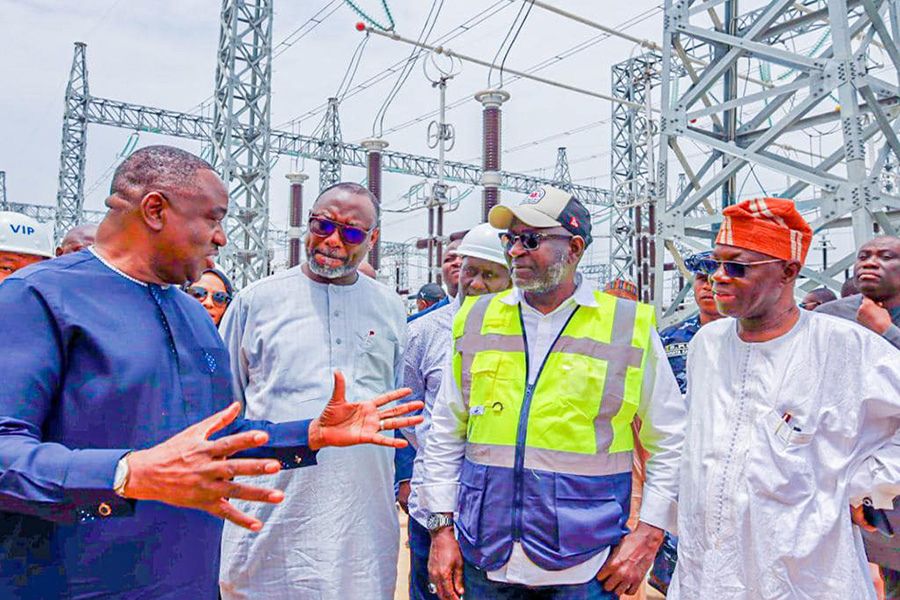
The Nigerian government has announced the completion of the $1.3 billion hydro plant on the Kaduna River near Zungeru. The new facility has an output of 700 MW. Mainstream Energy has won a 30-year concession to operate the plant, with $70 million to be remitted annually to the government.
France approves winners for 1.1 GW of onshore wind energy tenders
The French government has given out contracts for more than 1.1 GW of tenders for its latest round of onshore wind energy bids. Seventy-three proposals got the nod, representing an average price of EUR 85.29 per MWh.
The latest bids will bolster France’s bid to meet its 2030 renewables targets.
UAE to triple renewable energy production with $54 billion in investments
The UAE, the host of COP28, has announced it is tripling its renewable energy production before 2030. The oil-rich nation will invest up to $54 billion to achieve this target and meet its growing electricity demand.
First power from Iberdrola’s first French offshore wind farm in Brittany
Iberdrola’s Saint-Brieuc offshore wind farm in France has sent the first to the grid. The farm will supply 9% of Brittany’s electricity consumption, or about 1,820 GWh/year.
Production will increase as 62 wind turbines are added and commissioned.
Renewables account for 61% of Portugal’s electricity in H1 2023
According to the National Energetic Networks, most of Portugal’s electricity needs were met with renewable energy, representing 61%. Photovoltaic production took 7%, natural gas supplied 19%, and biomass took 6%.
US DoE to invest $1 billion in demand-side hydrogen initiative
The US Department of Energy is to invest $1 billion in a demand-side scheme to help meet the demand for hydrogen at regional clean hydrogen hubs (H2Hubs) in the future. This will provide market certainty for the producers and the consumers in the H2Hubs, thereby encouraging more private-sector investments.
Offshore renewable energy sources are increasingly vital in the global energy transition. However, harnessing their potential can require efficient energy storage solutions to address intermittent power generation. To fill this need, battery tankers are emerging as an innovation. This article explores the significance of battery tankers and their transformative impact on offshore renewable energy.
Why is energy storage needed in offshore renewable energy?
Offshore wind and solar farms are often located in remote areas with limited grid connectivity. These renewable energy installations face challenges related to intermittent power generation, as energy production fluctuates with weather conditions. Energy storage systems are crucial for managing this intermittency and ensuring a consistent power supply. Battery tankers provide a scalable and flexible storage solution.
How do battery tankers work?
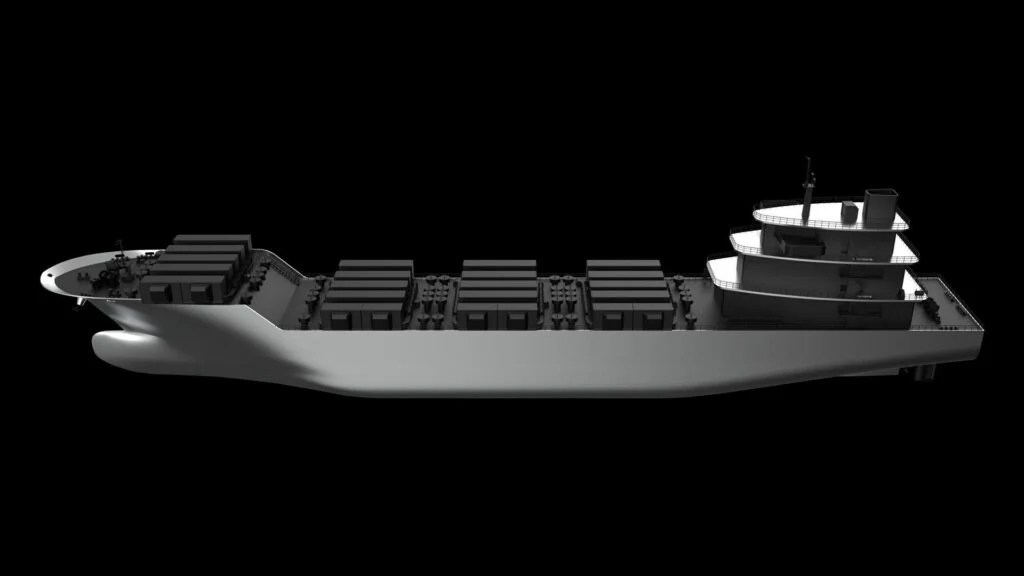
PowerX battery tanker courtesy of PowerX
Battery tankers are essentially massive floating energy storage units. They use advanced battery technologies to store surplus energy from offshore wind or solar farms. These tankers can charge when renewable energy production exceeds demand. They can then discharge the stored energy during periods of low production or high electricity consumption. The battery tankers act as a buffer, optimizing the power supply and ensuring a stable grid connection.
What are the advantages of battery tankers for offshore renewable energy?
Grid stability and reliability
Battery tankers enhance the stability and reliability of offshore renewable energy systems by providing immediate response and balancing services. They can inject stored energy into the grid in response to a sudden wind or solar generation drop, preventing power disruptions.
Intermittency mitigation
Battery tankers mitigate the intermittency issues associated with offshore renewable energy by storing excess energy during peak production periods. This allows for more efficient use of available resources. It also ensures a steady electricity supply, even during low renewable energy generation periods.
Enhanced grid integration
Battery tankers facilitate the integration of offshore wind and solar farms into the existing power grid infrastructure. They provide grid operators with greater control over power flow. This enables efficient utilization of renewable energy resources and reduces the need for costly grid upgrades. Decommissioned thermal power plants near ports can get a new lease of life by becoming charge/discharge points.
Scalability and flexibility
Battery tankers offer scalability, allowing for the addition of multiple units to accommodate the growing capacity of offshore renewable energy installations. They can be easily deployed and relocated, offering flexibility to optimize energy storage capacity based on specific project requirements.
Future outlook and challenges of battery tankers
The use of battery tankers for offshore renewable energy storage is still in its early stages, but the potential is immense. As the technology evolves, the cost-effectiveness and efficiency of battery tankers are expected to improve further.
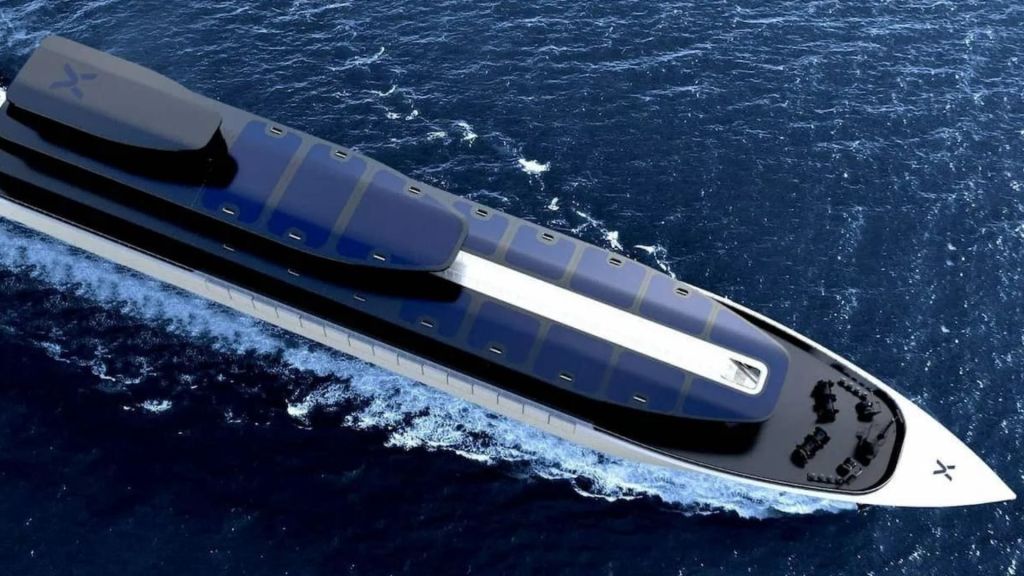
Japanese startup PowerX has introduced a battery tanker due for completion in 2025. The company’s proof of concept tanker will be equipped with 96 containerized marine batteries with a total capacity of 241 MWh. The batteries will use lithium iron phosphate cells with over 6,000 life cycles and use dedicated gas emission control and fire suppression mechanisms. PowerX has scheduled sea trials for 2026.
PowerX battery tanker courtesy of PowerX
However, challenges such as safety, battery degradation, environmental impacts, and regulatory frameworks need to be addressed to ensure this solution’s widespread adoption and sustainability.
Conclusion
Battery tankers represent a significant breakthrough in the field of offshore renewable energy. These floating energy storage systems can revolutionize the industry by addressing the intermittency challenges of offshore wind and solar farms. With their ability to provide stability, reliability, and grid integration, battery tankers offer a promising solution for powering the future of offshore renewable energy.

 Renewable Brief