The Ministry of Mineral Resources and Energy, MIREME, of Mozambique, has approved eight groups to participate in the planned Mphanda Nkuwa Hydropower Project tender. The plant will produce 1,500 MW of electricity.
Gabinete de Implentacao do Projecto Hirdoelectrico de Mphanda Nkuwa (GMNK) represents the Ministry for the project. Synergy Consulting supports the client as a transaction advisor, while Worley and Baker Mckenzie act as technical and legal advisors, respectively.
The eight qualifying groups are:
ETC Holdings (Mauritius)/ ZESCO (Zimbabwe)
Longyuan Power Overseas (China)/ Dadu River Hydropower Development Company & China Energy International Group
PowerChina Resources
WeBuild Group (Italy)/ ZESA (Zimbabwe)
Scatec (Norway)
Sumitomo Corporation (Japan)
EDF (France)
Kansai Electric Power Company (Japan)
The Mphanda Nkuwa hydropower plant will be located on the Zambezi River, about 60 km from the Cahora Bassa Dam.
The strategic partner (listed first where there are two companies in the list above) will be the major shareholder in the plant, with government-owned Electricidade de Mozambique (EDM) and Hidoelectrica de Cahora Bassa (HCB) owning the remaining shares.
Aston Martin has used Earth Day to announce its new sustainability strategy tagged Racing.Green. The plan sets the company’s sustainability target across all its operations.
The company is a member of the Science Based Target initiative, SBTi, which helps businesses globally to set carbon-emission reduction targets within the framework of climate science.
The Racing.Green plan compels Aston Martin to reduce emissions throughout its supply chain by 30 percent by 2030, compared to the levels in 2020. However, the company targets net-zero emissions by 2039.
Aston Martin is already working on carbon emission reduction, with positive results. For example, its UK operations have achieved a 40 percent reduction in emissions intensity between 2020 and 2021. All its manufacturing facilities in the UK have been powered 100 percent by renewable energy since 2019. Aston Martin is installing more than 14,000 solar panels at its St Athan factory in Wales. When completed, the installation will supply 20 percent of the site’s energy needs.
Aston Martin has also been able to divert 100 percent of its waste from landfills. It will eliminate all plastic packaging waste from its production by 2025.
As part of Racing.Green, Aston Martin will cut its water usage by 15 percent. It will also maximize the use of sustainable materials.
Despite existing for 109 years, Aston Martin has only made 109,000 cars. However, more than 95 percent are still working, pointing to the longevity of the company’s products.
Aston Martin is also planning to go electric, with the first battery-electric vehicle bearing its logo coming in 2025. A hybrid, the Valhalla, will come before that in 2024.
Tobias Moers, Chief Executive Officer of Aston Martin Lagonda, said: “Aston Martin is accelerating. We are transforming our business and believe that now is the time to challenge ourselves to make a bigger difference, to become a world-leading sustainable ultra-luxury business.
“Whilst embracing electrification, we believe our sustainability ambitions must be broader than just producing emissions-free vehicles, and want to drive sustainability principles across our entire business, with a team representative of society proudly producing responsible products with a reduced environmental impact and making a positive contribution to the communities where we operate.
“Applying our passion for engineering and design innovation to this challenge, we are excited about shaping not just how quickly the world gets from zero to sixty, but how quickly we get to Net-Zero.”
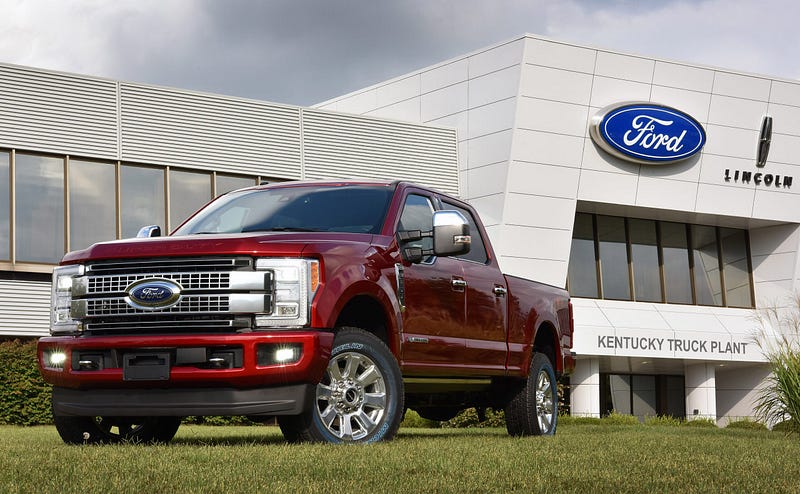
Ford F-150 Lightning pickup truck; Courtesy of Ford
All electric vehicles have a good impact on the environment. However, new research shows that electrifying pickup trucks leads to more significant greenhouse gas reduction in other light-duty vehicles.
The new study was conducted by researchers at the University of Michigan and Ford. It studied the cradle-to-grave GHG emissions of 2020 model year versions of ICEV, HEV, and Bev sedans, in addition to SUVs and pickup trucks.
In the US vehicle market, light-duty autos account for 58 percent of all transport-based emissions. Pickup trucks are a popular category, as they account for 14 percent of light-duty vehicles in the country.
The researchers found that HEV and BEV versions of sedans, SUVs, and pickup trucks have about 28 percent and 64 percent lower life-cycle emissions, respectively than the ICE versions. They considered only the base models.
As a result, a BEV sedan saves 45 tonnes of CO2, an SUV saves 56 tonnes, and a pickup truck saves 74 tonnes over a lifetime.
Other findings from the study include that the CO2 savings remained significant even when the battery size increased, the BEV had a shorter lifetime, and across different drive cycles.
Moreover, when converting ICEs to BEVs, the heavier the vehicle, the more the savings in CO2. This is a direct result of larger vehicles consuming more fuel.
However, as the study shows, production of BEVs produces more greenhouse gases than ICEs. The main culprit is the battery. But the increased emission is offset during the operation of the EVs. By driving an electric SUV for 1.6 years, a driver pays for the carbon emissions during manufacturing. For electric trucks, the payback period is 1.3 years.
“This is an important study to inform and encourage climate action. Our research clearly shows substantial greenhouse gas emission reductions that can be achieved from transitioning to electrified powertrains across all vehicle classes,” said senior study author Greg Keoleian, a professor at the U-M School for Environment and Sustainability and director of the U-M Center for Sustainable Systems. “This study expands upon previous studies that have focused on comparing battery-electric vehicle sedans to their internal-combustion-engine or hybrid counterparts. We report emissions for vehicle production, use, and end-of-life stages on a per-mile basis and over the total vehicle lifetime. In addition, we analyzed the regional variation in emissions considering differences in electricity grid mixes and ambient temperatures, and we also explored the effects of the rate of grid decarbonization on emission reduction.”
“This study can help us to understand the potential impact of electrification from an emissions-reduction perspective, particularly as we introduce new electric vehicles, and how we can continue to accelerate our progress towards carbon neutrality. We’re proud to partner with U-M in this critical work,” said Cynthia Williams, global director of sustainability, homologation, and compliance at Ford.
Ford is going full-steam on its electrification plans, and the latest step is breaking the decades-old company into two.
In a video, American automaker Ford has announced it has split into two entities to put it in a better position to pursue its EV goals. The two units are Ford Blue and Ford Model E.
Ford Blue focuses on legacy ICE vehicles, while Ford Model E will coordinate all its EV efforts going forward. This means the company’s existing EVs like the Ford Mustang Mach-E and upcoming models like the Ford F-150 Lightning will come under the jurisdiction of Model E.
Model E will be headed by Doug Field, a former executive at Apple and Tesla, although he will also have roles at Ford Blue because he is in charge of software and embedded systems across the company.
CEO and president of Ford, Jim Farley, will be the president of Model E. The position at Ford Blue is occupied by Kumar Galhotra.
The new Model E will “lead on creating an exciting new shopping, buying and ownership experience for its future electric vehicle customers that includes simple, intuitive e-commerce platforms, transparent pricing and personalized customer support from Ford ambassadors.”
Ford is also making some changes to its sales model. While retaining the franchise model in North America, the company will introduce a new way that is more transparent in pricing and customer support. However, the new method is voluntary for dealers to join.
Model E will allow Ford to restart its EV journey on a clean slate in designing, manufacturing, and delivery. It will help Ford to move and respond fast as Tesla can do.
Ford executives hail the division as a boost to actualize the EV push it revealed last year. There were talks about spinning off the EV business and making it public via a SPAC, but Ford ultimately abandoned the plan.
Meanwhile, Ford plans to cut costs in its ICE business, up to $3 billion, and involve lay-offs in the next four years. However, at the same time, Model E will expand by employing more workers with skills in software, engineering, design, etc.
While the share of EVs in the UK remains 12 percent, their effect on the environment is already being felt. According to the Society of Motor Manufacturers and Traders, average new car emissions reduced to 119.7 grams of CO2, representing an 11.2 percent decrease. This is a good sign as emissions from cars had been increasing thanks to the increasing popularity of SUVs.
Despite challenges faced by the EV industry, the head of SMMT, Mike Hawes, expects the situation to get even better. “Once again, it is electrified vehicles that are driving the growth, despite the ongoing headwinds of chip shortages, rising inflation, and the cost-of-living squeeze. 2022 is off to a reasonable start, however, and with around 50 new electrified models due for release this year, customers will have an ever greater choice, which can only be good for our shared environmental ambitions.”
Meanwhile, EV enthusiasts still have to content themselves with only a 1.3 percent share of the more than 40 million cars on the UK roads. Ben Nelmes, who heads policy and research at New Automotive, laments the ongoing harm caused by new ICEs. “Electric car sales have doubled in the last year, but there is still a mountain to climb to reduce the UK’s carbon emissions from cars. The 90,000 internal combustion engines that rolled off forecourts this month will continue to pollute and hit motorists in their pockets for another 14 years, on average.”
Part of the challenges EVs face includes inadequate charging infrastructure. According to data provided by the Government, the UK has 28,400 public charging points. However, SMMT believes about five times more is needed to eliminate range anxiety among potential EV owners.
Tesla is slowly letting other people into its walled garden of EV rapid charging as non-Tesla EV owners in France and Norway can now take advantage of its popular Superchargers.
The company shared the news on its official Twitter handle for charging. However, from the screenshots accompanying the tweet, EV owners will have to locate eligible charging sites. Apparent, Tesla has opened up 20 of its locations in France and 15 in Norway.
If you want to take advantage of these fast chargers, you can find them using the Tesla mobile app.
The first time non-Tesla EVs could suck up electrons tethered to a Supercharger was last November when the company began trialing the service in the Netherlands. The test run covered 10 stations.
Tesla only supports the CCS standard for now, and non-Tesla EV owners will pay an additional fee which Tesla justified as a support for “charging a broad range of vehicles and adjustments to our sites to accommodate these vehicles.”
Tesla cars can continue to charge normally with the Superchargers, although the stalls might get more crowded. However, the company has tried to prevent congestion at the charging sites by implementing several policies.
Eventually, all Superchargers worldwide will be opened to all EVs, although drivers in North America might have to wait to join the charging party or be ready to use adapters. According to the company, it has long wanted to open up its chargers as doing so will help the CEO, Elon Musk, achieve his ambition. Musk wants to encourage as many people as possible to switch to battery-powered cars to stop environmental pollution.
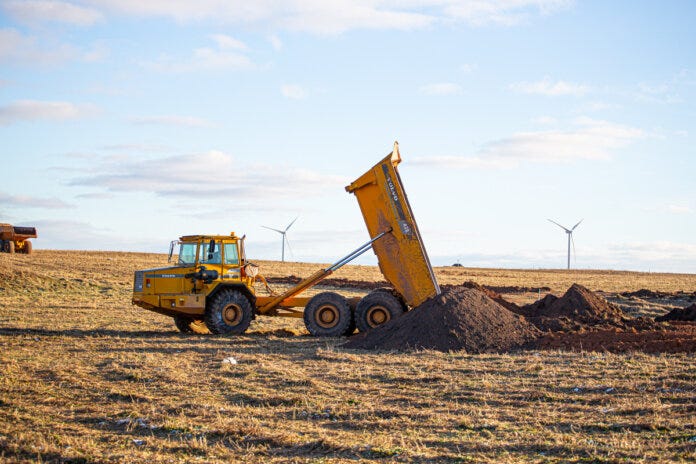
Construction work at the Slemon Park Microgrid Project
Ameresco Inc. has signed a contract that will see it collaborate with Prince Edward Island (PEI) Energy Corp. to develop the Slemon Park Microgrid project in Canada.
The duo will implement a microgrid consisting of a 10 MW solar facility and direct current-coupled energy storage, in conjunction with Slemon Park Corp. The microgrid will manage peak load demands within Slemon Park with the energy storage components.
Construction began last month and is expected to conclude by the fall of 2022.
Funding for the project came from the Natural Resources Canada’s Smart Grid Program, part of the Government of Canada’s Investing in Canada Infrastructure Program: Green Infrastructure stream.
Minister of Environment, Energy, and Climate Action Steven Myers said, “The Slemon Park Microgrid project will further our goal of achieving net-zero energy by 2030 on Prince Edward Island. With the addition of a new, clean, renewable energy grid, we’ll be able to reduce our baseline greenhouse gas emissions better and create a more resilient future.”
“We are so excited to partner with PEI Energy Corp. on such an impactful project,” says Bob McCullough, president of Ameresco Canada. “Improving grid resiliency will enable the province of Prince Edward Island to successfully implement renewable energy projects that will help serve to protect the Island’s environment and lead to a more sustainable and economically robust future.”
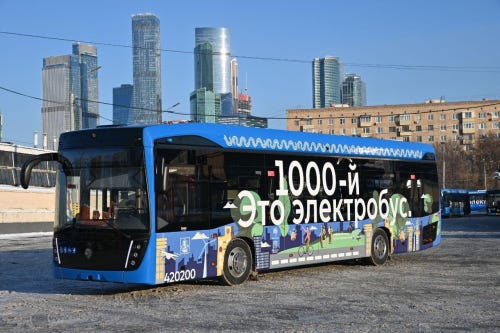
The city of Moscow in Russia is one that takes environmental conservation seriously. It recently demonstrated this by deploying its 1,000th electric bus, with a target of 2,200 by the end of next year.
Moscow’s 1,000th electric bus coincided with the 400th bought with funds raised through green bonds. Thanks to such bonds, the city can reduce pollution and further the discourse of environmental protection.
The first electric bus was launched in the city in 2018, with more than 60 million electric kilometers covered on 66 routes. More than 150 million passengers have enjoyed the zero-emission and quiet rides.
Moscow has installed more than 168 charging stations to support these battery-powered buses. It hopes to have 500 stations running by 2023.
The buses have the capacity for 85 people and are convenient to embark and disembark from. They are also fitted with a low floor and ramp for easy access for people with disabilities. Riders can charge their phones and watch content on media screens.
Moscow has also proven that electric buses can work throughout the year, even during the cold winter months that are often brutal on EV batteries. They have a temperature control mechanism to prevent them from getting too cold.
Moscow has stopped purchasing diesel-powered buses since last year and plans to add 600 more electric buses next year. When it reaches the 2,200th electric bus milestone, it means nearly 40 percent of its fleet is electric.
Courtesy of Greg Stewart/SLAC National Accelerator Laboratory
Lithium-ion batteries are excellent for electric vehicles because of their weight and relatively high energy storage capacities. However, they have a problem; as they age, lithium-ion batteries lose capacity, and the amount of energy they can store reduces. But now, a group of Stanford University researchers has been able to reverse the process.
These researchers boosted an old battery’s range according to their report published in Nature.
The loss of capacity comes due to lithium that separates from the electrodes. The Stanford group was able to make the ‘dead’ lithium move toward one of the electrodes and reconnect. Once reconnected, the lithium can then resuming helping the battery to hold a charge.
The lithium moved after lithium metal was added at one end and dissolved at the other end, and a short, high-current discharging step was added just after charging the battery. This process slowed the battery degradation down and increased its useful life by about 30 percent.
Professor Yi Cui had theorized that free-standing lithium could be moved physically by supplying a voltage to the battery’s cathode and anode, inspiring the research. His speculation has now been confirmed.
The researchers set up an optical cell with a lithium-nickel-manganese-cobalt-oxide cathode and a lithium anode, with an island of lithium between them. While tracking the content of the battery in real-time as it worked, the team realized that the isolated lithium was not dead and could react to the battery operation.
The researchers carried out their test on other batteries to confirm the finding. They also did some computer simulations.
Fang Liu, a member of the research group, said:
“We found that we can move the detached lithium toward the anode during discharging, and these motions are faster under higher currents. So we added a fast, high-current discharging step right after the battery charges, which moved the isolated lithium far enough to reconnect it with the anode. This reactivates the lithium so it can participate in the life of the battery. Our findings also have wide implications for the design and development of more robust lithium-metal batteries.”
With breakthroughs like this, electric vehicle batteries could be ‘repaired’ and made to last longer, thereby helping prevent environmental pollution.
The nation of Georgia is getting its biggest solar plant ever and it is coming in conjunction with Masdar.
Contract signed between the Georgian Energy Development Fund and Masdar will yield a solar farm that will output up to 100 MW.
Present to formalize the agreement at the Dubai Expo were the CEO of Masdar, Mohamed Jameel Al Ramahi, and GEDF CEO, Giorgi Chikovani. Also in attendance were UAE’s minister of state for foreign trade, Thani bin Ahmed Al Zeyoudi and the Georgian Minister of Economy and Sustainable Development, Natela Turnava.
The agreement is a by-product of a framework agreement the two parties had entered into earlier that contracts Masdar to execute a number of renewable energy projects in Georgia.
Commenting on the new contract, Chikovani said, “Georgia strongly follows its route and in accordance with the country’s strategy continues its utilization of renewable energy sources.
“This agreement, which aims to develop a solar project with one of the world’s leading renewable energy companies, is a precondition for achieving the priority goals and targets of the state energy policy.
“Development of similar projects will strengthen the energy security of Georgia, contribute to diversification of energy sources and increase the share of renewable energy in the power generation mix.”
In his own remarks, Al Ramahi said: “This landmark agreement will support Georgia’s energy diversification efforts, and will make a positive contribution on climate action.
“As a global leader in renewable energy, with projects in almost 40 countries, we look forward to working with the Georgian Energy Development Fund and the Government of Georgia on further renewable energy opportunities and will leverage our experience to support the nation’s economic development.”
Georgia is trying to reduce its reliance on hydropower to diversify its energy mix and enhance energy security.








 Renewable Brief