Golf courses are excellent facilities that provide recreational and health benefits. However, when they are converted into solar farms, they become even more helpful.
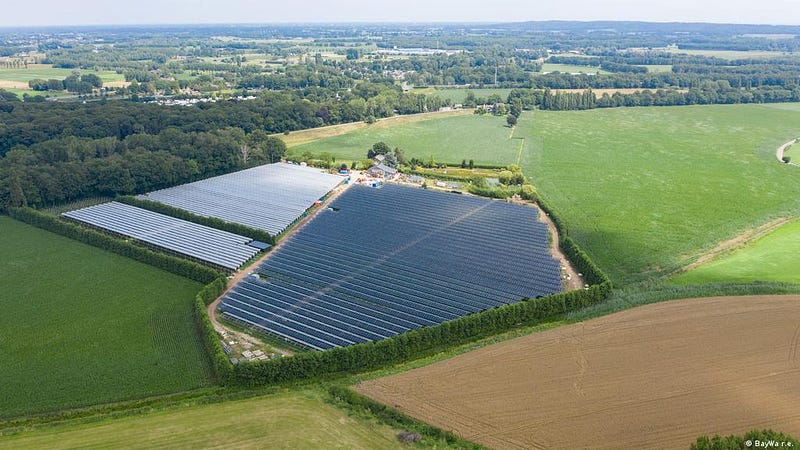
This is the story of the Healthlands Golf Course, which will be repurposed to a solar farm that generates 30 MW of energy. The site is in Manistee County, Michigan, in the US.
Prism Power Partners is handling the project and will come online by the end of 2022. The power from the farm will be enough to power 15,000 homes.
Since the site is near existing high-voltage electric distribution facilities, the cost to the consumers will be lower. It will be available through Consumers Energy, which has signed a contract to purchase all the energy from the site for 20 years.
“We are all in on solar energy and proud to team with a fellow Michigan company to create a cleaner, more sustainable energy future for our state by reusing valuable land and protecting the planet for future generations,” said Tim Sparks, vice president of electric grid integration at Consumers Energy. “We are leading the state’s clean energy transformation as we provide the affordable, reliable electricity our homes and businesses need for decades to come.”
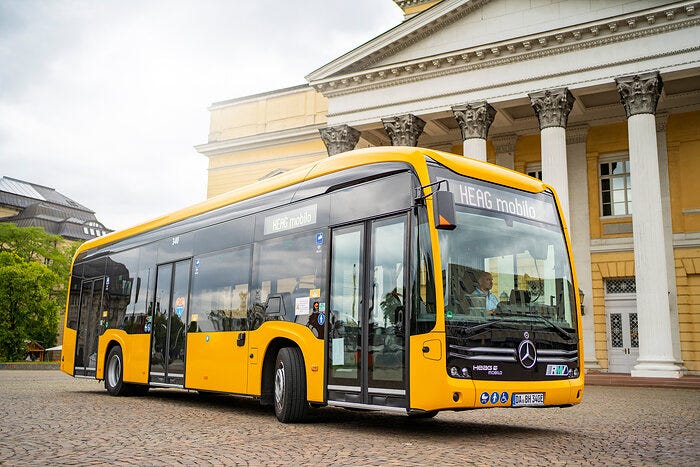
Public buses are a win for the environment because they help reduce the number of vehicles on the road, thereby reducing the amount of tailpipe emissions getting into the atmosphere. However, when the bus is electric, it is a double win as it cuts down pollution even further. The city of Darmstadt in Germany is recording such a double win as it sees 24 electric buses go into operation.
The eCitaro buses made by Mercedez-Benz are being introduced by HEAG mobile, a public transport operator as it plans to switch to a 100 percent electric operation. They are powered by nickel manganese cobalt batteries that are suitable for high-performance charging.
HEAG mobile is launching two versions of the eCitaro bus, 11 solo and 13 articulated.
eCitaro electric bus: Courtesy of Mercedes Benz
All the new buses have advanced driver assists like Sideguard Assist to help the driver take turns and Preventive Brake Assist, a braking assistance system. The driver’s seat is screened off by a large glass plane for protection from violence and airborne viruses. There is also an air filtering system on-board. The solo version has four security cameras, while the articulated has six.
There are plans to replace all the nearly 80 buses in HEAG mobile fleet by 2025. The operator took its first electric bus delivery in 2020 in a batch of five. By the time it replaces all its diesel-powered buses, HEAG mobilo will save approximately 2.5 million liters of fuel annually, translating to about 6.600 tonnes of CO2 prevented from polluting the environment.
Image: Global Trends in Renewable Energy Investment 2018
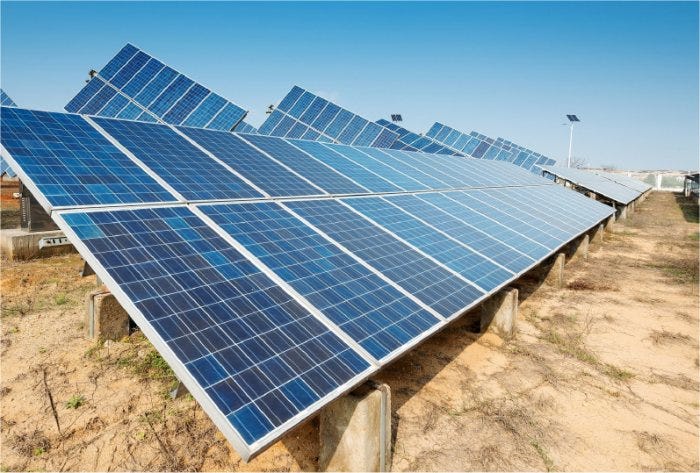
In what was a win for the environment in Australia, more than half of the country’s supply of electricity came from solar installations. Even though the victory lasted only a few minutes, it opened a new chapter in Australia’s march towards sustainable energy.
At that moment, the energy from coal-fired power plants dropped to a record low of 9,315 MW around noon last Saturday, while power generated from the sun stood at 9,427 MW.
According to statistics from Dylan McConnell, a research fellow at the University of Melbourne, the total energy from solar represented 57 percent of the energy mix of the country. “This is what I unofficially call ‘record season’. It’s actually still pretty early in the season [to get these numbers] but in spring or the shoulder seasons you have the combination of low demand, because there’s no heating or cooling, and then nice weather on the weekend. Those factors combine, and you get these giant shares of renewable energy that generally push out coal.”
On Sunday, energy prices dropped into the negative for more than 9 hours, meaning energy consumers were actually paid to consume.
Regionally, South Australia had 100 percent of its energy from wind and solar sources while the percentage in Victoria shot to 102 but energy operators stopped supplying.
The share of renewable energy would have even been more if the operators had not shut down production to avoid negative billing.
According to projections, Australia will need 51 GW of renewable energy by 2042 to meet its commitment under the Paris Climate Agreement but so far, only 3 GW has been committed, with a balance of 48 GW.
Remember your rides to and from school in one of the iconic amber-colored school buses? While they were likely powered by internal combustion engines, the next generation of students is getting quieter rides to and from school in Prince Edward Island in Canada. Lion Electric has been contracted to supply 35 of its electric school buses to the province. The electric automaker has already supplied 10 battery-powered buses to the area and they have been serving routes in Charlottetown.
In addition to the buses, Lion Electric will supply 35 Level 2 charging stations to the province.
Fund for the purchase of the electric buses came from the Canadian government and Prince Edward Island government. The two entities are supporting zero-emission school bus projects with more than $6.3 million. Altogether, the government of Canada is investing more than $180 billion in public transit, green and social infrastructure, over the next 12 years through its “Invest in Canada” program.
When the order is delivered, Prince Edward Island will become the province with the most electric school buses in North America. The province is working towards electrifying all 332 buses in its school bus fleet and also make all its public transit operations electric.
The replacement of 47 internal combustion engine buses with electric buses will prevent up to 1,000 tonnes of greenhouse gas emissions each year.
Natalie Jameson, a Prince Edward Island province’s minister says “As Islanders, we see the impact of climate change every day and recognize the importance of leading by example. By adding 35 new electric school buses to our existing 12 electric school buses, more students will experience the important steps we are taking as a province to reduce our greenhouse gas emissions as we work to become cleaner and more sustainable for future generations.”
Got any tip for me? Kindly reach me here davidsanmi@outlook.com
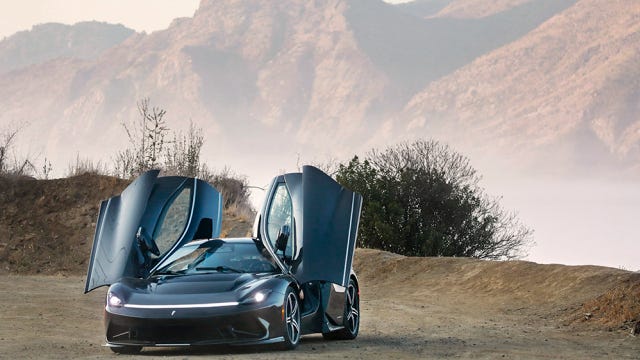
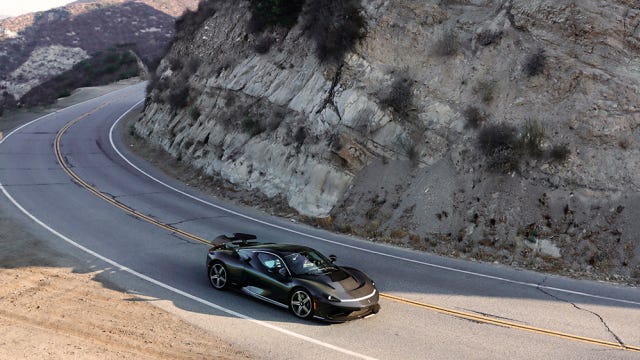
Hypercars and internal combustion engines used to be inseparable. However, for speed car enthusiasts that are also fans of environmental conservation, Pininfarina is unveiling a hypercar they can use without a guilty conscience if funds is no problem. The automaker has unveiled its 1,900 hp Battista electric hypercar.
First mentioned in 2019, it has taken Pininfarina two years to make a production-ready battery-powered version of the Battista. The Italian carmaker is showcasing the car at the Monterrey Car Week. Pininfarina also released stunning photos of the Battista cruising about California.
Interior: Courtesy of Pininfarina
Remarkably, the car in the photos looks very close to what Pininfarina displayed in 2019. The specs have been constant too. There is a 120 kWh battery pack that is rated by the European WLTP tests for 310 miles, although you may need to lower your expectations in real-world scenarios. The charging speed is expected to be 180 kW.
On the exterior, the Battista carbon fiber bodywork and forged aluminum-alloy wheels. However, Pininfarina promises almost endless customization of the components.
The Battista is a beast when it comes to performance, easily giving it the crown of the most powerful production car to come out of Italy. The quad-motor drivetrain produces a mind-blowing 1,900 hp and 1,696 ft-lbs of torque for a 0 to 62 mph acceleration in less than two seconds. There is no information about the speed limit yet but there is no doubt the Battista will move very fast. Just as it accelerates fast, this hypercar will come to a complete halt in less than two seconds.
Courtesy of Pininfarina
What is a hypercar without engine sounds? Pininfarina is making up for the lack of noise (electric cars operate noiselessly) with artificially produced sounds. As a homage to its Italian origin, the Battista will emit classical music as you accelerate.
Pininfarina is selling the Battista for $2.4 million, although it will make only 150 units so you have to act fast if you want one of these speed demons. However, if you desire something more exclusive, you need to pony up $2.9 million for one of the five Anniversario editions that Pininfarina is carving out of the 150 units. The five units will feature even more aerodynamic enhancements.
Other electric hypercars are the Rimac’s Nevera which shares parts of its powertrain with the Battista, and the Lotus Evija.
Got tips or story you want me to cover? You can reach me on Twitter @davidtayos or email davidsanmi@outlook.com
Air pollution has been known to be terrible for health. However, a new study has linked tailpipe byproducts of internal combustion engine vehicles to more than just serious respiratory problems. The study was carried out by researchers at the University of Washington and revealed the connection between car pollution and dementia and Alzheimer’s disease.
The study evaluated data already collected from two previous studies that tracked the air pollution levels of the city of Puget Sound since the 1970s and the probability of dementia starting from 1994.
Results showed that for every 1 microgram per cubic centimeter increase of PM2.5 particulate matter, there was a 16 percent increase in the chance of all-cause dementia and Alzheimer’s-type dementia occurring.
The source of the particulate matter was traced by the National Resources Defense Council (NRDC) to the burning of fossil fuels. Another study revealed last year that a higher coronavirus virus death rate was linked to higher levels of pollutants.
This is why renewable energy and alternatively powered vehicles like electric vehicles need to be promoted to reduce environmental pollution and improve the health of humanity in general.
However, more than a few carmakers are going beyond just making battery-powered automobiles. For example, Volvo says it has made a car that assesses air quality in the cabin. Hyundai is also reportedly bringing such technology to its own vehicles.
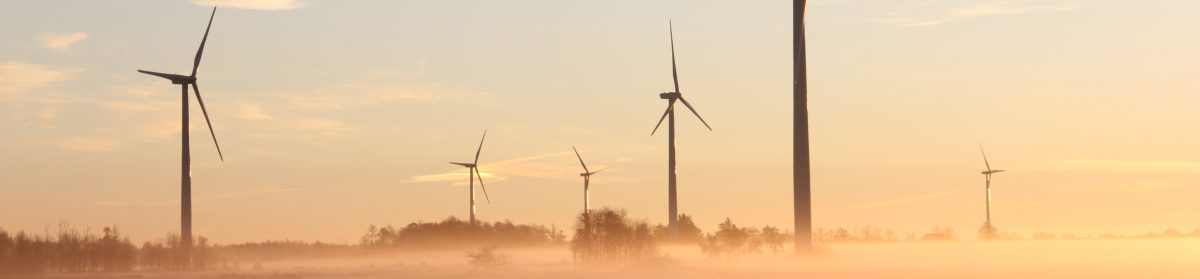
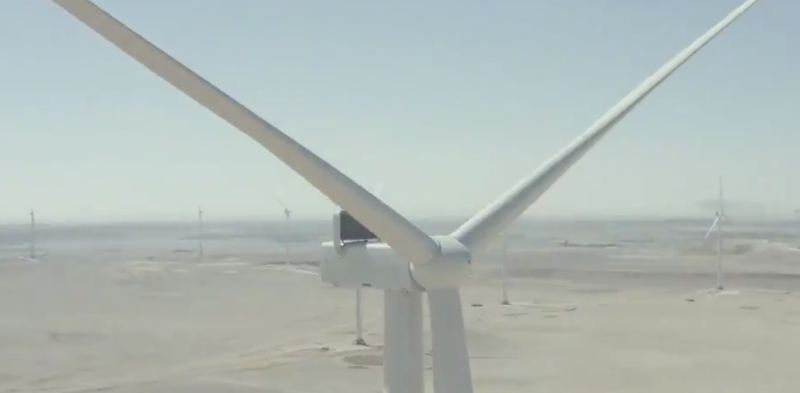
Saudi Arabia has finally joined the league of nations generating power from wind energy. The oil-rich kingdom achieved this status when its first wind farm connected to the grid. A consortium spearheaded by French company EDF Renewables and UAE-based Masdar developed the 400 MW farm located at Dumat al-Jandal under an Independent Power Producer scheme.
Dutch firm Vestas supplied and installed all the 99 wind turbines on the farm. Each turbine has an installed capacity of 4.2 MW, with a hub height of 130 m and rotor diameter of 150 m. Most of the installation work has been completed, showing lots of progress from when the project started in September 2019.
The wind farm will generate enough power to support 70,000 households and prevent nearly a million tonnes of carbon dioxide per year. EDF’s consortium got the project award for half a billion dollars in January 2019 after submitting the lowest bid at $21.3 per MWh, which later dropped to $19.9 per MWh, a global record in the wind energy business. The contract spans 20 years of power purchase agreement.
Vestas and Spanish firm TSK were brought onboard, while local Al-Babtain Contracting Company built the substations and high-voltage components of the project. The construction phase of the project alone produced more than 600 local jobs.
The Dumat al-Jandal wind farm is part of Saudi Arabia’s Vision 2030 strategy to reduce dependence on fossil fuels.
Olivier Marchland, project director of Dumat al-Jandal Wind Co for Energy LLC said in a press statement, “We are delighted to start the early power production of this unique large-scale wind project in KSA — Dumat Al Jandal wind farm. We are now looking forward to successfully reaching, with our partners and contractors, the full commissioning of the project in the months to come.”
Country representative for Masdar Saudi Arabia, Osama Al Othman, said: “Masdar is proud to be leveraging its experience in renewable energy to deliver the Kingdom of Saudi Arabia’s first wind farm in collaboration with our partners.
“The successful connection of the project to the electricity transmission grid marks an important milestone for this landmark project in [Saudi Arabia] and we look forward to [the] project’s completion in the near future.”
Shell, a company known for its deep involvement with hydrocarbon, is charting a new future for itself as an electric vehicle charging services provider. The energy giant is expanding its UK partnership with Waitrose by installing up to 800 charging points in about 100 Waitrose stores.
At the same time, Shell will increase the number of its forecourts where customers can shop for Waitrose food. The number of forecourts will increase by 68 to 125 across the country.
Each Waitrose site will have six 22 kW and two 50 kW rapid chargers for the use of customers as they browsed the contents of Waitrose stores.
This ‘destination service’ scheme is expected to start operation next year. It will mark Shell’s entry into providing EV owners opportunities to charge their vehicle while at a location for another purpose. The energy company plans to grow this network to 5,000 chargers by 2025.
Destination charging is often used by businesses to attract EV owners’ patronage and make rental properties more desirable.
Bernadette Williamson, General Manager Shell UK Retail, said: “This is great news for EV drivers across the UK, knowing they can easily, quickly, and reliably charge up at Shell charge points while shopping at Waitrose. We want to make EV charging as hassle-free as possible and support our customers wherever they want to charge.”
James Bailey, Executive Director of Waitrose, said: “This is an important partnership for Waitrose and means we can offer even greater convenience to more of our customers. We’re also delighted to bring our customers 800 new charging points for electric vehicles, including new rapid charging capabilities, as the UK moves more and more towards a sustainable transport network.”
Got any tips or news item you want me to cover? You can reach me through davidsanmi@outlook.com
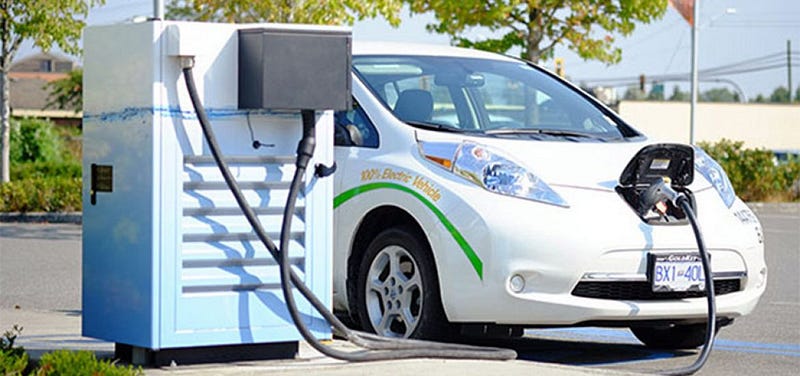
An electric vehicle plugged to a charger: From Flickr
Electric cars are the new normal. Startups like Tesla and Rivian are bringing more if them to the market, while established players like Ford and Volkswagen are gradually increasing the number of electric models in their product mix. The International Energy Agency reports that about 3 million new EVs were registered in 2020, representing a massive jump of 41 percent from the figure for 2019.
However, it is not out of place to wonder if there are actually benefits to switching to electric vehicles, especially if you plan to do so. This article goes into detail about why you should make the switch as soon as possible.
Electric cars help reduce carbon emissions
If you care about the environment, you will naturally be drawn to electric vehicles. They do not produce any tailpipe emission of their own as they work with energy stored in their batteries. This is unlike internal combustion engine vehicles that are responsible for 29% percentage of air pollution, according to the United States Environmental Protection Agency. These gases are responsible for global warming and other health hazards.
From mining to refining to transporting to your local fuel station, the production of hydrocarbon fuel requires a lot of energy, which is usually generated from hydrocarbons with attendant carbon emissions. Therefore, every ICE vehicle replaced by an EV is a win for the environment.
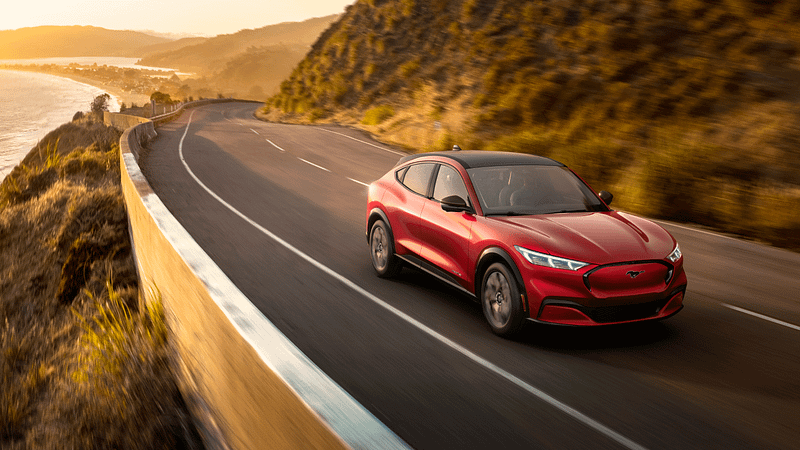
Ford Mustang Mach-E: Courtesy of Ford
Electric vehicles are superior in energy efficiency
Electric cars use the energy supplied to them more efficiently, unlike petrol or diesel-powered vehicles that can only convert about 20 percent of their energy to motion. This means electric cars prevent the wastage of energy. Electric cars also take advantage of regenerative braking, which allows the energy produced during braking to be converted to electrical energy that can be stored in the battery.
Electric vehicles have a lower total cost of ownership
As electric cars have fewer moving parts than their ICE counterparts, they break down less often. Even routine maintenance like changing oil is not required. This means fewer trips to the repair garage and fewer bills for you.
You will also pay less to charge your vehicle than to buy hydrocarbon fuels in most places. You could take advantage of free charging offered by some public institutions or businesses as perks to reduce your ‘fueling’ costs further. Some utility companies offer plans that make charging your electric vehicles less expensive. Targeting off-peak periods will lower your charging expenses too.
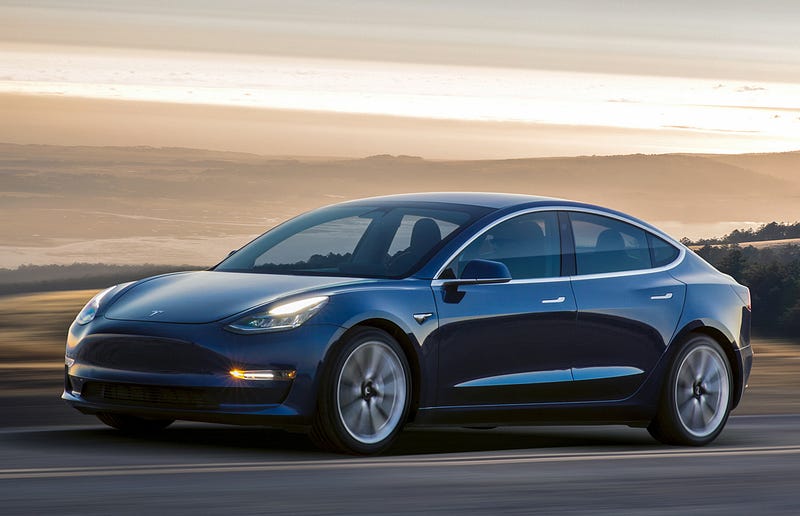
Tesla Model 3
Other advantages
If you care about noise pollution, electric vehicles are meant for you as they operate with little or no noise. You would also appreciate the convenience of charging your car at home, perhaps by simply plugging overnight.
Electric vehicles often get advanced tech earlier than ICE models, satisfying the techy side of you.
Modern EVs offer bi-directional charging, which means you can use your battery energy to power other implements like power tools or accessories during camping trips or picnics at remote locations.
What do you think about the future of electric cars? Feel free to sound off in the comment section below.
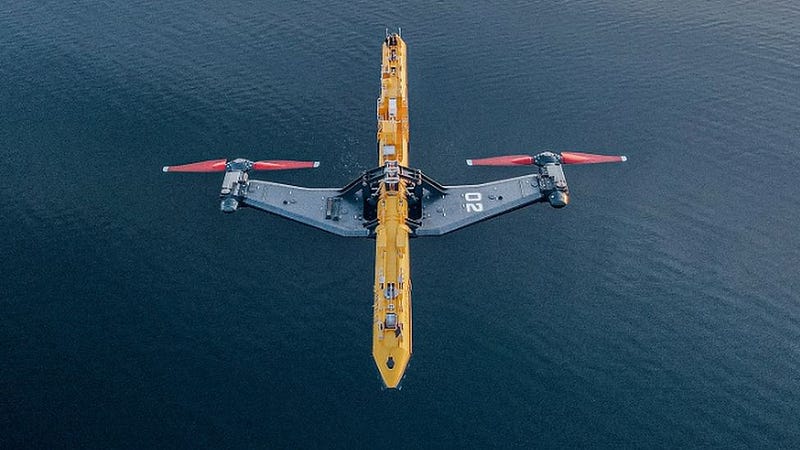
The most powerful tidal-powered turbine in the world has come online. The 02 tidal turbine, made by Orbital Marine Power, will produce 2 MW, enough to power 2,000 homes in the UK. The plant installation alone will cut 2,200 tonnes of CO2 from the atmosphere per year.
The 02 is 73 metre-long, weighs 680 tonnes, and has two hinged turbines 16 metres in diameter, which can be raised or lowered for transportation, installation, and maintenance. It has a floating superstructure with rotors attached to its legs generating energy from the passing tidal flow. A four-point mooring mechanism holds it in place with mooring chains that can each lift over 50 double-decker buses. The electricity produced is transmitted to the onshore network by a cable in the seabed.
After its manufacture and launch in Dundee this year, the 02 was towed to its installation site at the European Marine Energy Centre in Orkney, Scotland. The turbine will be in operation for 15 years. It is the first commercial tidal turbine from Orbital.
Courtesy of Orbital Marine Power
One of the unique features of the tidal turbine project is that it supplies energy to an onshore plant where green hydrogen is generated by an electrolyser.
Funds for the project came from several sources, including £3.4m provided by the Scottish government-run Saltire Tidal Energy Challenge Funds. More money was obtained from the ethical investment Platform, Abundance Investment.
Beyond the commissioning of the 02, Orbital has plans to make the technology underpinning the tidal turbine commercial. Andrew Scot, CEO of Orbital, explained, “We believe pioneering our vision in the UK can deliver on a broad spectrum of political initiatives across net-zero, leveling up and building back better at the same time as demonstrating global leadership in the area of low carbon innovation that is essential to creating a more sustainable future for the generations to come.”
Scottish Energy Secretary, Michael Matheson, takes pride in the 02, “With our abundant natural resources, expertise and ambition, Scotland is ideally placed to harness the enormous global market for marine energy whilst helping deliver a net-zero economy. The deployment of Orbital Marine Power’s O2, the world’s most powerful tidal turbine, is a proud moment for Scotland and a significant milestone in our journey to net zero.”
Tidal energy projects are expected to reach 100GW by 2050, according to Ocean Energy Europe.
Got any tips or story you want me to cover? Kindly reach me at davidsanmi@outlook.com







 Renewable Brief