Vattenfall’s Vesterhav Nord offshore wind farm comes online

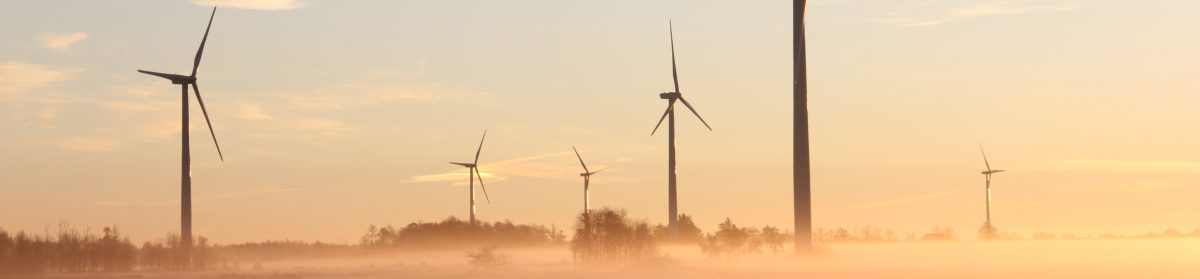
Header image courtesy of Vattenfall

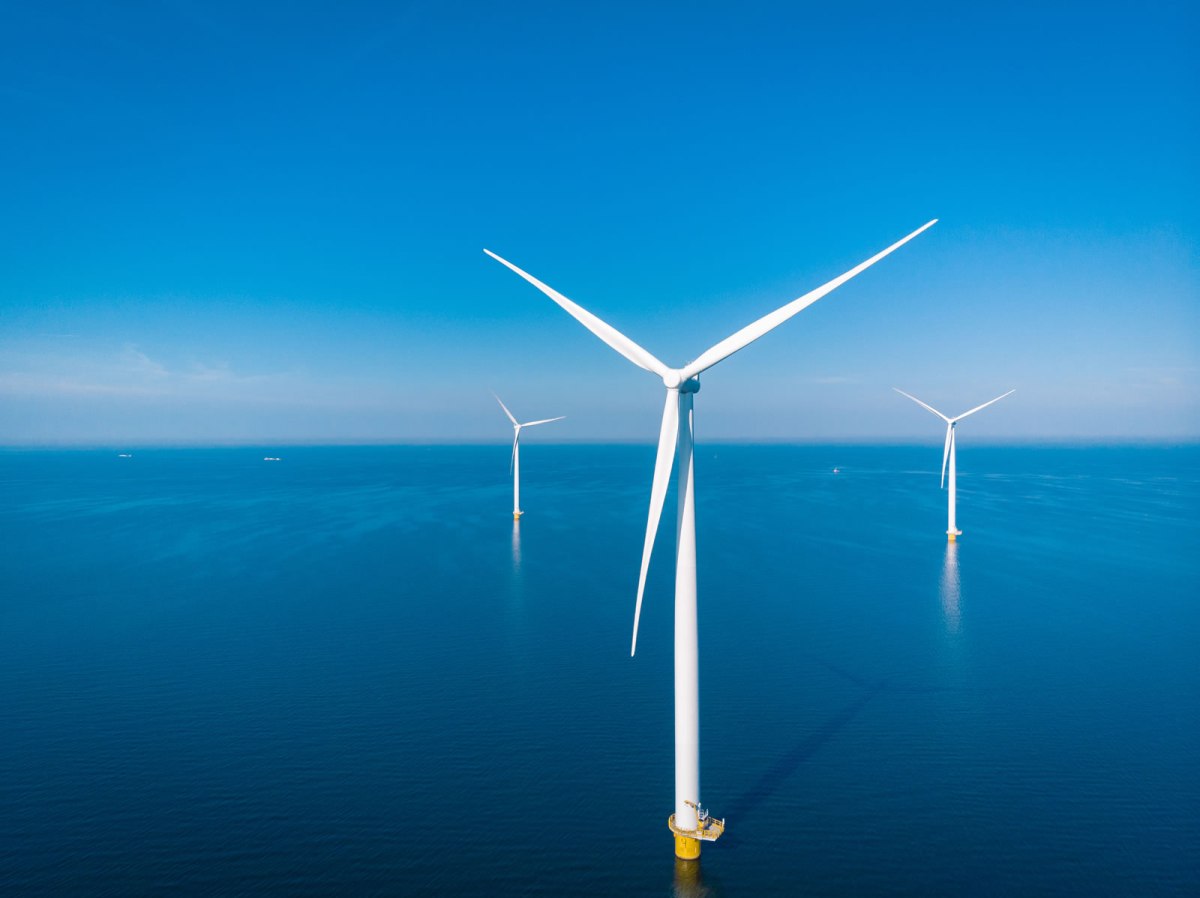
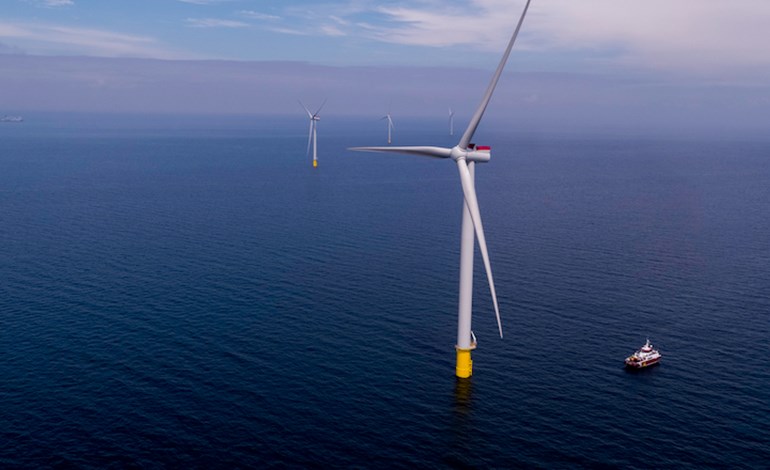
Vattenfall’s Vesterhav Nord offshore wind farm has started sending electricity to the grid, as reported by Renews.biz. The 176 MW came online a month after the company’s Vesterhav Syd began producing electricity.

Vattenfall will connect all 21 wind turbines in the Danish farm to the grid before the end of Q1 2024, with a total output enough to supply 180,000 households with zero-emissions electricity.

The Vesterhav Nord farm experienced a delay to the December 31, 2023, deadline for full connection and is still in talks for an extension with the Danish Energy Agency.

The offshore farm uses a new system for minimizing visual disruption based on radar, meaning the turbines’ warning lights would only come on when the farm is approached by an aircraft. However, the new systems will not be used fully until it gains approval.

Project director Mathilde Damsgaard commented, “It is with great pride that we are now sending the first fossil-free power ashore from Vesterhav Nord as well. It has been an exciting task with many challenges since we won the tender in 2016, and it is great to see the efforts bear fruit thanks to a great effort from the many involved.”
Offshore wind policy consultation starts in Ireland

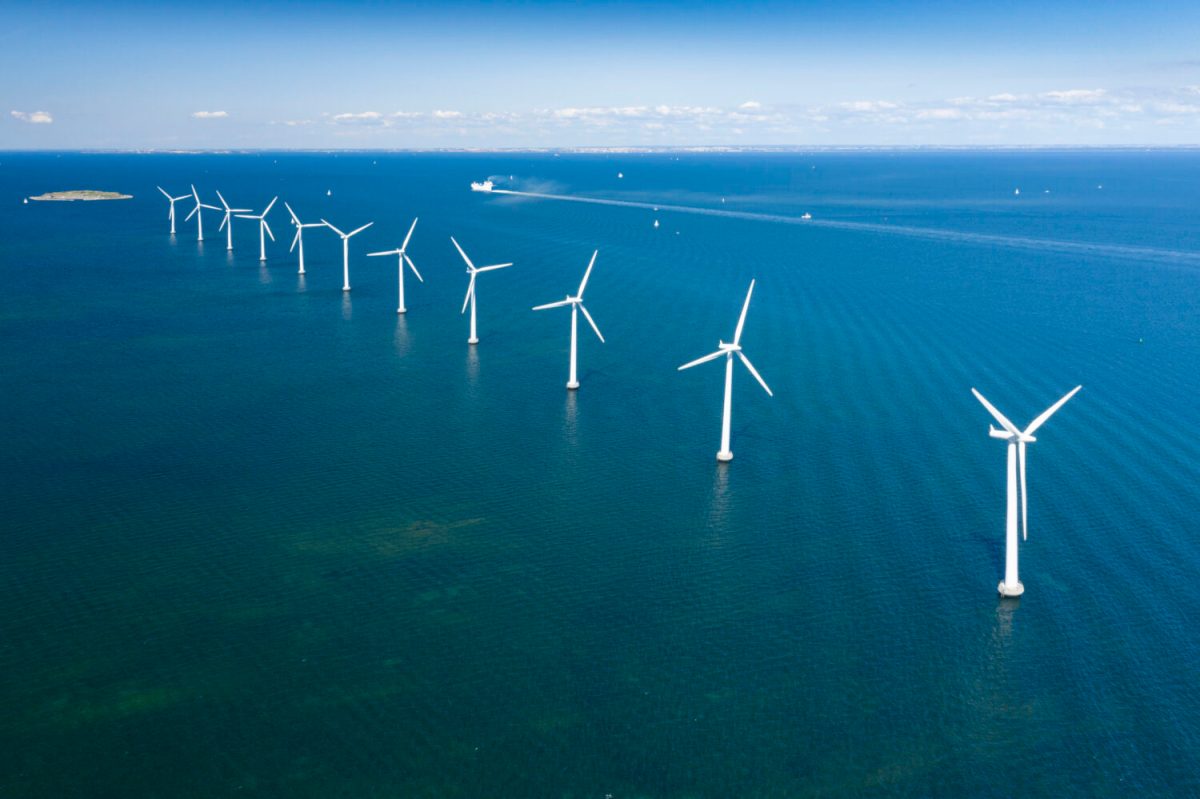
Header image courtesy of Getty Images

Ireland has commenced consultation on its new framework surrounding offshore wind energy under its Department of the Environment, Climate, and Communication (DECC).

The Offshore Renewable Energy Future Framework Policy (Future Framework for short) presents Ireland’s long-term blueprint for the growth of offshore renewable energy. It will establish the pathway to 20 GW of offshore wind energy by 2040 and 37 GW a decade later.

Ireland targets 5 GW of offshore wind energy by the end of the decade with 2 GW allocated to green hydrogen production.

The Future Framework will encourage investments and maximize financial gains from offshore wind projects. It also considers the potential for transforming excess renewable energy into alternative energy products that can be exported. It will also encourage “collaboration between the State, industry and local communities”, according to Environment, Climate, and Communications Minister Eamon Ryan.

This consultation will allow key stakeholders to give input and collect feedback for the final version of the framework. The final version of the Future Framework will be published in conjunction with the Department of Enterprise, Trade, and Employment in the spring after approval by the government.

Vattenfall’s Vesterhav Syd offshore wind farm connects to the grid

Header image courtesy of Vattenfall

It is a celebration mood at Vattenfall as the company completely connects its Vesterhav Syd offshore wind farm to the Danish grid. Construction on the 20 turbines lasted from July to September last year, with the first power delivered on November 10th, 2023.

Vattenfall had been connecting the turbines from the 168 MW offshore farm to the grid one by one since November.

Mathilde Damsgaard, project director for Vesterhav Syd and Nord at Vattenfall, said, “At Vattenfall, we are always happy when we finish an offshore wind farm and thereby contribute to fossil freedom.

“This time, we allow ourselves to be even more happy, since there is a cold winter in Denmark and Northern Europe where fossil-free and reliable electricity is of the essence.”

The Vesterhav Nord offshore wind farm is about 80 km from Syd and will generate 176 MW on completion. Vattenfall expects to completely connect it to the grid in Q1 2024.

Polish coal miners training to work on wind farms

As Notes from Poland reports, Polish coal miners have started a major career change by retraining to take up jobs in the wind energy industry. They will train to operate and service wind turbines. This program is part of an initiative to support workers exiting the mining industry in the East European country.

The two-week-long training, accredited by the Global Wind Organization (GWo), is being funded by EDF Renewables Polska to help assuage the concerns of coal miners about the effects of the energy transition to renewables. Coal is still a big business in Poland, generating 70% of the electricity supply. Miners can undergo the training for free.

According to Alicja Chilińska-Zawadzka, general director at EDF Renewables Polska, “In the coming years, the wind energy industry will need tens of thousands of employees, while the specialised staff leaving the mining industry seems to be particularly prepared to find employment in the renewable energy sector after appropriate training.”

Candidates will visit a wind farm to learn about working safely at heights, first aid, fire awareness, and wind farm operation. They will be tested on operating suspended platforms and overhead cranes.

The miners will also meet with potential employees and have their first interviews. A second batch of miners will undergo the program in the first quarter of 2024, with applications already open.

Poland wants to close all its mines by 2049.

Major renewable energy news this week

Header image courtesy of Lloyd Thornton/Shutterstock

Amprion starts on 8 GW offshore power link in Germany

Germany’s transmission system operator Amprion has begun planning the Windader West energy corridor, which will connect up to 8GW of offshore wind energy to the North Rhine-Westphalia state. The first 2 GW connection is expected in 2032.

Read more…

Kenya Power solicits bids for boosting rural electricity with solar mini-grids

Kenya Power and Lighting Company (KPLC) has called for bids for setting up solar power mini-grids in several counties, representing 20 percent of its population and 72 percent of its land area. The contract covers seven years of operation and maintenance by the successful bidders.

Read more…

DP Energy and SBM planning 400 MW floating wind farm for Nova Scotia, Canada

DP Energy and SMB have formed a joint venture named Nova East Wind to build a 400 MW floating offshore wind farm in Nova Scotia, Canada. The development will be located about 30 km off Goldboro, although the precise location is yet to be determined.

Read more…

Solar drives renewable investment to $358 billion in H1 2023

Global investment in renewable energy soared to $358 billion in the first half of 2023, according to BloombergNEF. This was driven by solar investment in China, thanks to cheaper PV modules and a growing rooftop PV market.

Read more…

Consortium planning 5 GW wind farm for Australia

Elanora Offshore, a consortium of KIMAenergy, Energy Australia, Boskalis, Respect Energy, and Polpo Investments, will build a 5 GW wind farm off Gippsland in Victoria, Australia. Funding has already been secured for the project, with a targeted completion for the first phase in 2032. The farm will supply 40 percent of Victoria’s energy needs.

Read more…

Wind turbines to be mined for rare metals in Scotland by SEM and University of Edinburgh

Header image courtesy of Alamy

What happens to wind turbines when they reach end-of-life? They might soon be getting a new life as SEM and the University of Edinburgh are collaborating on extracting rare elements from these spent turbines, as reported by ReNews.

The new technique will target rare metals combined with steel to make the turbines. These include niobium, tantalum, and rhenium, all mined with methods that harm the environment. However, their function in strengthening alloys makes them critical in turbine manufacturing.

The project between SEM and the University of Edinburgh is funded by the Industrial Biotechnology Innovation Centre (IBioIC). It will help manufacturers make new turbines from old ones instead of importing mined materials. The UK currently has no means of extracting these rare metals.

SEM’s DRAM technology works as a filter that makes the process sustainable. It uses co-products from malt whisky distillation. DRAM was initially created to mine metals from waste electronics safely.

Dr. Liz Fletcher, director of business engagement at IBioIC, said, “SEM is a great example of a business taking a bio-based process and applying it to multiple sectors to help companies achieve environmental goals.

“By joining forces with academic experts, SEM has developed potentially game-changing processes for sustainably treating various types of waste. Recycling at an industrial scale will be key to achieving net zero, while also reducing the carbon footprint and environmental damage associated with imported raw materials.”

Turbine installation starts on Dogger Bank offshore wind farm

Header image courtesy of Dogger Bank

Installation work has begun at the Dogger Bank offshore wind farm, as reported by ReNews. The farm will host 277 turbines in three phases when completed off the coast of England.

Each of the 13 MW GE Haliade-X turbines towers 260 m. They will be installed with a vessel lifting up to 3,200 tonnes. The Yorkshire farm will output 3.6 GW, enough green electricity for 6 million homes.

The project is a joint venture between SSS Renewables, Equinor, and Vargronn (another joint venture between Eni Plenitude and Hitec Vision.)

Dogger Bank is expected to produce 400 jobs in the 35 years lifetime of the project. Construction will last three years.

“Our progress here with our joint venture partners Equinor and Vargronn proves offshore wind projects of this size are now mainstream and will help turbocharge the transition to the cheaper, cleaner, and more secure energy system we all want to see. “It is action, not ambition, that will secure our energy future, and this project shows action on a massive scale. But we will need many more Dogger Banks to achieve our goals, and we look forward to working with government to bring forward more projects at pace.”

Energia, Vargronn JV to develop 1.8 GW Irish offshore wind capacity

Header image courtesy of 4fr-Getty Images

Ireland stands to gain up to 1.8 GW of offshore wind energy capacity by 2030, thanks to the partnership between Energia Renewables and Vargronn, as reported by ReNews.

Vargronn is a partnership between Plenitude (Eni) and HitecVision. The JV will initially focus development on the southern and eastern Irish coasts. Energia is already active in these areas, with sites in the North Celtic Sea (900 MW) and South Irish Sea (900 MW).

Seabed surveys of the selected area have been completed, with detailed preparations for EIAs kicked off. The JV is also engaging with the local fishing industry and communities.

Depending on governmental policy, the projects in these areas could be operational by 2030.

Energia Group chief executive Ian Thom commented, “We look forward to working closely with Vargronn and to combining our experience of developing renewable energy projects in Ireland with Vargronn’s extensive offshore wind expertise and supply chain relationships. “Through the development work completed to date, our partnership is uniquely placed to deliver new offshore capacity on the south and east coasts by 2030, and in so doing, make a significant contribution to Ireland’s offshore wind targets.”

Australian Aboriginal group teams up with Philippine company ACEN on 3 GW renewable energy

Header image courtesy of Lloyd Thornton/Shutterstock

Australia’s Aboriginal group Yindjibarndi has entered into an agreement with Philippine energy firm ACEN on a massive renewable energy project in the iron ore mining region of Western Australia. As reported by Reuters, the project will generate up to 3 GW from land belonging to the community.

The first phase will produce 750 MW from a combination of wind and solar energy and battery energy storage. The projected cost stands at A$1 billion (US$682 million).

The Yindjibarndi Aboriginal Corp (YAC) will own an equity stake of 25%-50% in any project and approve construction on the Yindjibarndi Ngurra, where the tribe exercises native title rights. Native titles recognize the rights of the indigenous people of Australia to control some parcels of land.

In addition to part ownership, businesses owned by the Yindjibarndi people would have preferred bidding rights for contracts, while members of the community would receive free training with job opportunities.

ACEN is a subsidiary of the Ayala Group which plans to expand its renewable energy capacity from 4.4 GW to 20 GW by 2030. The partnership with the Yindjibarndi group has been named the Yindjibarndi Energy Corp (YEC).

YAC Chief Executive Michael Woodley said, “The agreement with ACEN means that the Yindjibarndi people can actively participate in Australia’s renewable energy transition in a significant way that provides long-term economic benefits to our community.”

Mississippi gets first utility-scale wind farm courtesy of Amazon, AES

Header image courtesy of MaxyM, Shutterstock

The state of Mississippi in the US is getting its first utility-scale wind farm, a result of a partnership between online retail giant Amazon and AES, as reported by The Clarksdale Press Register.

The farm, to be located in Tunica, will have 41 wind turbines on a 14,000-acre site used for agriculture. Interestingly, the farmers will continue to farm rice, soybeans, corn, and wheat as the winds from the Mississippi Delta power the wind turbines.

AES is the developer and owner/operator and has highlighted how the landowners have diversified their income with the land retained in the family.

The Tunica wind farm will produce 184.5 MW of energy and lots of agricultural produce. The electric output will power about 80,000 Mississippi homes annually. The project will generate tens of millions of dollars in tax revenue for the county and school district, along with many employment opportunities.

AES’ partner, Amazon, has been expanding its renewable energy footprints globally with more than 400 projects like this. Charley Daitch, director of Energy and Water Strategy at Amazon Web Services (AWS), said, “Amazon is on a path to powering our operations with 100% renewable energy by 2025, and we want to ensure the local communities where our customers live and work are also benefiting from the solar and wind projects that we support. These energy projects are helping provide clean energy to local grids, create jobs, support local businesses and farmers, and boost the rural tax base in the southeast, which are all part of Amazon’s commitment to become a more sustainable company.”