Illinois announces ban on fossil fuel power plants by 2045

(Courtesy of U.S. Department of Energy Office of Science)

The state of Illinois in the US will soon pass a comprehensive clean energy bill that will make it one of the leading states in clean energy in the country.

Named the Climate and Equitable Jobs Act, the bill enjoys bipartisan support in the House.

It will outlaw fossil fuel power plants in the state by 2045. However, before the deadline, Illinois is mandating such plants to meet its aggressive environmental targets.

Illinois is going to spend $580 million a year to move its clean energy share of its energy mix from 9% to 50% by 2040. In addition to making its energy supply cleaner, the fund will create thousands of new jobs.

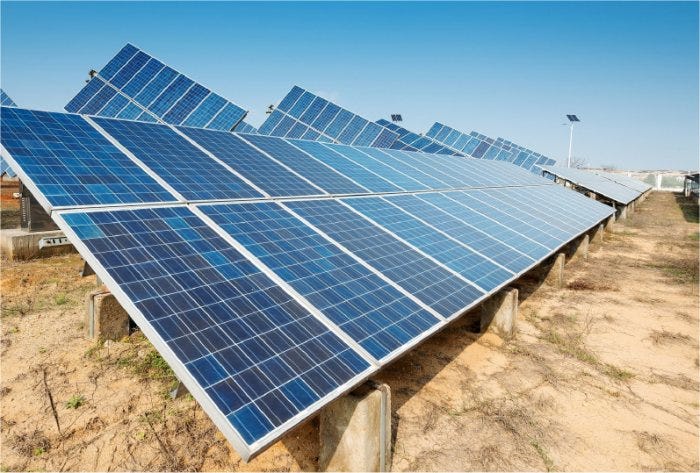
Solar energy will get a boost, from spending $20 million on community projects to $50 million. The bill also includes moves to revive the solar industry after the downturn caused by the pandemic.

In the same bill, Illinois wants to increase energy efficiency for low-income communities and save millions of dollars a year. It will also solidify labor standards in clean energy projects.

$78 million will go to expanding electric transportation, with 45% going to low-income communities.

The state of New York recently banned the sales of new ICE vehicles from 2035.

Got any tip or suggestion for me? Kindly reach me at davidsanmi@outlook.com

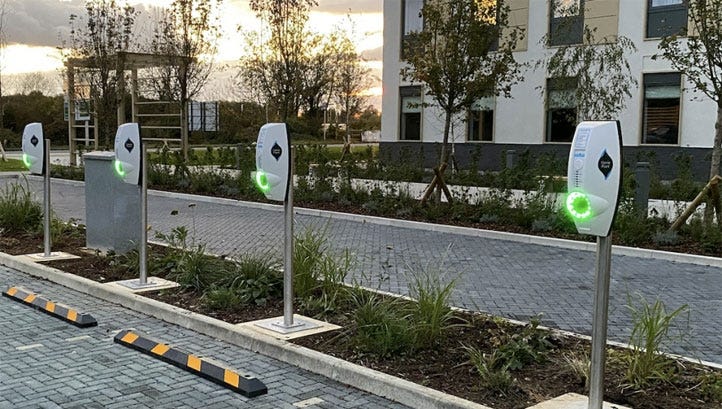
England to become first country to mandate installation of electric chargers in new homes

Home charging: Courtesy of Auto Car

According to a legislation that ministers want to introduce this year, electric chargers will soon welcome buyers of new homes in the UK. The laws will cover new offices too.

Transport minister Rachael Maclean revealed the proposed laws, a first worldwide, will mandate installing electric vehicle charging points in all new development properties in England. This move is coming on the heels of the 2030 ban of new light-duty ICE vehicles sales in the country. It will accelerate the development of charging infrastructure to match demand as more citizens switch to electric cars.

The current rate of charging point installation is far below what is needed, at only 500 per month. Experts say the country needs to see a rate of about 700 per day to be adequately prepared for the expected boom in electric vehicle sales. The latest figures show there are 24,374 public chargers in the UK.

Meanwhile, the government is ready to spend £1.3 billion on charging points in homes, streets, and motorways all over the UK. Street installations will take care of households that do not have parking spaces on their properties. They will also benefit from chargers at offices.

Outlining the timeline for the legislation, Maclean said, “We will publish our consultation response on requiring all new residential and non-residential buildings to have a charge point and we intend to lay legislation later this year. We also confirmed our intention to mandate that home and workplace electric vehicle chargers must be capable of smart charging.”

The smart charging requirement is to prevent overloading the grid when drivers plugin at the same time. This will be achieved by communicating to the car the best time to connect to the grid.

The UK is aiming for net-zero emissions by 2050. A net-zero emissions policy means any emission produced will be canceled out by a system to remove an equivalent amount of greenhouse gases from the atmosphere.

Got any tip for me? Kindly reach me at davidsanmi@outlook.com

New York to ban sales of new gas-powered vehicles by 2035

Governor Kathy Hochul: Courtesy of Joe Andrucyk

The state of New York is emerging as a big supporter of environmental sustainability. This new status as the governor has assented to a bill banning the sale of new internal combustion engine cars and trucks by 2035.

Governor Kathy Hochul put her signature on bill S.2758/A.4302, introduced in October 2020. The legislation aims to eliminate new ICEs in two stages. Passenger cars and trucks, off-road vehicles, and equipment will go first by 2035. Medium and heavy-duty vehicles follow by 2045.

As part of the legislation, the state’s Department of Environmental Conservation will develop a regulation for trucks that mandates manufacturers to make a certain percentage of their annual sales of zero-emission vehicles. The framework will be based on California’s Advanced Clean Trucks Rule and will start from 2025 models.

New York’s goal is to have at least 55 percent of new Class 2b-3 pickup trucks and vans, 75 percent of Class 4–8 trucks, and 40 percent of new Class 7–8 tractors sold in New York be pollution-free.

In addition, the state agencies and New York State Energy Research and Development Authority will create a market development strategy for zero-emission vehicles by the end of January 2023.

According to Governor Hochul, “New York is implementing the nation’s most aggressive plan to reduce the greenhouse gas emissions affecting our climate and to reach our ambitious goals, we must reduce emissions from the transportation sector, currently the largest source of the state’s climate pollution. The new law and regulation mark a critical milestone in our efforts and will further advance the transition to clean electric vehicles while helping to reduce emissions in communities that have been overburdened by pollution from cars and trucks for decades.”

In California which is a pioneer state in environmental conservation policies, Governor Gavin Newsom made a similar executive order that banned sales of new ICE passenger vehicles by 2035. More state-wide bans may be coming as 12 states urged the president to implement a similar ban nationwide.

Got any tip for me? Kindly reach me through davidsanmi@outlook.com.

UK’s NatWest bank to install 600 EV public chargers

If you are a NatWest customer and own an electric vehicle in the UK, you just got another reason to go to the bank. NatWest will install 600 public chargers at its branches across the UK, giving you the opportunity to top-up your battery while you complete a transaction inside.

EQUANS will supply the chargers. The company will also commission and maintain the Alfen Pro-Line 7.4 kW dual chargers by folding them into its GeniePoint network of public chargers for five years.

NatWest is magnanimously allowing staff, visitors, and customers to use the chargers. They will be used by the bank’s vehicles as it transitions to an electric fleet.

On why NatWest is installing the chargers, NatWest Climate Solutions Lead Michael Lynch said “We are helping our staff decarbonise transport and achieve net-zero commuting. Working in partnership with EQUANS to provide EV charge points at key strategic office locations supports our staff in making the transition to electric vehicles and help reduce our carbon footprint.”

Jerry Moloney, Managing Director of EQUANS, was excited by the partnership: “This partnership demonstrates a clear and strong commitment from NatWest on where they stand on the net-zero transition.
“The only way we will convince a greater proportion of the population to consider electric vehicles is by giving them greater options and better access to chargers. This investment from NatWest does exactly that.
“We’re delighted to be offering NatWest customers, staff, and visitors with access to our fast and reliable GeniePoint Network and look forward to progressing this partnership.”

As more businesses offer destination charging like NatWest, UK’s electric vehicle charging infrastructure will continue to mature.

Norwegian firm, Yara, makes a 7 MWh electric cargo ship

The Yara Birken electric ship; Courtesy of Yara

As electric vehicles are now commonplace, the next frontier to conquer is water transport. This is the thinking of the engineers at Norwegian chemical firm, Yara International, which has developed a battery-powered vessel named Yara Birken.

The ship is autonomous, meaning it will guide itself to its destination without human intervention.

Yara made the electric cargo ship through its subsidiary, Yara Marine Technologies. It aims to combat pollution produced by marine diesel engines. The subsidiary has been working on the ship since 2017.

The electric ship has a 7 MWh battery, with two 900 kW Azipull pods and two 700 kW tunnel thrusters, to power the vessel to a top speed of 13 knots. Total cargo capacity is 120 Twenty-foot Equivalent Units (TEU) or 60 40-foot shipping containers.

Yara Birken will embark on its maiden autonomous voyage later in 2021, from Heroya to Brevik, in Norway. Engineers will monitor its progress from three onshore control centers.

The new ship will eventually be completely autonomous in its operation but will need humans to load and unload. Yara will incorporate autonomous cranes and carriers for moving the containers onto and off the ship.

Using a battery on the Yara Birken will impact the environment positively as it will eliminate pollution that is the equivalent of 40,000 truck trips per year.

While Yara has not revealed such plans, an electric ship the size of Yara Birken is ideal for backing up the grid as it can power many homes using vehicle-to-grid technologies.

Got a tip for me? You can reach me through davidsanmi@outlook.com. Don’t forget to subscribe so you don’t miss any update.

GoFuel and Ez4EV launch mobile EV charging services in India

Courtesy of EzUrja

While electric vehicles promise many benefits, running out of battery charge in the middle of the road is one of the fears holding some folks back from switching. Two startups in India, however, are building a business around rescuing you out of precisely that kind of situation.

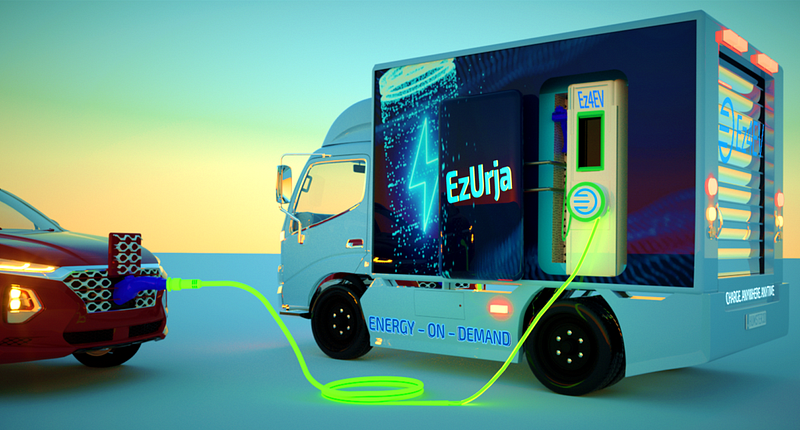
GoFuel, based in Chennai, India, has introduced its mobile charging services. It will charge dead batteries on the road or even replace them with fresh ones. For larger vehicles, GoFuel will send a van outfitted with energy storage to you anywhere you are and charge your car at a rate of up to 200 kW. Smaller vehicles like three-wheelers and two-wheelers can get a battery swap from GoFuel in minutes.

The startup is already active in Assam, Andhra Pradesh, and Punjab, using a franchising model. It has plans to expand all over India and even set up mobile charging and swapping stations that solar panels will power.

The second startup is Ez4EV, focused on battery storage and charger development. It is also launching on-demand mobile stations called EzUrja. They will function like ATMs, which users can locate quickly and plug into. The rapid chargers can fill a car battery to 80% in under 10 minutes and buses under 30 minutes. They will be internet-connected for remote management.

According to the CEO of Ez4EV, “Ez4EV Private Ltd is all set to launch its innovative mobile charging solution EzUrja (easy oorja) for electric vehicles in next three months to mitigate the range anxiety of EV owners and to instantly up the missing infrastructure for EV charging points in the country.
EV development prerequisite is the charging point availabilities. In our country where customer delight is on a door-step delivery basis, we complement the same by providing India’s first ‘Charging-on-Demand’ to ease the ride of an EV owner.”

Don’t forget to subscribe so as not to miss any of my updates.

Meet the Cybertruck, Tesla’s powerful stainless steel electric pick-up truck

Courtesy of Tesla

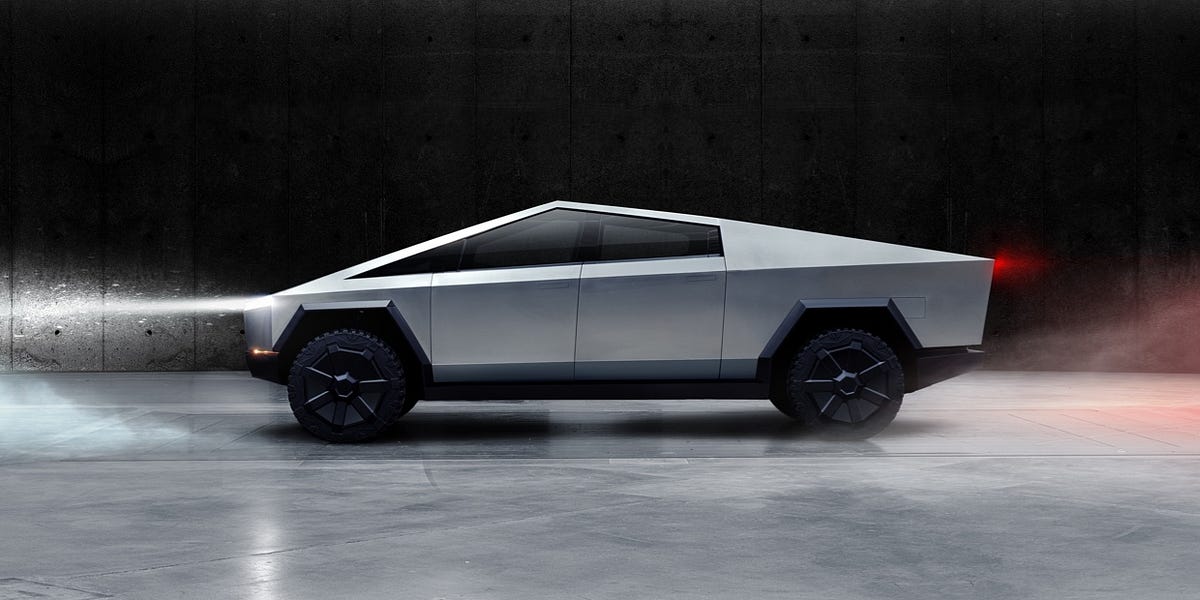
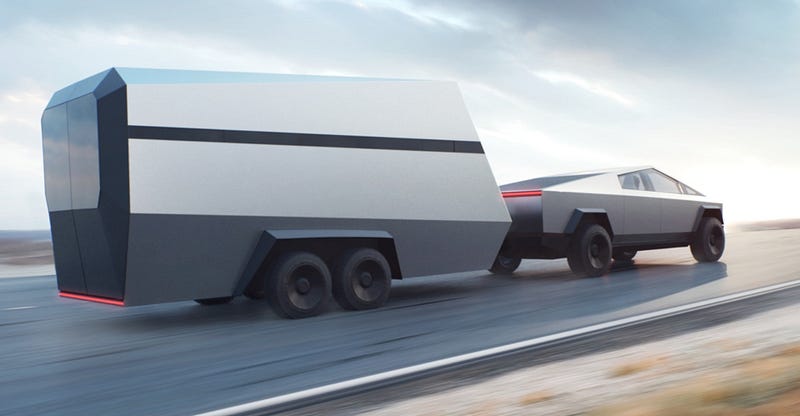
Electric trucks are not a market with many players currently; however, Tesla is working on its own electric pickup truck, the Cybertruck. Tesla is known for making electric vehicles with long driving ranges and outstanding performance.

Despite not being released yet, the Cybertruck commands lots of attention as more than one million pre-orders have been made, according to unofficial estimates.

One of the most striking things about the Cybertruck is its appearance, which looks like it will fit perfectly in a sci-fi flick set in 2050 Mars. The CEO of Tesla, Elon Musk, claims he chose the design to make the Cybertruck stand out in a sea of similarly-looking trucks.

Another interesting feature of the Cybertruck is the stainless steel unibody. The material is the same as Tesla’s sister company, SpaceX, is using to build its spacecraft. Apart from the stainless steel preventing rust and dents, Tesla worked on it to protect the riders inside the truck.

Courtesy of Tesla

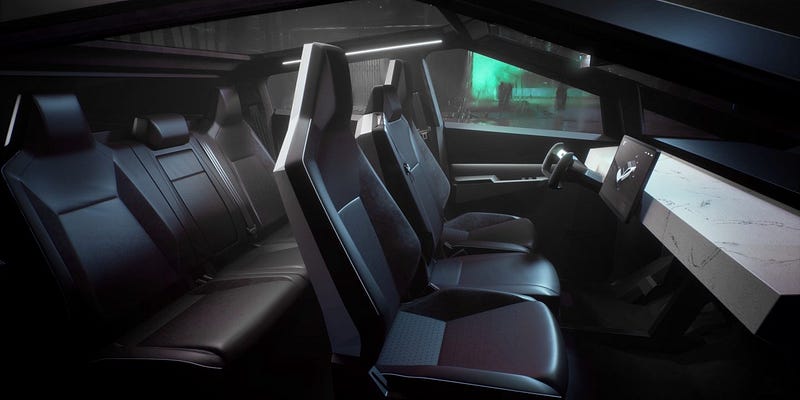
Speaking of the interior, the truck has room for six adults, thanks to the wider-than-normal width. There is a 17-inch touchscreen center console from where the driver can access controls. It also has ample room for storage under the backseat, in the truck bed outside, and most likely in the front trunk where the engine would have been.

The Cybertruck will come in three configurations, the single, dual, and tri electric motor. As a company obsessed with high performance, Tesla promises the Cybertruck will accelerate from 0 to 60 mph under 2.9 seconds, something that is unheard of for pickup trucks. The highest trim will tow up to 14,000 pound loads behind it.

Continuing Tesla’s tradition of offering long ranges, the Cybertruck will cover up to 500 miles on a single charge. Thanks to its bi-directional charging ability, you will be able to tap from the truck’s battery to operate power tools or provide power in remote locations like camping grounds.

Pricing of the Cybertruck starts at $39,900, and you can place an order on Tesla’s website with a refundable fee of $100. Production of the pickup truck was slated for late 2021, but it appears that it has been moved to 2023 as the company tries to get the facility where it will be produced ready and secure a steady supply of batteries.

Other companies working on pickup trucks are Rivian with its R1T, Ford with its F-150 Lightning, GM’s Silverado EV, etc.

What do you think of the Cybertruck? Feel free to air your thoughts in the comment section.

Golf course in the US finds new life as solar farm

Golf courses are excellent facilities that provide recreational and health benefits. However, when they are converted into solar farms, they become even more helpful.

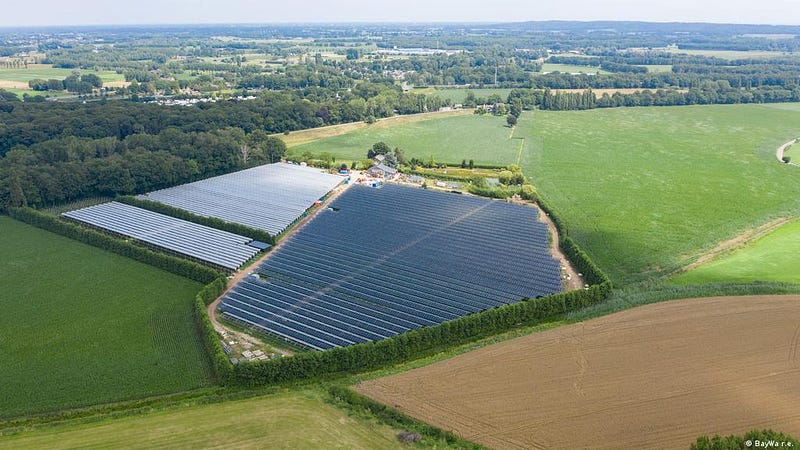
This is the story of the Healthlands Golf Course, which will be repurposed to a solar farm that generates 30 MW of energy. The site is in Manistee County, Michigan, in the US.

Prism Power Partners is handling the project and will come online by the end of 2022. The power from the farm will be enough to power 15,000 homes.

Since the site is near existing high-voltage electric distribution facilities, the cost to the consumers will be lower. It will be available through Consumers Energy, which has signed a contract to purchase all the energy from the site for 20 years.

“We are all in on solar energy and proud to team with a fellow Michigan company to create a cleaner, more sustainable energy future for our state by reusing valuable land and protecting the planet for future generations,” said Tim Sparks, vice president of electric grid integration at Consumers Energy. “We are leading the state’s clean energy transformation as we provide the affordable, reliable electricity our homes and businesses need for decades to come.”

24 Mercedes-Benz electric buses go into operation in Germany

eCitaro electric bus: Courtesy of Mercedes Benz

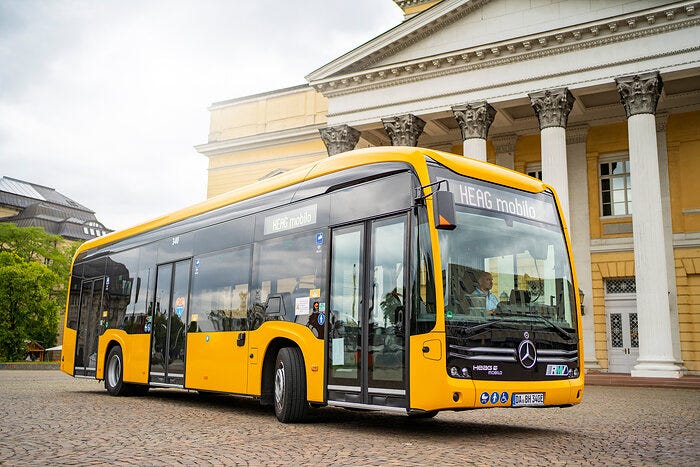
Public buses are a win for the environment because they help reduce the number of vehicles on the road, thereby reducing the amount of tailpipe emissions getting into the atmosphere. However, when the bus is electric, it is a double win as it cuts down pollution even further. The city of Darmstadt in Germany is recording such a double win as it sees 24 electric buses go into operation.

The eCitaro buses made by Mercedez-Benz are being introduced by HEAG mobile, a public transport operator as it plans to switch to a 100 percent electric operation. They are powered by nickel manganese cobalt batteries that are suitable for high-performance charging.

HEAG mobile is launching two versions of the eCitaro bus, 11 solo and 13 articulated.

eCitaro electric bus: Courtesy of Mercedes Benz

All the new buses have advanced driver assists like Sideguard Assist to help the driver take turns and Preventive Brake Assist, a braking assistance system. The driver’s seat is screened off by a large glass plane for protection from violence and airborne viruses. There is also an air filtering system on-board. The solo version has four security cameras, while the articulated has six.

There are plans to replace all the nearly 80 buses in HEAG mobile fleet by 2025. The operator took its first electric bus delivery in 2020 in a batch of five. By the time it replaces all its diesel-powered buses, HEAG mobilo will save approximately 2.5 million liters of fuel annually, translating to about 6.600 tonnes of CO2 prevented from polluting the environment.

Solar Energy surpassed coal energy for the first time in Australia

Image: Global Trends in Renewable Energy Investment 2018

In what was a win for the environment in Australia, more than half of the country’s supply of electricity came from solar installations. Even though the victory lasted only a few minutes, it opened a new chapter in Australia’s march towards sustainable energy.

At that moment, the energy from coal-fired power plants dropped to a record low of 9,315 MW around noon last Saturday, while power generated from the sun stood at 9,427 MW.

According to statistics from Dylan McConnell, a research fellow at the University of Melbourne, the total energy from solar represented 57 percent of the energy mix of the country. “This is what I unofficially call ‘record season’. It’s actually still pretty early in the season [to get these numbers] but in spring or the shoulder seasons you have the combination of low demand, because there’s no heating or cooling, and then nice weather on the weekend. Those factors combine, and you get these giant shares of renewable energy that generally push out coal.”

On Sunday, energy prices dropped into the negative for more than 9 hours, meaning energy consumers were actually paid to consume.

Regionally, South Australia had 100 percent of its energy from wind and solar sources while the percentage in Victoria shot to 102 but energy operators stopped supplying.

The share of renewable energy would have even been more if the operators had not shut down production to avoid negative billing.

According to projections, Australia will need 51 GW of renewable energy by 2042 to meet its commitment under the Paris Climate Agreement but so far, only 3 GW has been committed, with a balance of 48 GW.