
Plug Play partners Airbus to decarbonize air travel with green hydrogen

For many people passionate about environmental conservation, air travel remains a way they contribute to pollution because the aviation industry is a significant source of carbon emission, at 2–3% of all emissions due to human activities. While it might not be feasible to avoid flying altogether, two companies are joining forces to look for ways to reduce carbon emission in the sky with the help of green hydrogen.

Plug Power is collaborating with Airbus in this endeavor which will study the practicality of powering aircraft and airports with green hydrogen in the future.

At Airbus, green hydrogen holds lots of promise in cutting down the carbon emissions air travel is responsible for. The European company will work with Plug Power to develop a viable roadmap for introducing green hydrogen in airport operations and aircraft in the future.

The airport operation aspects that the joint study will focus on include swapping out fossil fuel with green hydrogen in powering airport facilities like transport equipment, heating buildings, and terminals, etc.

Green hydrogen can be produced from water through electrolysis. The process can be made more carbon-free by using power from renewable sources. Countless other industries are also investigating how green hydrogen can help them achieve lower carbon emission targets.

Airbus and Plug Play will select an airport in the US for a test run and serve as a template for other airports in North America.

Airbus first revealed its green-hydrogen airport idea in 2020, serving as its entry point into developing infrastructure to support aircraft running on green hydrogen.

Airbus VP of Zero-Emission Aircraft, Glenn Llewellyn, said about the partnership between the two companies, “We at Airbus see huge potential for green hydrogen to power our future zero-emission aircraft. This partnership with Plug Power — a true pioneer in developing green hydrogen infrastructure across the United States and key points across Europe and Asia — will enable us to leverage their expertise to decarbonize airports while preparing them for the arrival of hydrogen aircraft by 2035.”
CapMetro in Texas places the largest order for electric buses in the US

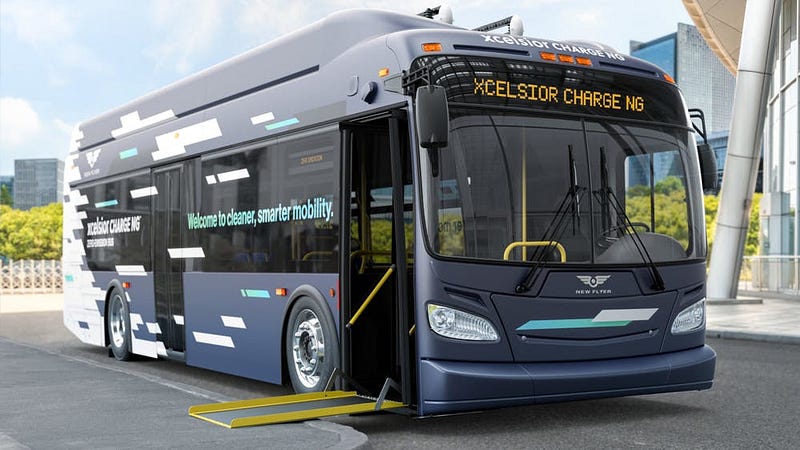
New Flyer electric bus, courtesy of New Flyer

Capital Metropolitan Transportation Authority, CapMetro, in Texas, has signed the biggest contract for electric buses in the US. The company’s board of directors approved the purchase of 197 battery-powered city buses to swell the number to 200.

The order will cost CapMetro $255 million. In the main portion of the contract, Proterra and New Flyer will supply 56 electric buses. The rest are optional and include 126 40-foot buses and 15 60-foot bosses. CapMetro will get chargers and staff training too.

The new buses will serve the Expo Center and Pleasant Valley MetroRapid lines. CapMetro will take delivery of the first batch toward the end of 2022. They will feature modern amenities like USB charging ports, plug-in and overhead charging, open seating floor plan, digital passenger display, etc.

The electric buses will help CapMetro reduce air pollution, noise pollution, and fueling costs when operational.

The purchase of the electric buses is part of CapMetro’s plan to overhaul the city’s transport system. It includes a new rail system with underground stations and electrification of the fleet of buses.

According to CapMetro president and CEO Randy Clarke, “Today’s announcement is a major milestone for CapMetro as we strive to provide safe, clean, and equitable transportation for our community for generations to come. Public transportation has a bright future in Central Texas as we continue to bring Project Connect to life in the coming years. With this electric bus procurement, we are showing our dedication to a cleaner tomorrow.”

In the words of the president of Proterra Transit, Josh Ensign, “Proterra is incredibly proud to build on our strong partnership with CapMetro and deliver our newest, fifth-generation electric bus technology to help Austin realize its important goal of 100 percent zero-emission transportation. Through its embrace of next-generation electric bus technology and charging infrastructure, CapMetro is setting a model for others to follow in the transition to clean, quiet transportation for all.”

California goes after gas-powered lawn mowers and leaf blowers with a ban

California is a leader in eradicating carbon emissions, and it has taken further steps to stamp out pollution from gas-powered lawn equipment.

This new ban will take effect from 2024, affects small off-road engines (SOREs), including leaf blowers and lawn mowers, generators, and emergency response equipment, according to bill AB 1346 signed by the governor.

The bill empowers the state’s Air Resources Board to prepare regulations that will support the move. However, the regulators have the authority to postpone some aspects of the ban based on what is technically feasible.

It seems AB 1346 targets the sales of new gas-powered SOREs but does not address their use.

In defense of the ban, SOREs contribute to pollution, despite their relatively small sizes. Because they have largely escaped regulation since they are not as visible as automobiles, the engines often do not fully combust fuel, leading to soot and other particulate exhausts. They also produce more nitrous oxide gases than passenger cars in the state. All these contribute to the smog that affects health.

Apart from gas pollution, SOREs also cause noise pollution because their operations are usually loud.

For Californians concerned about financial implications, the new bill points out that these SOREs have affordable zero-emission replacements. For example, there are electric lawn mowers with rebates to reduce their costs. In fact, bill AB 1346 gives provisions for state agencies to increase funding for such rebate programs.

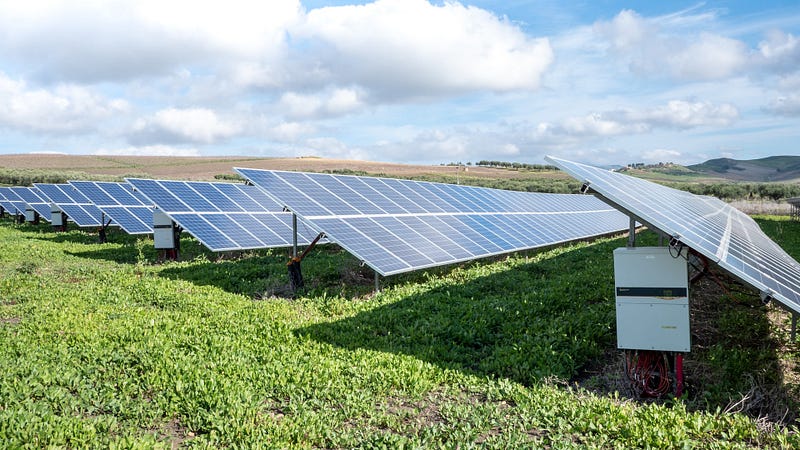
Iraq to set up 525 MW of solar energy at the cost of $0.5 billion

Solar power is cheaper, cleaner, and reliable. For this reason, it is always exciting to see another country sign contracts for solar development. Iraq is the latest country to commit to a solar project that will generate 525 MW of electricity!

The project is also a unification of some sort as it will be handled by a consortium made up of Norwegian Scatec, Egyptian Orascom Construction, and local firm Bilal. It will work under a build, own, and operate model by an entity specially set up (SPV).

The provinces of Babel and Karbala will host the project in southern Iraq, and the total value is about half a billion dollars.

The consortium won the contract for 522 MW out of the 755 MW available on tender under an independent power producer (IPP) scheme.

Under the agreement, the electricity ministry will connect the installation to the grid under a transmission connection contract (TCC) and lease the land for the solar farms under a land-lease contract (LCC). This makes the ministry customer to the SPV.

The solar farms are scattered over seven locations. The Karbala produces the most electricity at 300 MW, and Sawa 1 in Muthana province generates the least at 30 MW.

Iraq is negotiating other contracts for more renewable energy that will bring more international firms into the country. These include Masdar, an Abu Dhabi sovereign wealth company that will develop capacity for 1 GW solar energy production in five locations in the country.

Similarly, French TotalEnergies will develop another 1 GW of solar production. Also, Chinese Power China will generate 2 GW of solar energy in phases.

Iraq is working towards 10 GW of solar energy by 2030 to meet high energy demands in the country. It currently has 216 MW of renewable energy capacity.

Got any tip for me? Don’t hesitate to reach me at davidsanmi@outlook.com

Orsted makes progress on its Skipjack Wind offshore wind farm in Maryland

Courtesy of Orsted

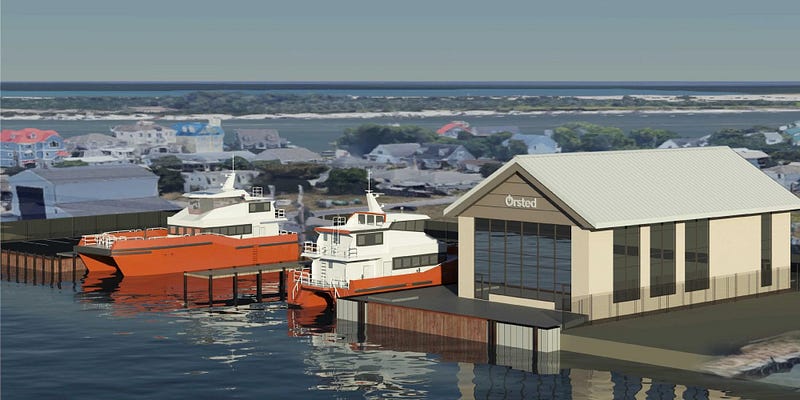
Wind turbines are environmentally friendly methods of generating energy, and it is great that they are catching on. The state of Maryland in the US is getting in on wind turbines as Orsted is setting up Skipjack Wind 1 offshore farm that will produce 120 MW and power 40,000 homes.

Apart from being a sustainable energy source, the project that will generate about 1400 jobs is worth $225 million in investments. Attached is another $20 million facilities for maintenance of the Skipjack Wind 1 installation.

Orsted will locate the farm 19 miles from the shores of the Delmarva Peninsula. It will come online in 2026.

The project will use GE’s Haliade-X 12 MW wind turbines.

The maintenance facility, which will be emission-free, is situated in Ocean City. It will create about 110 jobs and make Ocean City a hub for offshore wind jobs and other economic activities.

From the facility, Crew Transfer Vehicles will take off to service the wind farm. It will include a warehouse and office space for Orsted’s operation in the region. Some staff will live on the premises permanently, including maintenance technicians, operations staff, and engineers. There is no timeline yet, but it is safe to assume it will be completed before the farm itself.

Since all its operation is zero-emission, the CTVs are emission-free and will dock at the facility.

There has been opposition to the project, as some residents including the mayor of Ocean City, complain the presence of the turbines will ruin their view of the horizon.

”As the global leader in offshore wind energy, Ørsted firmly believes that the Ocean City community deserves full access to the incredible promise of this new American industry,” said David Hardy, CEO of Ørsted Offshore North America.

”We are excited to fulfill another commitment made to the State of Maryland and look forward to working with Ocean City residents, including its local fishing community, to make this a project that benefits all.”

Former Hummer production factory now to make electric vans

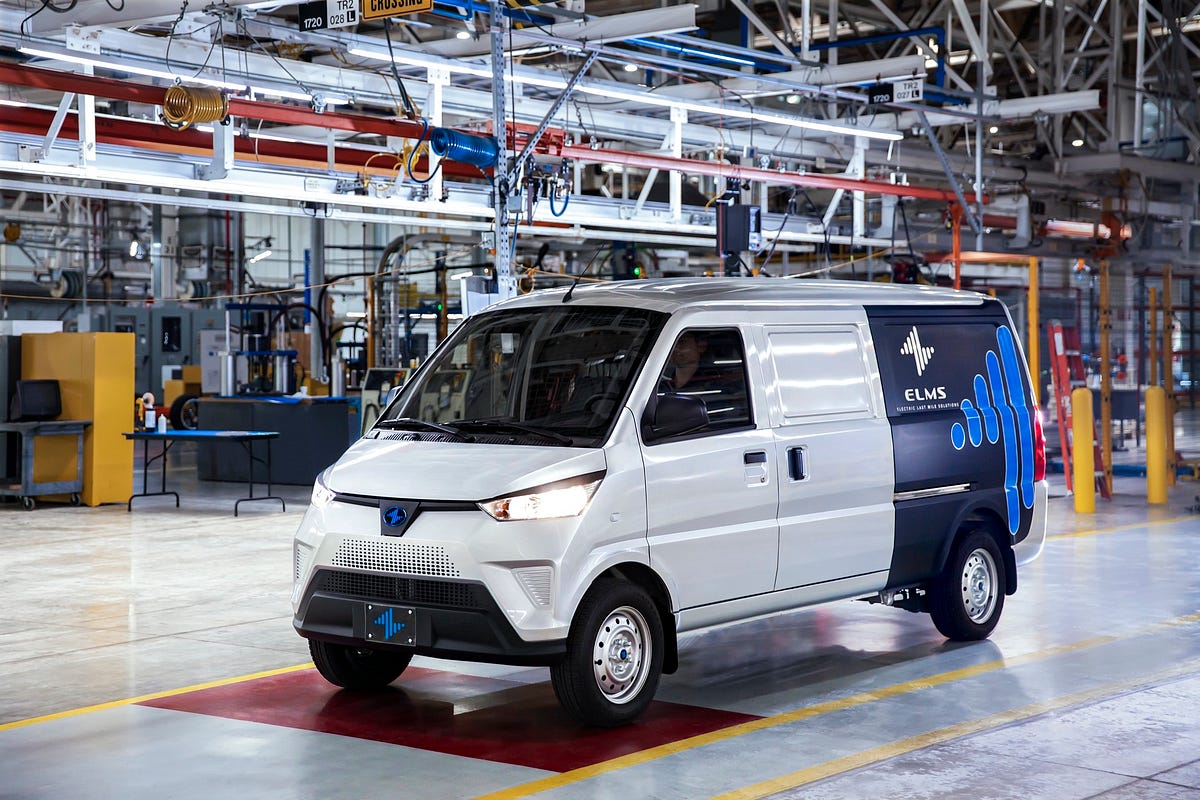
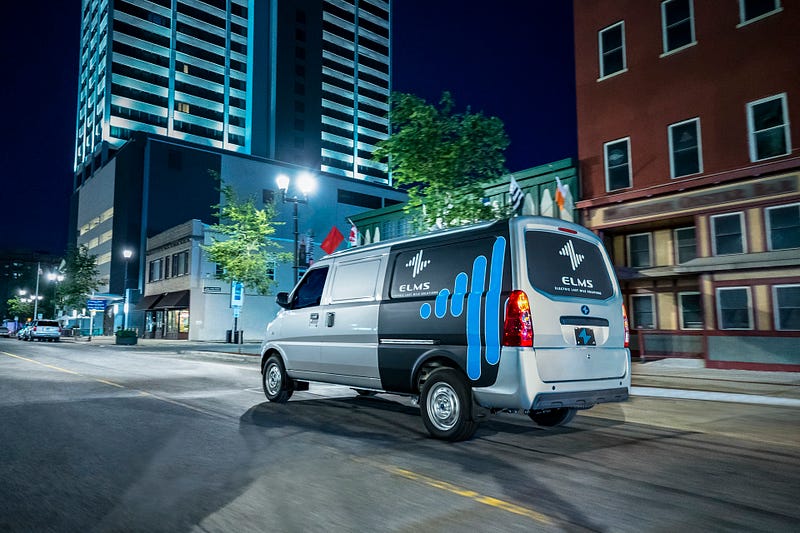
ELMS electric van

In what is billed as the triumph of battery-powered locomotion over internal combustion engines, a plant that produced the culturally iconic, fuel-guzzling Hummer is now making electric vans!

If you were around at the time and were interested, you would probably remember the hulking Hummer SUVs from rap music videos. Those vehicles consumed tons of fuel and produced lots of carbon emissions. They also jostled other cars out of the way due to their hulking nature.

Environment conservation, however, is having the last laugh as the plant that made the Hummer will make pollution-free electric vans. The factory, located in Mishawaka, Indiana, has been taken over by Electric Last Mile Solutions (ELMS), who announced the delivery of its first batch of Urban Delivery EV electric vans to customers.

According to ELMS, these Class 1 electric vans are the first of their kind in the US, and the initial batch will go to Randy Marion Automotive Group. This dealership placed an order for 1,000 units.

ELMS started in August 2020, with CEO Jim Taylor leading the effort to buy the production facility. The company uses a model where part of the manufacturing is done in China, but the vans are finished in the former Hummer-producing factory.

The light-duty Urban Delivery EV van is 177 inches long, 64 inches wide, and 75 inches tall. It has a 2,100-pound payload capacity, 171 cubic feet of cargo space, and covers 125 miles on a single charge.

Following the Urban Delivery van is Urban Utility, a Class 3 van that will enter production in 2022.

Other companies are making electric vans, like Rivian who has a 100,000 unit order from Amazon, Canoo who has a model that will sell from $33,000, and Arrival in the UK. However, none has a production facility with a legacy as fascinating as ELMS’.

$400 billion dollars for clean and renewable energy promised by government and business leaders

Clean and renewable energy sources

The push for clean and renewable energy just got a massive boost, with $400 billion promised by a group of governments and private sector players. This pledge came during a high-level summit that called for action on climate change during the UN General Assembly in New York, US.

As part of the agreement, hundreds of millions of people will access renewable energy, especially in developing countries. Energy efficiency will also see improvement.

About 35 countries took part in the new renewable energy pact. Global companies including TotalEnergies, Schneider Electric, and Google also committed.

Germany pledged to raise the share of its total electricity consumption to 65 percent by 2030. The European nation also committed to supporting partner countries to develop technologies like green hydrogen. A €7 billion fund will support it.

During the summit, UN Secretary-General Antonio Guterres tasked world leaders to cut the number of people with no access to electricity by half by 2025, from a total of 760 million. He mentioned four methods to achieve a sustainable energy future; reduce the number of people without access to electricity by half by 2025, accelerate the shift to clean energy sources, make energy accessible to all by 2030, and carry everybody along in the effort to reduce carbon dioxide.

Separately, China and the US made their environmental pledges. The Asian economic powerhouse promised to end financing coal power plants in overseas countries. At the same time, the US committed to doubling its climate assistance to developing countries.

Siemens achieve recyclable wind turbine blades

An offshore wind farm

Wind turbines are environmentally friendly in power production. They do not produce any harmful emissions, but have you ever wondered what happens to the enormous blades when decommissioned?

Siemens Gamesa Renewable Energy (SGRE) has been working to make the blades recyclable.

Because of their sizes and unique requirements, the blades are difficult to repurpose, recycle, or dispose of when they reach end-of-life.

The blades made of fibreglass are an anomaly in wind power generation because about 85 percent of an installation’s parts are recyclable, including copper wires, electronics, and steel.

Siemens has now achieved a breakthrough with their 81 m long turbine blades that will easily break into the component materials. The components used as binders resin that dissolves in a mild acid solution. This material choice dramatically simplifies and reduces the time taken for the recycling process.

The common practice in wind turbine production is to join the turbine materials in a method challenging to reverse. Profitability has been due to the low cost of materials, but with these new materials, the manufacturing costs should even be lower.

Apart from Siemens, companies that recycle turbine blades include Veolia North America, which signed an agreement with GE Renewable Energy to shred old blades in Missouri. The resulting product will be used to replace coal, sand, and clay in cement production.

Orsted, Banish wind farm developer, has also committed to reusing, recycling, and recovering all their blades when decommissioned. If it can’t find a good recycling solution, Orsted promised to store the blades.

It is encouraging to see companies engaged in renewable energy production going the extra mile by making provisions for safely handling their equipment post decommissioning.

Barcelona places order for additional 24 electric buses

Courtesy of Solaris

Public buses are known to be a more efficient form of public transport. They also help reduce carbon emission because they take lots of privately owned cars off the road. However, when the public buses are electric, they further reduce the negative impact of transportation on the environment.

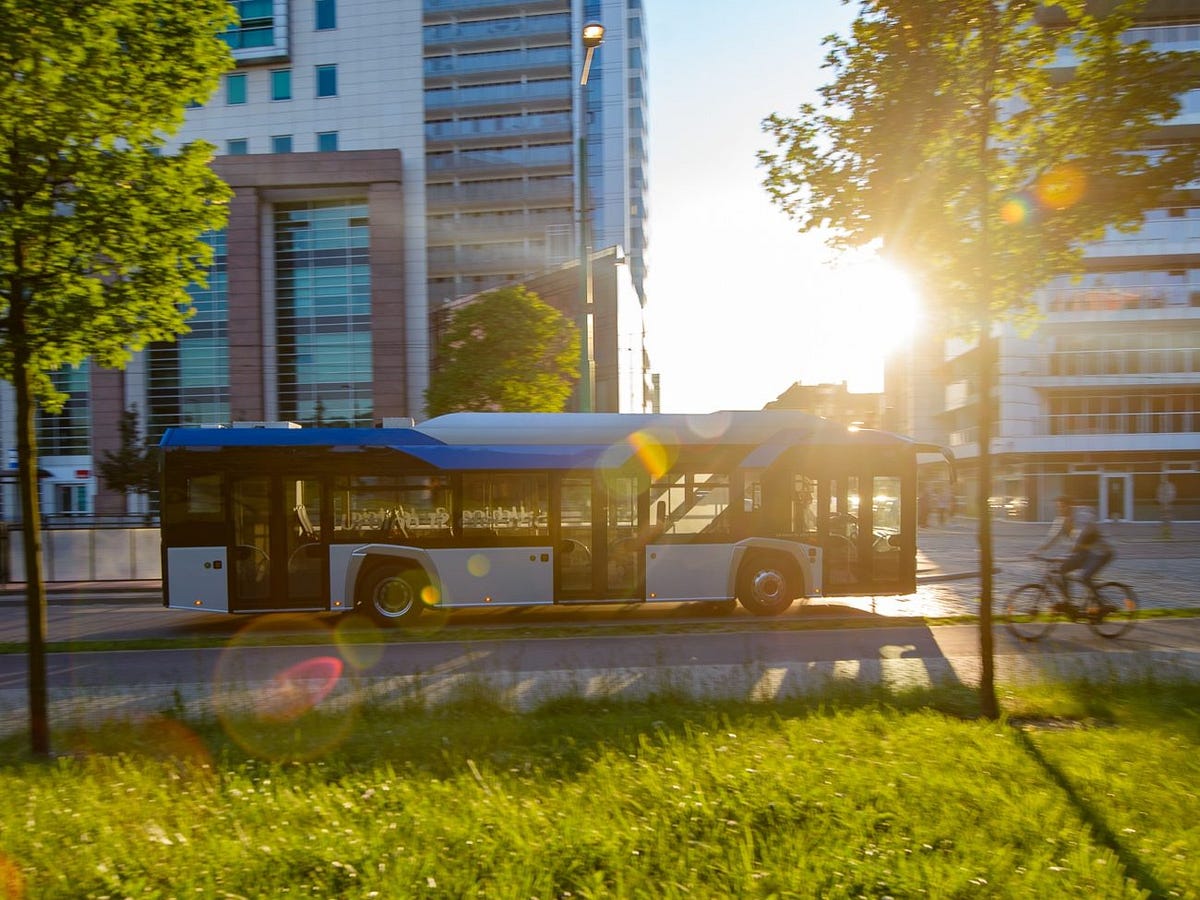
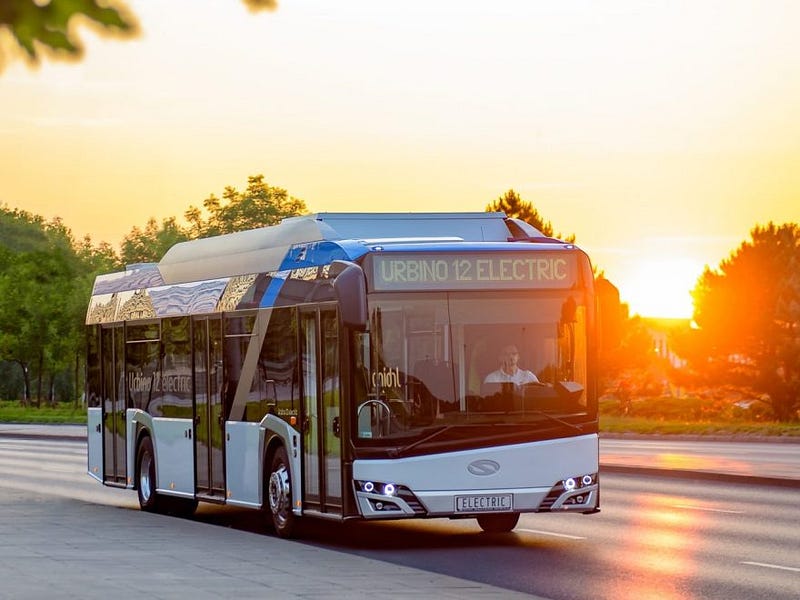
It is therefore exciting when a city opts for electric buses, just Barcelona has done. The Spanish city, home to one of the most famous soccer clubs, has ordered 24 electric Solaris-made buses. The Urbino 12 buses will land in the capital city in 2022, at the cost of €12m.

The Urbino 12 buses are quiet, emission-free, and attract low maintenance costs, as electric buses go. They are also able to operate for 24 hours a day with the proper battery configuration.

Electric buses are not new in Barcelona as the city authority had earlier deployed 19 articulated Urbino 18 electric buses. The first set of battery-powered public buses arrived in Barcelona in 2015.

Courtesy of Solaris

The Urbino 12 buses are powered by Solaris High Energy batteries with 400 kWh capacity and will charge with pantograph and plug-in tech. A single centrally placed electric motor provides the automotive force.

While the buses will work noiselessly, they are also safe to drive. They include driver-assist techs like MMobileeye Shield+ for reducing blind spot risks and MirrorEye systems that replace the side-view mirrors with a system of cameras. Without the side mirrors, the Urbino buses can navigate narrower and crowded streets.

Courtesy of Solaris

Other features of these zero-emission buses include a passenger counter for tracking the flow of passengers.

Solaris is a top player in Europe when it comes to the production and sales of low- and zero-emission buses. The company has deployed about 3000 zero-emission Solaris vehicles, including over 1000 electric buses, in many European cities.

Norway fuel station now installing EV charging stations

Courtesy of Kempower

What happens to all the fuel stations around as electric vehicles become more integrated into our lifestyle? While it is an interesting question, the answer is already playing out in Norway, where the share of BEVs in the sales of new cars has reached 70 percent.

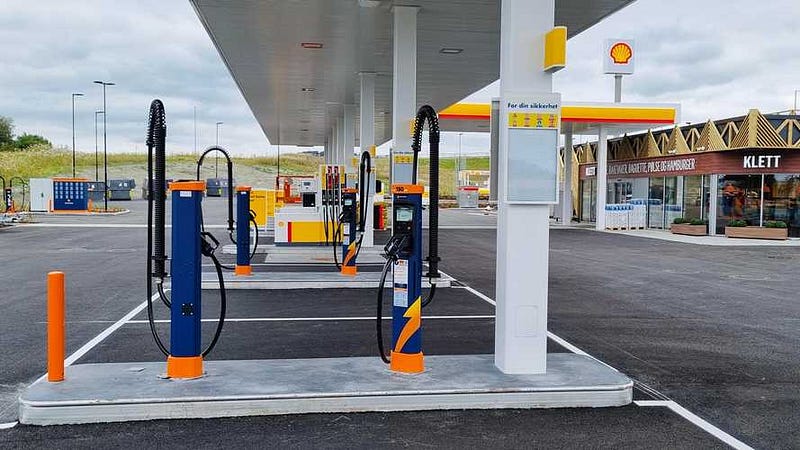
As reported by Bjorn Nyland, the Shell Nebbenes Vest fuel station is gradually shedding its hydrocarbon image. Previously known for dispensing fuel, Shell has been transforming the station progressively to electric.
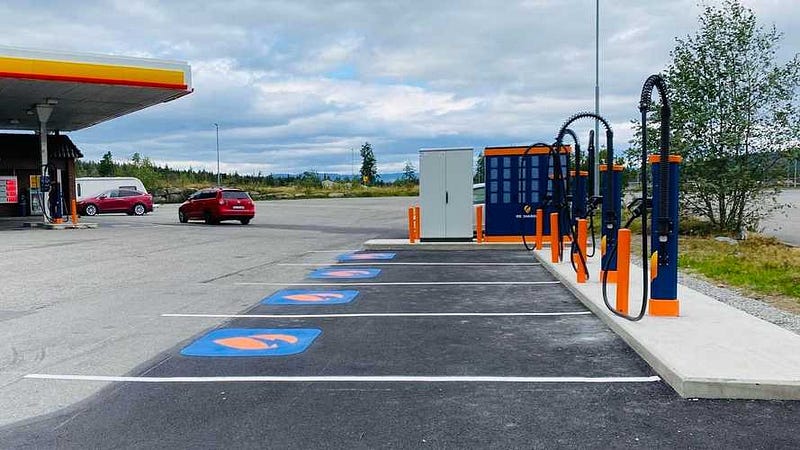
 The Dutch energy giant has been installing Kempower S-Series fast chargers in the station, with the Recharge charging network contracted to manage them.

Courtesy of Kempower

Some fuel pumps have given way to the chargers right under the roof, something that would have been unthinkable. However, it demonstrates how seriously Shell is taking the electric vehicle revolution. The company also added multiple charging stalls on the side of the station.

The state-of-the-art charging stalls have a 7-inch touchscreen that displays statistics like the state of charge and power output. It also shows a QR code that you scan to download all the charging information onto a smartphone, including a chart of the charging session. The Kempower chargers also have long cables, making them easier to handle by customers.

With the transformation at the Shell Nebbenes Vest fuel station, it is clear that infrastructure meant for refueling ICE vehicles does not need to die off but can adapt to servicing electric vehicles.