Czech city to purchase hydrogen buses from Solano

Public buses are a more environmentally friendly way of transportation because they take many cars, potential sources of pollution, off the road. However, when the buses are not powered by fossil fuels, they are even better, because they do not produce carbon emissions.

The city of Usti in the Czech Republic has made the right environmental move by entering into an agreement with Solaris Bus & Coach for the supply of Urbino 12 buses. The public buses run on hydrogen and do not produce greenhouse gases.

The contract covers eight years and could be extended to 20 mass transit buses. The first buses will be delivered within 420 days of signing the agreement.

Usti is the first city in the Czech Republic to sign a contract for hydrogen-powered buses, even though Solaris has worked with the city before.

Each of the Urbino 12 buses has a double-electric motor system with a total capacity of 250 kW. They can store 1560 liters of hydrogen fuel in five tanks.

With all tanks filled, the Urbino 12 bus can travel 217 miles. The bus also comes with a battery that augments the fuel cell during increased demand.

Other features of the Urbino 12 bus include a passenger counting system, assistance for visually impaired passengers, USB ports for each seat row, etc. A CO2-powered heat pump will provide air conditioning.

Globally, Solano has delivered about 100 Urbino 12 hydrogen-powered trucks to its client in countries like France, Netherlands, Poland, Germany, Italy, etc.
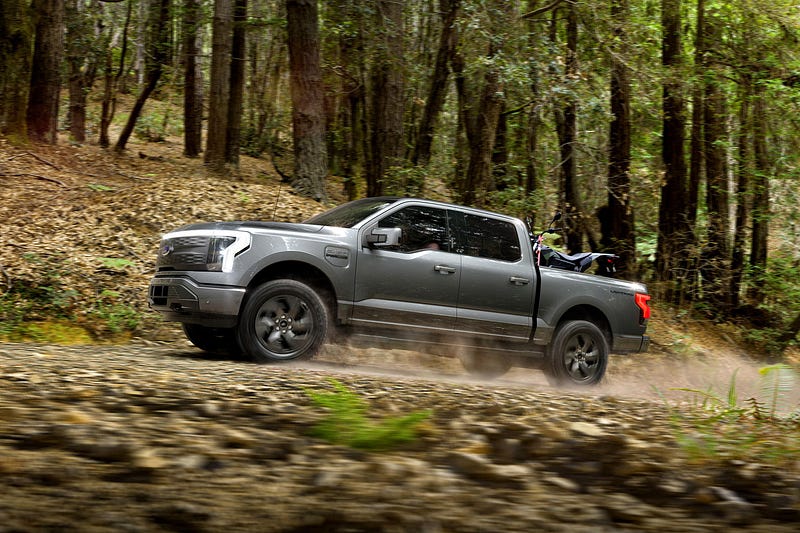
Ford closes booking for the F-150 Lightning after 200,000 reservations

Ford F-150 Lightning: courtesy of Ford

Ford has a problem that most manufacturers hope to have. It has so many reservations for its upcoming F-150 Lightning electric pickup truck that it is forced to stop others from placing orders.

The battery-powered truck has accumulated about 200,000 reservations, and Ford thinks it has to actually start producing the vehicle.

The news of the close of reservation came after the CEO updated the number of buyers waiting to buy the F-150 Lightning.

Production is scheduled to start in 2022, but it appears some people that booked for a unit will wait a couple of years before taking delivery of their vehicle. Ford said it plans to ramp up manufacturing to 80,000 units per year in 2024. If the company does not increase its investment in workforce and production capacity, it might take up till 2024 or even beyond to fulfill all the orders.

The pickup truck is a popular vehicle segment in the US, and the first set of electric pickups will definitely do well in sales as there has been a pent-up demand for the vehicles.

The Lightning is the electrified version of Ford’s best-selling F-150 ICE truck. Ford will sell the Lightning to both consumers and fleet operators.

Ford has been beaten to the market by Rivian, who began delivering its R1T to customers a few months ago. Ford will also compete with models like the Cybertruck from Tesla and Silverado EV from Chevy.

The GMC Hummer EV is also a truck, but the high price means it is not competing with Ford’s offering.

Arrival to set up battery plant in North Carolina with 350,000 module per year output

With demand for electric vehicles expected to increase in the coming years, batteries might soon take center stage in the EV revolution as automakers scramble to secure battery supplies for themselves. British company, Arrival is addressing the looming battery crunch by building a High Voltage Battery Module (HVBM) plant in Charlotte, North Carolina. The facility will cost $11.5 million and will be used for assembly.

Yearly output from the factory will reach 350,000 with 150 direct jobs created.

Arrival produces battery-powered buses and vans and is expanding production into the US after setting up a North American headquarters in Charlotte. It already has a microfactory in the same city to make vans.

The company’s microfactory is a deviation from the norm in automobile manufacturing, but Arrival claims it is a better approach. Arrival designs its own hardware and software in-house to increase production efficiency.

The new Charlotte plant will also produce electric vans, making it the second site in the US where Arrival makes vehicles. The company has a deep relationship with the city, as it is involved in Charlotte’s attempt to power its fleets and facilities 100 percent with zero-carbon emissions by 2030.

CEO of Arrival Automotive, Mike Ableson, commented, “By bringing the assembly of our proprietary High Voltage Battery Modules in house, we’re striving to be as vertically integrated as possible. This will enable us to have even greater control over the functionality and cost of our products and pass those cost savings on to the customer while also working toward our goal of zero waste production. We’re excited to add another facility in Charlotte, as we prepare to open our new North American headquarters building just down the road and continue to work in tandem with the city to develop solutions for their electrification and sustainability goals. This is a big milestone for Arrival as we ramp up operations in the region in advance of production starting in Rock Hill in Q2 next year.”

Arrival had previously announced a partnership with Li-Cycle to set up a battery supply chain that incorporates the recycling of battery materials.

Toyota is joining Arrival in opening a battery plant in the US, and the chosen site is just 100 miles away from Arrival’s location in North Carolina.

Renewables accounted for 20.45% of U.S. electricity production in the first three quarter of 2021

Renewables are gaining ground in the US, according to reports by the US Energy Information Administration (EIA). The agency stated that electricity generated from renewable sources accounted for 20.45 percent of the country’s total output in the first three quarters of 2021.

Breaking the figures down, electricity from solar panels increased by 24.61 percent, while wind-generated electricity increased by almost 11 percent from January to September 2021. The two sources gained 15 percent combined and represented 12.59 percent of total electricity production.

Solar and wind now account for 61.55 percent of renewable electricity, with biomass, geothermal, and hydropower sources making up the rest.

Geothermal production increased too, although at a much lower 2.75 percent, while biomass managed only 1.71 percent.

Hydropower stands out as it actually experienced a reduction in production, at 12.7 percent, which is most likely due to worsening drought conditions. This loss in hydropower was not enough to stall the growth of renewable electricity as a whole, as the category recorded an increase of 3.26 percent, from 20.30 percent last year.

Renewable sources continue to lead nuclear electricity, which was at 18.47 percent. Natural gas was still in the first position but suffered a loss, coming down from 40.75 percent last to 37.57 percent. Coal sadly had a resurgence, bouncing back to second place with 22.60 percent.

However, trends from the last five years project increasing growth for renewable electricity and will gradually displace coal and nuclear stations.

Commenting on the figures, SUN DAY Campaign’s executive director, Ken Bossong, whose organization analyzed the data released by the EIA, said, “Inasmuch as they have maintained an overall faster rate of growth than any other energy sources over the past half-decade and longer, it seems safe to say that solar and wind will eventually become the nation’s primary electrical producers. They now have a growing lead over nuclear power; surpassed coal in 2020 and will likely do so again next year; and are rapidly cutting into natural gas’s current dominance.”

Enel brings its 353 MW onshore wind farm online in Brazil

Courtesy of Luciana Serra

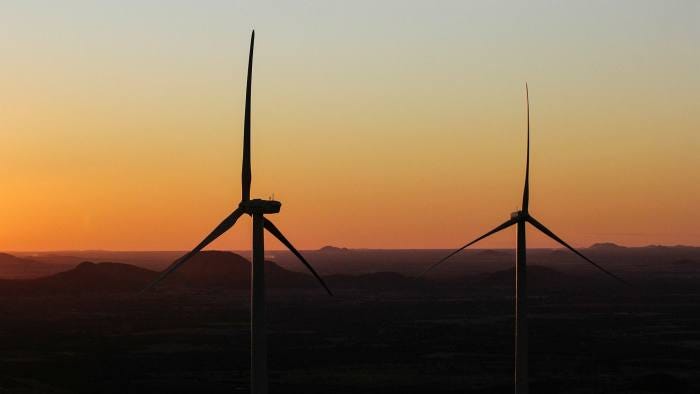
Brazil has notched another win in the renewable energy space as Enel Green Power begins operating its Morro do Chapeu Sul 2 wind farm. The 353 MW capacity onshore farm has started producing energy.

The farm consists of 84 turbines, and about half of them are already supplying power to the National Interconnected System. By January, the remaining turbines will come online too. The farm alone is expected to help Brazil avoid almost one million tons of CO2 emissions annually.

Enel spent more than $300 million on the farm. The energy produced will be sold directly to commercial customers.

The new farm joins an earlier installation in the same region that began operation in 2018 and produces 172 MW.

Enel is involved in three other renewable energy projects in the country; two wind farms and a solar plant.

Speaking on the Morro do Chapeu Sul 2 farm, head of Enel in Brazil, Roberta Bonomi, said, “The start of operations in Morro do Chapéu Sul II reaffirms our commitment to contribute to the diversification of renewable sources in the country, making available to the electricity system a substantial volume of new installed capacity capable of helping the country in view of the current water shortage.

“This is Enel’s fourth renewable project to come into operation in the country in 2021.

“Between 2020 and early 2022 alone, we will have put into operation around 2.6 GW of new wind and solar capacity, contributing to our sustainable growth in the region.”

Mitsubishi unveils the Airtrek SUV with 520 km range

Courtesy of Mitsubishi

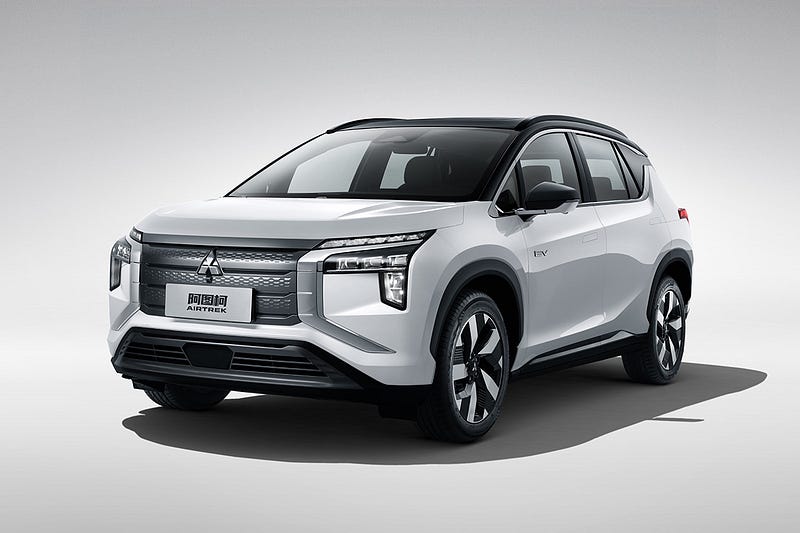
The EV options available to buyers keeps expanding, with Mitsubishi Motors Corporation unveiling the all-new Airtrek electric SUV at the Auto Guangzhou.

Mitsubishi built the new SUV on the concept of e-cruising, with the ‘e’ having triple meanings of electric, expanding, and expressive. They mean the car is battery-powered, can help the owner to expand their life, and the Airtrek symbolizes Mitsubishi’s uniqueness.

Inside the Airtrek SUV, the cabin is spacious. It offers an instrument panel that provides a broad field of vision. The finishing is classy and deliberately designed to be comfortable for the whole family as it can seat five. There is a center touch screen that you will use to access the controls.

The Airtrek SUV comes with a 70 kWh battery that delivers about 520 km according to CLTC’s standards. EPA estimates, which are more stringent, will likely be lower.

Mitsubishi boasts the Airtrek has a low center of gravity thanks to the placement of the battery at the center of the floor, leading to excellent front-rear weight distribution.

Courtesy of Mitsubishi

The electric motor, inverter, and reduction drive are made into a single lightweight unit that is still powerful enough to produce high horsepower and torque.

Drivers of the Airtrek will enjoy the nimble handling and smooth ride.

President and CEO of Mitsubishi Motors Corporation, Takao Kato, commented on the Airtrek, “We named the new electric SUV Airtrek so that many customers can enjoy adventurous, active driving with this pure EV, which achieves a maximum driving range of approximately 520 km while emitting zero CO2 in motion. We hope the all-new Airtrek will help expand the horizons of customers in China, where environmental initiatives are accelerating with new energy vehicles, especially EVs.”

Pricing, availability, and more details on the Airtrek will come in the future.

California to make charging electric trucks and buses cheaper with new electricity rate

The state of California in the US is one of the leading figures in zero-emission mobility. However, the state regulators are still making moves to make electric trucks and buses more attractive for fleet operators and persuade them to switch from ICE vehicles. One of such moves is a new charging rate to reduce the cost of refueling.

The new rate is dynamic as it changes by the hour, based on demand. This will allow fleet operators to target periods when electricity is cheaper to charge their vehicles. This could be off-peak times or when the electricity supply is surplus.

Pacific Gas & Electric Company has been approved to offer the new rate, which will enable more cost savings for truck and bus companies, which will result in less total cost of ownership.

All PG&E customers can now request the new rate as long as they are within the utility company’s service territory, which covers northern and central California. The plan is that fleet operators will work out that charging electric vehicles at this new rate is cheaper than running on fossil fuel and will be more motivated to make the switch.

The government has identified key sectors and areas where PG&E is to prioritize with this new charging rate. This includes disadvantaged and vulnerable communities within the state. PG&E is expected to focus its marketing and education effort on these sectors.

California is going as far as mandating PG&E to offer a lower rate when there is excess renewable energy in the system, thereby incentivizing the fleet operators to consume clean energy.

Other methods the state is using to push for clean mobility include new regulations like the Advanced Clean Truck rule and executive orders by the governor, like the one that mandates all new vehicles to be zero-emission in the next 15 years.

Got any tip for me? Kindly contact me through davidsanmi@outlook.com

Merchants Fleet reserves 5,400 BrightDrop electric vans

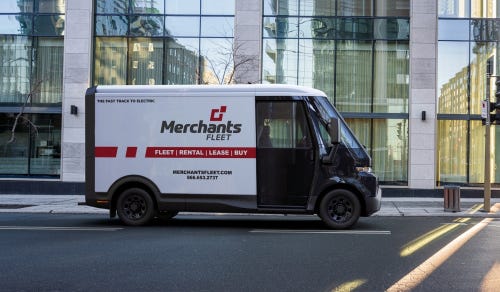
In another win for the environment, another fleet management company in the US has taken bold steps to embrace zero-emission mobility. Merchant Fleet has placed an order for 5,400 BrightDrop EV410 electric vans.

BrightDrop is an offshoot of General Motors that is focused on helping commercial delivery and logistics companies switch their fleets to electric. Its EV410 can cover 250 miles on a single charge and has a gross vehicle weight rating of 10,000 pounds. BrightDrop has a larger model named the EV410.

Due to its weight limit, the EV420 is suitable for moving smaller payloads in last-mile delivery. But it has the advantage of excellent curb management and maneuverability.

Merchants Fleet has been working towards this shift as it had started offering a guide to businesses on how to electrify their fleet through its AdoptEV program. The guide covers every step, including vehicle purchase and EV charging infrastructure. One of Merchants Fleet’s clients is Staples which has about 1,500 vehicles and has begun integrating EVs into its operations.

BrightDrop has found its first and biggest client yet in Merchant Fleet, which is the fastest-growing fleet management company in the US.

The EV410 was designed with the comfort and convenience of drivers in mind, with hundreds of hours of field tests to identify the features most important for an efficient operation. It has a low step height, front sliding pocket doors, and wide cabin walkways. There is a security system that detects motion around the van.

The Yara Birken electric ship finally sets sail

Courtesy of VARD

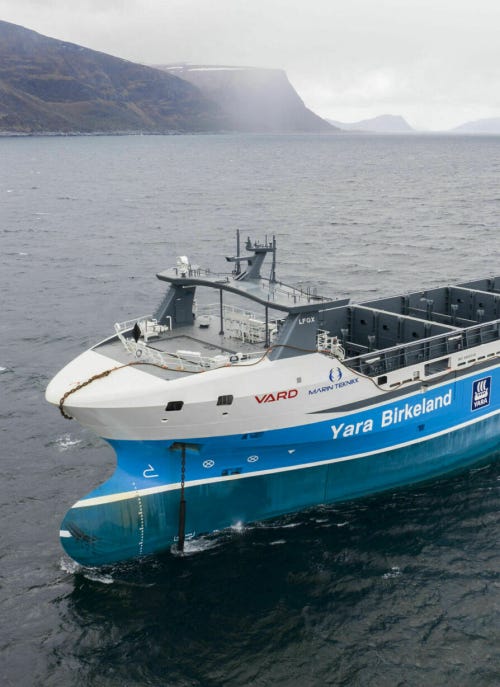
Remember the electric ship I reported on earlier called Yara? The battery-powered ship has departed on its maiden journey.

The Yara Birkeland can operate autonomously and will complete its first rip in the Oslo Fjord. It is equipped with technologies supplied by Kongsberg, including sensors that enable both autonomous and remote operations. It also worked on the battery, propulsion system, and electric drive.

Due to its nature as an electric ship, the Yara does not have a ballast tank, as the battery pack acts as permanent ballast. The ship will also load and discharge automatically. However, other actions that are automatic include the mooring system.

The electric ship has a 7 MWh battery, with two 900 kW Azipull pods and two 700 kW tunnel thrusters, to power the vessel to a top speed of 13 knots. Total cargo capacity is 120 Twenty-foot Equivalent Units (TEU) or 60 40-foot shipping containers.

Using a battery on the Yara Birken will impact the environment positively as it will eliminate pollution that is the equivalent of 40,000 truck trips per year.

The Yara has only started a two-year test run before it is certified as an autonomous, battery-powered ship. It will be supported by three centers that will take over emergency and exception handling, operational monitoring, decision support, etc.

VARD built the Yara with funds from Enova. It will be controlled at Massterlys’ facility in Horten. Massterly is jointly owned by Kongsberg and Wilhelmsen.

Enova, a government-owned entity promoting renewable energy, has set aside about $15 million to build a battery-powered autonomous ship.

Yara is also researching how to use green ammonia in the shipping industry to achieve emission-free operation.

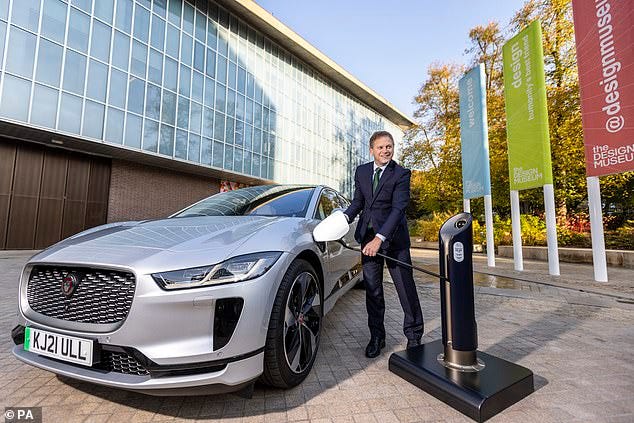
Britain reveals a new public charger that could become as iconic as the red phone box

Everybody knows the iconic red telephone boxes in the UK, which were introduced in the ’20s and became the background scenery in many locations. Now, the government hopes to recreate that with public electric chargers as it pursues a future free from carbon emissions.

The public chargers are meant as incentives to encourage people to switch to electric cars. According to Transport Secretary Grant Shapps, the chargers have been designed to be easily recognizable and a joy to use. The designers paid attention to inclusivity and got input from consumers, local governments, accessibility, and the industry.

The government couldn’t have chosen a more appropriate time to launch the chargers, as it came during the COP26 climate summit day dedicated to transport.

To make the chargers more familiar and less intrusive, they have circular handles with LED lights that change color based on the status. When available, the charger remains white but turns green when removed from the holster. When plugged in, the LED lights go blue.

The design came from a joint effort that included PA Consulting and The Royal College of Art. They got a £200,000 grant from the Department for Transport’s Office for Zero-Emission Vehicles. The task was to come up with a piece of iconic equipment that would fit in on any roadside all over the country and that people would spot easily and come to love.

Britain has announced a ban on the sale of new ICE cars from 2030, with hybrid models to follow five years after. Installing these chargers is the government’s way of preparing for a smooth transition from an ICE-focused transport system to a battery-based. With time, the government hopes the chargers would be as common as the phone box, London bus, or black cab.

The Minister, who owns a Tesla Model 3, explains that electric vehicles are already cheaper to run in the UK than petrol or diesel cars and will become more affordable to buy in the nearest future.

Shapps said concerning the chargers, “To support the transition to EVs, it’s integral that we have the infrastructure to support it.

‘My vision is for the UK to have one of the best EV infrastructure networks in the world, with excellent British design at its heart.”