Major renewable energy news last week

Header image courtesy of Lloyd Thornton – Shutterstock

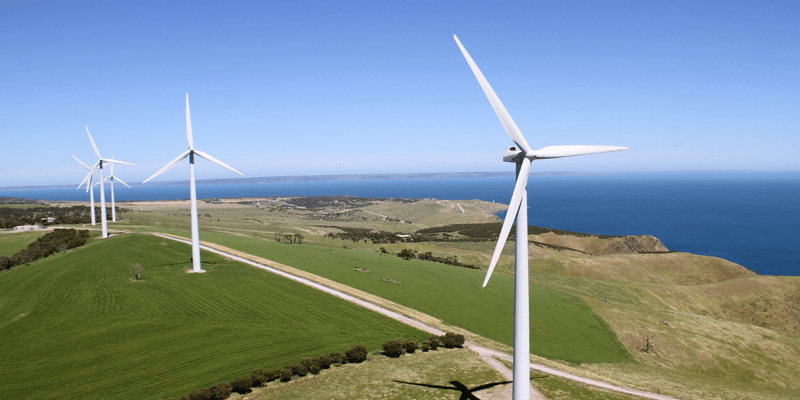
Europe added 2.1 GW of offshore wind energy in H1 2023

Europe built new 2.1 GW of offshore wind capacity in the first six months of 2023. This brought installed capacity to 32 GW, with more than half concentrated in the Netherlands and the rest distributed across the UK, Germany, and Norway.

Read more…

Mainstream and Ocean Winds expand floating wind JV in Scotland

Mainstream Renewable Power and Ocean Winds (the JV between EDPR and ENGIE) will collaborate again to build a floating 500 MW wind farm in Shetland, Scotland. This will bring the total capacity of the Arven offshore wind farm to 2.3 GW. The JV is also developing a 1.2 GW floating offshore wind farm in South Korea and contending in Norway’s upcoming floating offshore wind tender.

Read more…

Germany auctions off 1.67 GW solar energy amid unprecedented interest

Germany’s latest round of solar auctions received unprecedented interest. The bids were worth 1.67 GW, representing a third of the volume the European county plans to auction in 2023. Germany added 3.3 GW of solar capacity in Q2 2023.

Read more…

Siemens opening 800 MW/year solar inverter factory in the US

Siemens has announced plans to increase its manufacturing footprint in the US with an 800 MW per year solar inverter factory. Production is expected to start in 2024. The US is attracting more clean energy manufacturing thanks to tax credits and demand-side incentives.

Read more…

Greece’s renewables crossed 11 GW in June

Greece’s installed renewable energy capacity topped 11 GW in H1 2023. Solar energy contributed over half of the capacity, with 5.79 GW installed capacity. Wind accounted for 4.83 GW, with 281 MW of hydro.
Read more…

EV maker Rivian and partners converting Kentucky coal mine into $1 billion, 800 MW solar farm

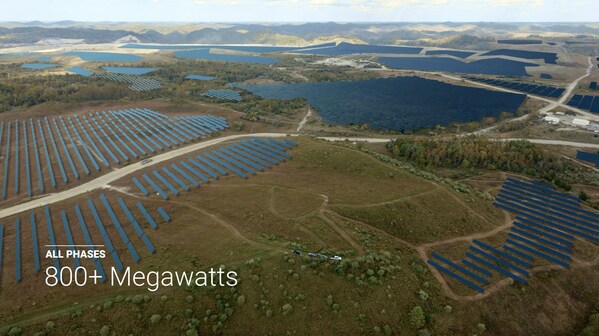
Header image: Starfire Solar Farm courtesy of BrightNight

Electric vehicle manufacturer Rivian has struck a partnership with BrightNight and The Nature Conservancy to convert one of the biggest coal mines in the US into the largest solar plant in Kentucky, as reported by Electrek.

The mine, known as Starfire Mine, will now host “a clean energy project that would accelerate an equitable, science-based clean energy transition that maximizes positive impacts on climate, conservation, and communities.” The site, to be renamed BrightNight Starfire Renewable Energy Center, was selected by Rivian and The Nature Conservancy before BrightNight was brought in as the developer.

The $1 billion solar installation will generate 800 MW, enough to power 170,000 homes per year. In addition, the project will construct a 20-mile-long transmission line that will pave the way for an additional 1 GW of renewable energy in the future.

Phase 1 out of the four phases will commence in 2025, with Rivian purchasing 100 MW via a power purchase agreement from BrightNight, the equivalent of 450 million miles of clean energy driving every year.

The Nature Conservancy has also committed to buying 2.5 MW as a supplement to its own onsite solar farm. Rivian’s CEO RJ Scaringe commented on the proposed solar farm, “Shifting our energy system to carbon neutrality goes beyond electrifying the roughly 1.5 billion vehicles in the global fleet. We must also support the decarbonization of our grid and responsible deployment of renewable energy.”

Welcome to Renewable Brief!

Welcome, dear reader, to the inaugural post of Renewable Brief!

I am thrilled to embark on this journey with you as we explore the world of renewable energy. In this blog, I will dive into the latest developments, innovations, and trends in the renewable energy sector, providing concise and insightful briefings to keep you informed and inspired.

Understanding Renewable Energy

Renewable energy has emerged as a game-changer in our quest for a greener and more sustainable planet. Unlike finite fossil fuels, which contribute to environmental degradation, renewable energy sources, such as solar, wind, hydro, geothermal, and biomass, are clean, abundant, and can be harnessed indefinitely. They offer many benefits, including reduced greenhouse gas emissions, improved air quality, energy independence, and job creation.

Exploring Renewable Technologies

I will explore renewable technologies, discussing their working principles, benefits, and potential applications. Each technology has unique advantages and considerations, from photovoltaic solar panels that convert sunlight into electricity to wind turbines harnessing the power of the wind.

Spotlighting Industry Innovations

The renewable energy landscape continuously evolves, driven by ground-breaking innovations and advancements. I will keep you updated with the latest breakthroughs in renewable energy research, development, and implementation.

Exploring Policy and Market Trends

Renewable energy is not just about technology; policies, regulations, and market dynamics also influence it. I will examine the policy frameworks and incentives that shape the renewable energy landscape, from government initiatives and international agreements to local regulations and subsidies. I will also keep a close eye on market trends, investment opportunities, and emerging business models that drive the growth of the renewable energy sector.

Taking Action for a Sustainable Future

Knowledge is the first step towards action. As such, I will also discuss practical steps individuals, communities, and businesses can take to embrace renewable energy solutions and reduce their carbon footprint.

Thank you for joining me on this exciting journey. Renewable Brief aims to be your go-to resource for concise and informative briefings on all things renewable. Stay tuned for regular updates and engaging discussions that will shape the way we think about renewable energy.

The Netherlands confirms new offshore wind zones

License: Creative Commons, Attribution-ShareAlike 2.0 Generic.

New offshore wind farms are coming to the Netherlands, and the Dutch Council of Ministers has approved where the new farms will be built. Bidding for the wind farms will start in 2025.

The Netherlands aims for a 10.7 GW development which would be divided into three new sites; Nederwiek, Lagelander, and Doordewind. Two other areas from the designated list will also get new farms, including the northern part of Ijmuiden Ver and the southern part of Hollandse Kust West.

The whole network of farms will generate nearly 21 GW by 2030. This is almost double the Netherlands target of 11 GW capacity from offshore farms according to the Coalition Agreement and the Climate Agreement of 2019.

TenneT has been tapped to connect the new farms to land, costing €16bn. The company will begin to award the contracts for the individual component even before the final approvals have been granted.

According to the Dutch Minister for Climate and Energy Rob Jetten, “We want to make the North Sea our largest green energy source. That’s a huge job. The construction of a wind farm and the connection to the electricity grid takes several years, during which we constantly pay attention to the ecological impact. In order to achieve our goals for 2030, we are now in a hurry to get the wind farms up and running as quickly as possible.”

Wind generated about 2.5 GW of energy in 2021, according to government records. The country wants to increase it to at least 4.5 GW by 2023 to comply with its Energy Agreement for Sustainable Growth commitment. Offshore wind energy is expected to supply 3.3 percent of the country’s energy needs by that time.

Stellantis and Samsung to build $2.5 billion EV battery factory in Indiana

Courtesy of Jeffrey GRussel and Dodge

Electric vehicles have taken off, and companies are not afraid to make huge investments in them. Stellantis and Samsung have decided to site a factory that will manufacture EV batteries in Indiana at the cost of $2.5 billion.

While many people know the Galaxy series of Android phones, Samsung has a subsidiary that makes batteries for electric vehicles, known as Samsung SDI. The subsidiary has teamed up with Stellantis to set up a plant in Kokomo, Indiana, to make EV batteries. The facility will create jobs for 1,400 people directly.

Stellantis is the parent company for carmakers like Dodge, Jeep, Chrysler, etc.

The two companies will split the development cost and are willing to spend up to $3 billion on the factory.

Stellantis already has a presence in Kokomo, where it makes castings, transmissions, and engines.

Earlier, Stellantis had revealed it would build another plant for making EV batteries with LG Energy Solution in Windsor, Ontario, at the cost of $4.1 billion. Both projects are part of Stellantis’ push into the growing EV market.

Stellantis wants to sell 5 million electric cars by 2030 across its brands. It announced a detailed plan last year for making its line-up electric. The Chrysler brand will sell only electric vehicles by 2028.

The Kokoma plant is expected to come online in 2025 and will start with an annual capacity of 23 GWh and expand to 33 GWh. The Windsor facility will kick off with a 45 GWh capacity.

Other automakers investing in EV battery production include General Motors, which plans a 140 GWh annual capacity, and Ford, which will build three plants with a combined capacity of 129 GWh per year. Volkswagen is even more ambitious, which a plan for 240 GWh per year capacity from six plants in Europe by 2020.

Next-gen C-8 electric flying boat to be revealed by Candela in Venice

Courtesy of Candela

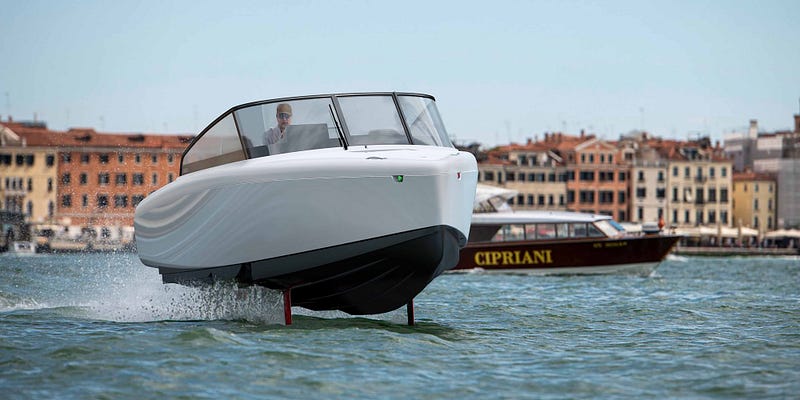
Electric cars are now a norm, and battery-powered planes may soon become commonplace. The next target for electrification, logically, is water, and Swedish boat maker, Candela, will soon launch a new version of its C-series hydrofoil electric speedboat, the C-8.

The C-8 was announced last August, succeeding the C-7, which had become popular in Europe and the US.

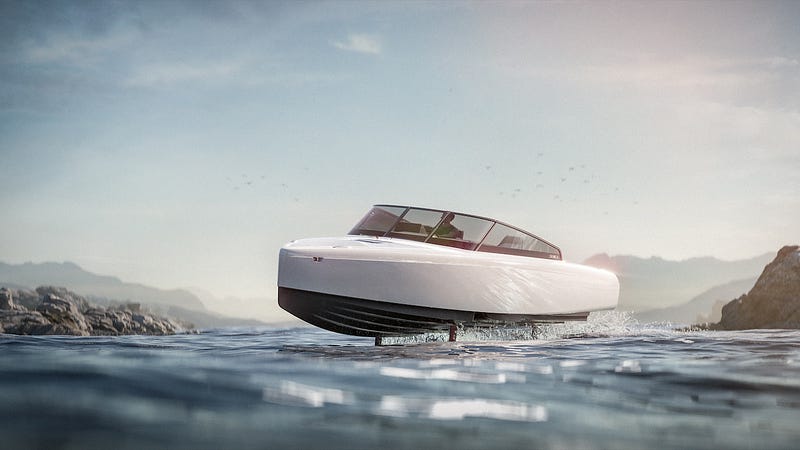
The C-8 is the next-gen and features a groundbreaking design. It uses two computer-controlled hydrofoils that can raise, lower, and make other fine adjustments itself to ensure you and your passengers have the smoothest ride. It can make 100 such adjustments in one second.

This electric speedboat was designed to massively cut down the energy required to glide at high speed and still yield enough riding range. The engineers used an ingenious method to reduce the energy consumption by 75 percent. A typical boat like the C-8, measuring 28 feet, consumes as much energy as 15 family cars. This is why such boats usually have atrocious ranges, and those that offer longer ranges are priced exorbitantly.

Candela made the C-8 fly above the water instead of riding through it. The boat lifts itself automatically after reaching a few knots of speed, which reduces the drag experienced.

Courtesy of Candela

You can cruise at a top speed of 30 knots, but another draw of the C-8 is the operating costs. A 2.5 hours cruise will cost you about €8 of electricity, about 90 percent cheaper than an ICE boat of similar size.

There are other benefits, like a smoother ride and quiet operation. There is also minimal maintenance required, as you can get away with a maintenance interval of once a decade, compared to an inspection every 100 hours for a typical gas-powered boat. The boat also leaves no wake, which threatens the buildings along Venice canals.

According to Candela’s founder and CEO, Gustav Hesselskog, “Flying in absolute silence, without any slamming and basically for free — it’s just an amazing experience. Once you’ve tried Candela C-8, it will be hard to go back to traditional powerboats.”

Candela will reveal the boat at the Salone di Nautico Boat Show in Venice, Italy. The C-8 will compete in the show’s E Regetta for electric boats.

ABB and Eviny collaborate to install world’s fastest EV charger in Norway

Courtesy of ABB

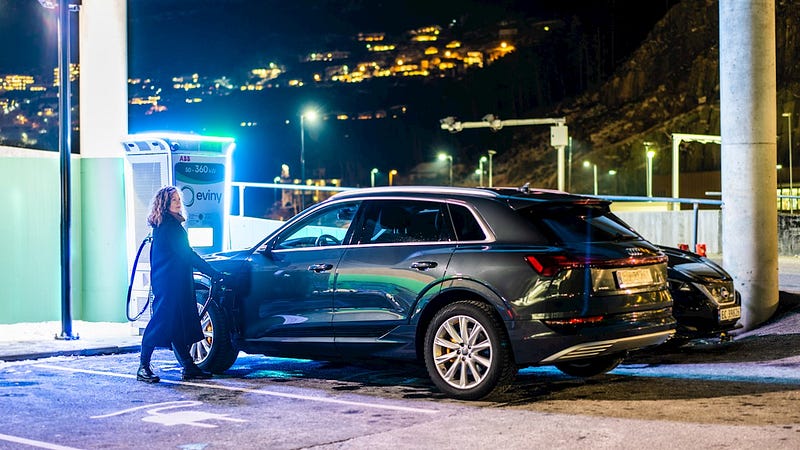
The Norwegian city of Bergen has had the honor of hosting the world’s fastest electric car charger. The charger is ABB’s Terra 360 and can add 100 km in just three minutes. ABB and Eviny also collaborated to install the fast charger at a ski resort named Geilo.

The charger in Bergen is available to EV owners at the Oasen Shopping Center and the ski resort.

After these two pilot installations, the duo will undergo a wider rollout in Norway and Sweden.

The Terra 360 can charge two cars simultaneously using dynamic power distribution. The maximum output is 360 kW, meaning it can charge a typical car to 100 percent in just 15 minutes or even less.

ABB says the Terra 360 charger is fast but convenient to use as it doesn’t work differently from the chargers EV owners are used to. The charger also has a smaller footprint and sophisticated lighting to guide the user when it is dark. The cable is 5 m long but light, and the charger is available for people using wheelchairs.

Frank Muehlon, CEO of ABB E-mobility, explains: “Having recently unveiled the Terra 360 to the world, these are truly landmark launches which we are delighted to partner with Eviny on. Norway is setting the global standard when it comes to the e-mobility transition and we are excited to hear the reaction of EV drivers in one of the most advanced nations for EV adoption.”

According to Eviny’s CEO, Jannicke Hilland, “For several years we have been involved in the Norwegian transition into e-mobility. We know how important a reliable fast charging experience is when choosing an electric car over a fossil-fueled car. The e-mobility transition is happening lightning fast here in Norway, and to continue to lead the change, we need the fastest.”

ABB can’t choose a better place to install its new Terra 360 charger as the country is on track to become the first to stop the sales of petrol and diesel cars in its territory by 2025. The majority of new cars purchased in the country are electric.

Eviny has installed more than 400 chargers across Norway at 150 locations. ABB has sold more than 680,000 EV chargers in more than 85 markets.

Mozambique considering eight groups for Mphanda Nkuwa Hydropower Project

River Zambezi, Zimbabwe

The Ministry of Mineral Resources and Energy, MIREME, of Mozambique, has approved eight groups to participate in the planned Mphanda Nkuwa Hydropower Project tender. The plant will produce 1,500 MW of electricity.

Gabinete de Implentacao do Projecto Hirdoelectrico de Mphanda Nkuwa (GMNK) represents the Ministry for the project. Synergy Consulting supports the client as a transaction advisor, while Worley and Baker Mckenzie act as technical and legal advisors, respectively.

The eight qualifying groups are:

  • ETC Holdings (Mauritius)/ ZESCO (Zimbabwe)
  • Longyuan Power Overseas (China)/ Dadu River Hydropower Development Company & China Energy International Group
  • PowerChina Resources
  • WeBuild Group (Italy)/ ZESA (Zimbabwe)
  • Scatec (Norway)
  • Sumitomo Corporation (Japan)
  • EDF (France)
  • Kansai Electric Power Company (Japan)

The Mphanda Nkuwa hydropower plant will be located on the Zambezi River, about 60 km from the Cahora Bassa Dam.

The strategic partner (listed first where there are two companies in the list above) will be the major shareholder in the plant, with government-owned Electricidade de Mozambique (EDM) and Hidoelectrica de Cahora Bassa (HCB) owning the remaining shares.

Aston Martin joins league of automakers announcing sustainability strategies

Aston Martin headquarters in Gaydon

Aston Martin has used Earth Day to announce its new sustainability strategy tagged Racing.Green. The plan sets the company’s sustainability target across all its operations.

The company is a member of the Science Based Target initiative, SBTi, which helps businesses globally to set carbon-emission reduction targets within the framework of climate science.

The Racing.Green plan compels Aston Martin to reduce emissions throughout its supply chain by 30 percent by 2030, compared to the levels in 2020. However, the company targets net-zero emissions by 2039.

Aston Martin is already working on carbon emission reduction, with positive results. For example, its UK operations have achieved a 40 percent reduction in emissions intensity between 2020 and 2021. All its manufacturing facilities in the UK have been powered 100 percent by renewable energy since 2019. Aston Martin is installing more than 14,000 solar panels at its St Athan factory in Wales. When completed, the installation will supply 20 percent of the site’s energy needs.

Aston Martin has also been able to divert 100 percent of its waste from landfills. It will eliminate all plastic packaging waste from its production by 2025.

As part of Racing.Green, Aston Martin will cut its water usage by 15 percent. It will also maximize the use of sustainable materials.

Despite existing for 109 years, Aston Martin has only made 109,000 cars. However, more than 95 percent are still working, pointing to the longevity of the company’s products.

Aston Martin is also planning to go electric, with the first battery-electric vehicle bearing its logo coming in 2025. A hybrid, the Valhalla, will come before that in 2024.

Tobias Moers, Chief Executive Officer of Aston Martin Lagonda, said: “Aston Martin is accelerating. We are transforming our business and believe that now is the time to challenge ourselves to make a bigger difference, to become a world-leading sustainable ultra-luxury business.

“Whilst embracing electrification, we believe our sustainability ambitions must be broader than just producing emissions-free vehicles, and want to drive sustainability principles across our entire business, with a team representative of society proudly producing responsible products with a reduced environmental impact and making a positive contribution to the communities where we operate.

“Applying our passion for engineering and design innovation to this challenge, we are excited about shaping not just how quickly the world gets from zero to sixty, but how quickly we get to Net-Zero.”

New study shows that electrifying pickup trucks yields more reduction in greenhouse gases than…

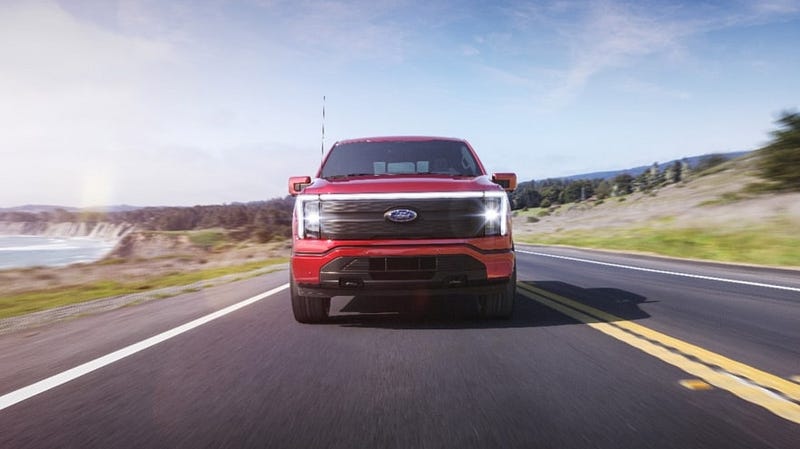
Ford F-150 Lightning pickup truck; Courtesy of Ford

All electric vehicles have a good impact on the environment. However, new research shows that electrifying pickup trucks leads to more significant greenhouse gas reduction in other light-duty vehicles.

The new study was conducted by researchers at the University of Michigan and Ford. It studied the cradle-to-grave GHG emissions of 2020 model year versions of ICEV, HEV, and Bev sedans, in addition to SUVs and pickup trucks.

In the US vehicle market, light-duty autos account for 58 percent of all transport-based emissions. Pickup trucks are a popular category, as they account for 14 percent of light-duty vehicles in the country.

The researchers found that HEV and BEV versions of sedans, SUVs, and pickup trucks have about 28 percent and 64 percent lower life-cycle emissions, respectively than the ICE versions. They considered only the base models.

As a result, a BEV sedan saves 45 tonnes of CO2, an SUV saves 56 tonnes, and a pickup truck saves 74 tonnes over a lifetime.

Other findings from the study include that the CO2 savings remained significant even when the battery size increased, the BEV had a shorter lifetime, and across different drive cycles.

Moreover, when converting ICEs to BEVs, the heavier the vehicle, the more the savings in CO2. This is a direct result of larger vehicles consuming more fuel.

However, as the study shows, production of BEVs produces more greenhouse gases than ICEs. The main culprit is the battery. But the increased emission is offset during the operation of the EVs. By driving an electric SUV for 1.6 years, a driver pays for the carbon emissions during manufacturing. For electric trucks, the payback period is 1.3 years.

“This is an important study to inform and encourage climate action. Our research clearly shows substantial greenhouse gas emission reductions that can be achieved from transitioning to electrified powertrains across all vehicle classes,” said senior study author Greg Keoleian, a professor at the U-M School for Environment and Sustainability and director of the U-M Center for Sustainable Systems. “This study expands upon previous studies that have focused on comparing battery-electric vehicle sedans to their internal-combustion-engine or hybrid counterparts. We report emissions for vehicle production, use, and end-of-life stages on a per-mile basis and over the total vehicle lifetime. In addition, we analyzed the regional variation in emissions considering differences in electricity grid mixes and ambient temperatures, and we also explored the effects of the rate of grid decarbonization on emission reduction.”

“This study can help us to understand the potential impact of electrification from an emissions-reduction perspective, particularly as we introduce new electric vehicles, and how we can continue to accelerate our progress towards carbon neutrality. We’re proud to partner with U-M in this critical work,” said Cynthia Williams, global director of sustainability, homologation, and compliance at Ford.

Source: Ford