Major renewable energy news this week

Header image courtesy of Lloyd Thornton/Shutterstock

Amprion starts on 8 GW offshore power link in Germany

Germany’s transmission system operator Amprion has begun planning the Windader West energy corridor, which will connect up to 8GW of offshore wind energy to the North Rhine-Westphalia state. The first 2 GW connection is expected in 2032.

Read more…

Kenya Power solicits bids for boosting rural electricity with solar mini-grids

Kenya Power and Lighting Company (KPLC) has called for bids for setting up solar power mini-grids in several counties, representing 20 percent of its population and 72 percent of its land area. The contract covers seven years of operation and maintenance by the successful bidders.

Read more…

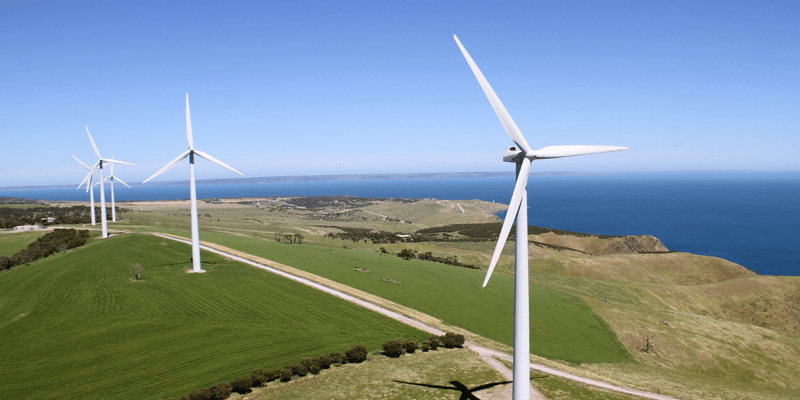
DP Energy and SBM planning 400 MW floating wind farm for Nova Scotia, Canada

DP Energy and SMB have formed a joint venture named Nova East Wind to build a 400 MW floating offshore wind farm in Nova Scotia, Canada. The development will be located about 30 km off Goldboro, although the precise location is yet to be determined.

Read more…

Solar drives renewable investment to $358 billion in H1 2023

Global investment in renewable energy soared to $358 billion in the first half of 2023, according to BloombergNEF. This was driven by solar investment in China, thanks to cheaper PV modules and a growing rooftop PV market.

Read more…

Consortium planning 5 GW wind farm for Australia

Elanora Offshore, a consortium of KIMAenergy, Energy Australia, Boskalis, Respect Energy, and Polpo Investments, will build a 5 GW wind farm off Gippsland in Victoria, Australia. Funding has already been secured for the project, with a targeted completion for the first phase in 2032. The farm will supply 40 percent of Victoria’s energy needs.

Read more…

Houston’s sundial public artwork to power local community with solar energy

Header image courtesy of Land Art Generator

Sometimes, art is more than just art, as with Houston’s next piece of public art. Billed as the world’s largest sundial, the Arco del Tiempo, or Arch of Time, will produce renewable energy for the local community.

As reported by Digital Trends, the work of Berlin-based artist/architect Riccardo Mariano will be installed in the East End district of Houston in 2024.

The Arco del Tiempo, a 100-foot-tall installation, works to keep time, apart from producing 400,000 kWh of year annually, enough to satisfy the power demand of 40 local homes. It will power the Talento Bilingue de Houston cultural hub nearby.

The public art will beam sunlight on the Guadalupe Plaza Park, with the light patterns changing with the sun’s movement. PV panels on the installation’s surface will harvest sunlight. The space under the arch can host public events at night.

Artist Mariano describes the Arco del Tiempo as “a practical example to illustrate the movement of the earth around the sun in a playful way.”

Mayor Sylvester Turner commented, “This unique artwork is more than a sculpture. It is a renewable energy power plant. It is a monument to a new era of energy.

“The City of Houston has always stood at the vanguard of energy innovation and the Arco del Tiempo artwork stands in that tradition, highlighting Houston’s role as an art city and as global leader in the energy transition.”

Australian Aboriginal group teams up with Philippine company ACEN on 3 GW renewable energy

Header image courtesy of Lloyd Thornton/Shutterstock

Australia’s Aboriginal group Yindjibarndi has entered into an agreement with Philippine energy firm ACEN on a massive renewable energy project in the iron ore mining region of Western Australia. As reported by Reuters, the project will generate up to 3 GW from land belonging to the community.

The first phase will produce 750 MW from a combination of wind and solar energy and battery energy storage. The projected cost stands at A$1 billion (US$682 million).

The Yindjibarndi Aboriginal Corp (YAC) will own an equity stake of 25%-50% in any project and approve construction on the Yindjibarndi Ngurra, where the tribe exercises native title rights. Native titles recognize the rights of the indigenous people of Australia to control some parcels of land.

In addition to part ownership, businesses owned by the Yindjibarndi people would have preferred bidding rights for contracts, while members of the community would receive free training with job opportunities.

ACEN is a subsidiary of the Ayala Group which plans to expand its renewable energy capacity from 4.4 GW to 20 GW by 2030. The partnership with the Yindjibarndi group has been named the Yindjibarndi Energy Corp (YEC).

YAC Chief Executive Michael Woodley said, “The agreement with ACEN means that the Yindjibarndi people can actively participate in Australia’s renewable energy transition in a significant way that provides long-term economic benefits to our community.”

Major renewable energy news you might have missed this week

Header image courtesy of Philip Gostelow

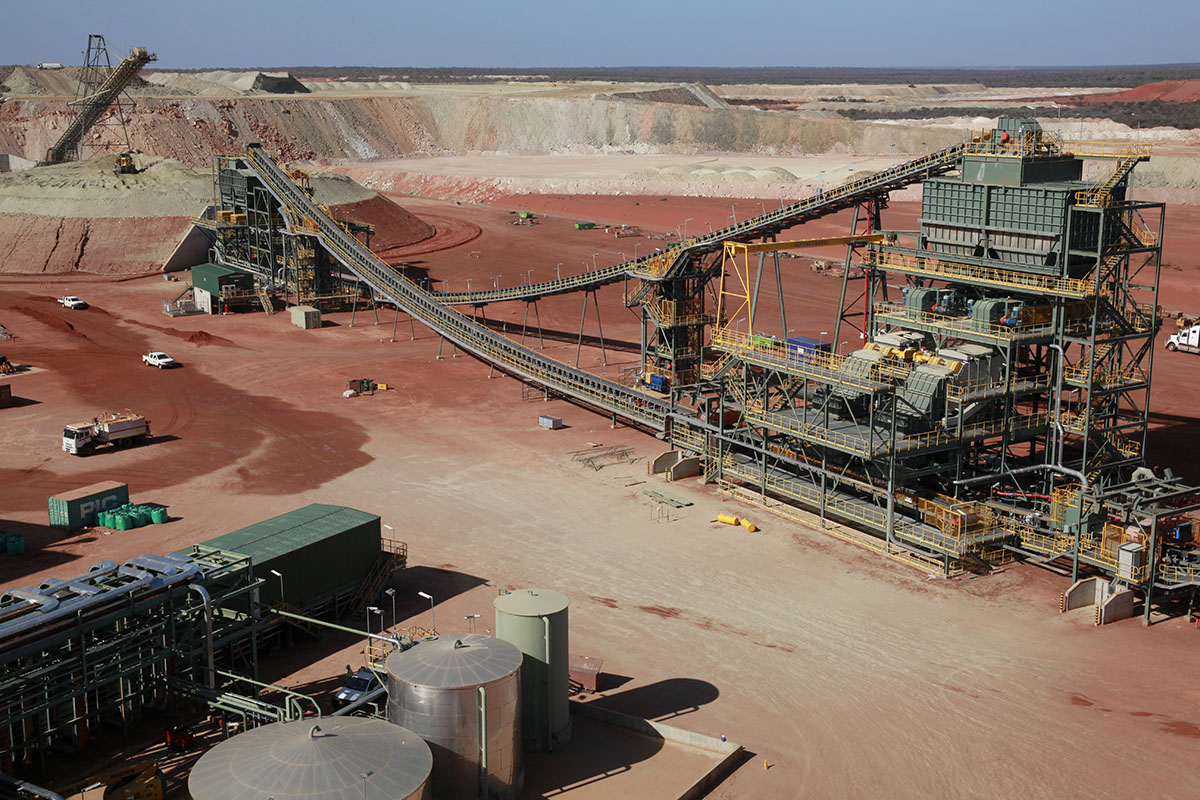
AngloGold Ashanti to power gold mine with renewable energy

AngloGold Ashanti Australia will build one of Australia’s largest renewable energy projects in the natural resources sector. The project will power the company’s Tropicana Gold Mine, consisting of a 50 MW solar farm and an 18 MW battery energy storage system. The development will cut the mine’s carbon emissions by 160,000 t annually.

Read more…

The UK government defends green levies on energy bills; will bring down future costs

After a two-year suspension due to the pandemic, the UK government is bringing back green levies on energy bills. The levies will add £170 per year to the average bill.

Down Street insists the levies will bring down energy bills over time by stimulating renewable energy investments.

Read more…

Noria Energy launches largest floating solar project in South America

Noria Energy has launched a new solar power system that floats on the Urra Dam reservoir in Colombia. The 1.5 MW solar development will demonstrate that hydroelectric dams with fluctuating water levels can be paired with a floating solar generation to enhance energy reliability and boost production.

Read more…

Africa REN secures € 32 million funding for the first battery storage project in West Africa

Africa REN has announced it has secured funding for the first battery storage project in West Africa. The project is located in Senegal and funded by the Dutch development bank FMO and the Emerging Africa Infrastructure Fund (EAIF).

Read more…

BlackRock secures $500 million to build Australia’s biggest battery

BlackRock, the world’s biggest fund manager, has raised more than $500 million from co-investors to build the largest grid-scale battery project in the southern hemisphere in Australia, with 850 MW and 1680 MWh of capacity. The Waratah Super battery in NSW will help drive Australia’s transition to a low-carbon economy.

Read more…

Texas depends on solar to cope with heavy load on grid due to heatwave

Header image courtesy of TotalEnergies

Texas has been experiencing a recording breaking heatwave, and one of the most affected infrastructures is the electricity grid. However, renewable energy, particularly solar, has come to the rescue by helping the Lone Star State to maintain energy reliability, as The Guardian reports.

Texas has been groaning under the weight of a blanket of oppressive heat, with forecasters not seeing an end in sight. The soaring temperatures have made people seek respite indoors in the comfort of their air-conditioners. However, the artificially cooled air comes at a cost; energy demand is at record levels.

With a grid independent of the rest of the country to sidestep federal regulation, Texas can obtain little power from other states. This is a serious issue as several of the state’s old fossil-fueled power plants have failed during the spikes in demand.

However, Texas has avoided rolling blackouts in June, despite temperatures reaching three digits. According to energy analysts, this is thanks to solar power generated in the state. During the hot afternoons, solar has produced more than 15 percent of Texas’ energy supply.

The irony is not lost on most observers as the same sun responsible for the heat is producing the energy needed to cool spaces.