
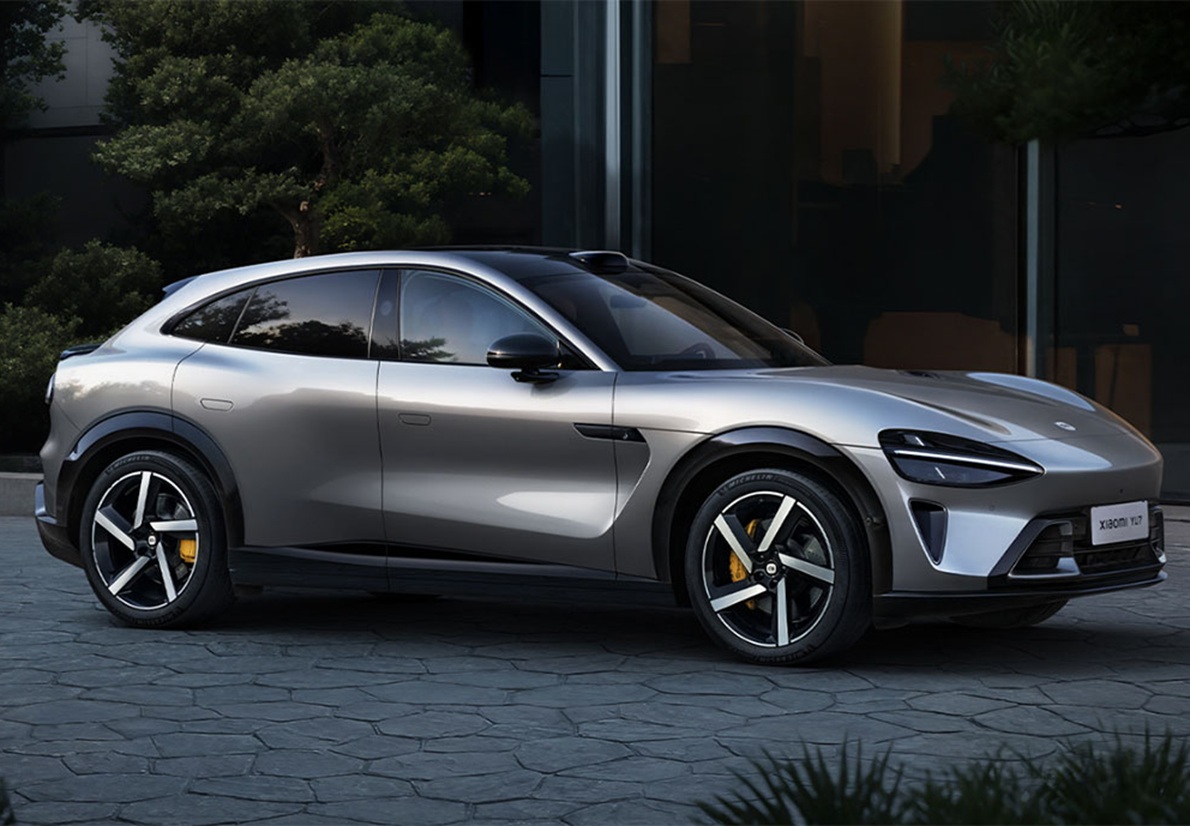
CEO confirmed Xiaomi bought and ripped apart 3 Tesla Model Ys for analysis

Xiaomi boss Lei Jun has always admired the Tesla Model Y. However, the new EV maker went a step further while developing its own YU7 by buying the former for a complete teardown.

According to Lei, who delivered his annual speech at the Beijing National Convention Center this week, Xiaomi engineers disassembled three Tesla Model Ys and were impressed by what they found. He stated, with a huge screen behind him comparing the two electric SUVs, “We bought 3 Model Ys at the start of this year, disassembling the parts one by one, and studied every component, one at a time.”

Lei recommended the rival Tesla Model Y, saying, “If you don’t choose YU7, you can consider Model Y.” He added, “I’m not criticizing the Model Y. The Model Y is a very, very outstanding car.”

While the CEO revealed that his own team learned from the leader, he asserted that his product “definitely does not lose to the Model Y.” Lei compared the YU7 and Model Y’s batteries and concluded that the former offered excellent value for money.

Lei is on record as encouraging customers to consider the Tesla Model Y. The unusual advice came after his own company was overwhelmed by demand for the YU7, which received more than 240,000 orders following its launch in June. Buyers had to endure a 56-week wait before taking delivery of their car in China.
Tesla Model 3 Long Range RWD surpasses expectations with 408-mile run

Header image courtesy of @dkrasniy on X (formerly Twitter)

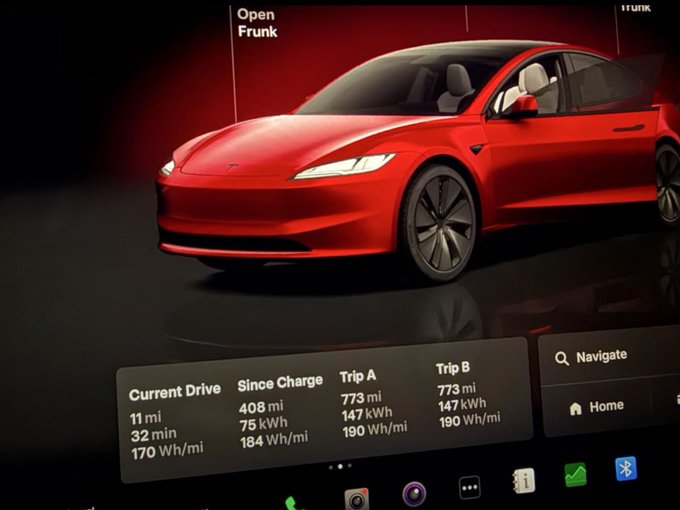
A Tesla Model 3 has reportedly defied the odds by going 408 miles on a single charge, almost 50 miles more than its EPA-approved 363 miles driving range.

Electric vehicle owners are used to real-world driving ranges significantly less than advertised, especially during colder weather. However, a Tesla Model 3 has defied the odds by going almost 50 miles above its rated driving range.

The Model 3, a Long Range Rear-Wheel Drive (RWD) version, belongs to Tesla owner David, who goes by @dkrasniy on X (formerly Twitter). According to David’s post, the electric sedan lasted 408 miles on a single charge, translating to an average energy consumption of 184 Wh/mile. The Environmental Protection Agency (EPA) certifies the car for a 363-mile driving range.

There is little doubt that David adjusted his driving habits to reach the goal; in other words, he hypermiled. Hypermiling is a common concept among EV enthusiasts. It involves driving in such a manner to max out the driving range. Hypermilers usually avoid rapid acceleration and hard braking and turn on regenerative braking to recoup energy otherwise lost. The more hardcore drivers plan their routes to avoid stops and traffic as much as possible to maintain a consistent speed.

However, David’s feat is no less impressive. The Model 3 RWD is Tesla’s least expensive EV, but it is also one of the company’s most efficient. This means the automaker is willing to offer its best tech at the lowest price point.

It goes without saying that most Tesla Model 3 owners will not drive up to 400 miles without stopping for a charge. However, it is reassuring to know that they can eke more miles out of the battery when absolutely necessary, e.g., to get home or to the next public charger.

UK’s electric vehicle registration grew 17.8% in 2023

Header image courtesy of Tesla

In a win for sustainable mobility, the number of BEVs registered in the UK grew in 2023 by 17.8 percent, despite a dip in sales in December, according to figures from the SMMT.

Car buyers registered almost 315,000 electric vehicles in the UK last year, out of a total registration of 1.9 million units, a growth of 17.8 percent compared to 2022. This means one in six UK car buyers went electric. The jump is noteworthy because EV sales in December 2023 dropped 34.2 percent to 27,841 from 42,285 in December 2022.

According to the Society of Motor Manufacturers and Traders (SMMT), the surge in EV sales was driven primarily by professional fleets and businesses choosing zero-emission mobility, as only one out of eleven private buyers opted for a BEV.

The number of private EV buyers is expected to rise, however, even though EV subsidies in the UK have ended. This is because carmakers now have to ensure a certain percentage of their sales is purely electric. The percentage will increase from 22 percent this year to 80 percent in 2030 for cars and from 10 percent to 70 percent for vans. The percentage jumps to 100 percent five years later.

Breaking down the UK’s EV sales in 2023, the Tesla Model Y was the fifth best-selling car, with nearly 5,000 sold in December alone and 35,899 for the year. The second-best EV was the MG4 with 21,715 units for the year, followed by the Audi q4 e-tron with 16,757 units sold.