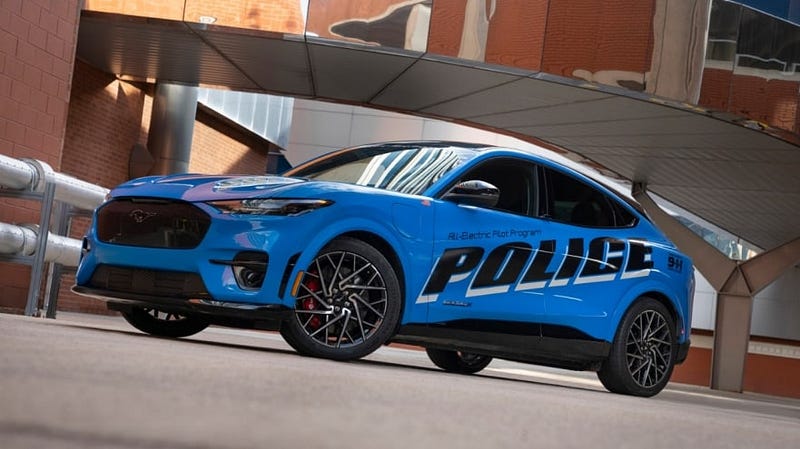
New York City orders electric Ford Mustang Es for law enforcement

A Ford Mustang E being used as patrol vehicle

If you are ever suspected to be on the wrong side of the law in New York City in the fast approaching new year, chances are you will ride to the police station in a non-polluting car. While it is not an encouragement to dabble into crime, New York City has revealed it has placed an order for 184 Ford Mustang Mach-Es. Deliveries are set for June 2022.

However, not only law enforcement will operate electric cars because the City’s emergency workers will get some units too. But within law enforcement, the vehicles will be distributed to the police department and Department of Correction. Two other government units that will get the electric Mustangs are the Department of Parks and Recreation and the Department of Environmental Protection.

Overall, New York City will purchase more than 1,250 electric vehicles in 2022 alone. It plans to have an all-electric law enforcement fleet by 2035.

Commenting on the EV purchase, Keith Kerman, chief fleet officer for New York City, said in a statement, “Law enforcement vehicles are the largest and most visible part of our City’s fleet. This order of all-electric Mach-Es will enable our law enforcement agencies to put electric models to the full test and work out maintenance, lights and sirens, charging, and other operational issues. It is a critical step towards our goal of a fully electric fleet.”

New York is committed to swapping internal combustion engine automobiles with battery-powered vehicles in its fleet. “Every single City vehicle we electrify is one step forward to advance clean air and a climate-friendly New York City,” according to Ben Furnas. He heads climate matters at the office of New York City’s mayor.

The Biden administration will phase out more than 600,000 ga-powered vehicles from its massive fleet on the federal government level. President Biden has also signed into law an infrastructural bill that will spend billions of dollars on building electric vehicle chargers all over the country.

New York City commits $420 million to electrifying its fleet

New York City has announced it will spend $420 million in electric vehicles, charging infrastructure, and alternative fuels as it tries to accelerate the shift to zero-emission mobility in all its municipal operations.

The city is targeting a completely electric fleet by 2035. This brings back the goal by five years as it had been targeting 2040 before.

The new goal is significant because it has broadened the ICE vehicles it targets. With this update, all light-duty, medium-duty, and non-emergency heavy-duty vehicles must be electrified by 2035. Only essential vehicles like fire engines will be allowed to operate till 2040 if suitable electric replacements cannot be found for them.

It also makes New York City’s plan the most aggressive in the country. The city owns about 30,000 vehicles, the largest for any municipality in the country.

According to the new executive order signed by Mayor Bill de Blasio, the city’s Department of Citywide Administrative Services (DCAS) will:

  • Begin a central replacement program for the City’s gas-powered vehicles, starting with at least 1,250 in 2022. DCAS is in the process of finalizing a contract with a Minority and Women-Owned Business Enterprise (M/WBE) vendor to supply many of these vehicles.
  • Install at least 1,776 fast electric vehicle chargers spanning all five boroughs by 2030. DCAS will make at least 100 of the 1,776 fast chargers open to the public. DCAS completed its 100th fast charger last month, with 11 open to the public, and is beginning work on an additional 275.
  • Add 180 portable mobile electric vehicle chargers and solar carports. These solar carports and portable chargers can be moved from location to location, supporting flexible and emergency charging as the City of New York transitions the fleet to electric vehicles. Solar carports can fully power vehicles without a connection to the electric grid. Both technologies can serve as a power back-up for electric vehicles in the event of a power outage.
  • Expand the use of other alternative fuels, including renewable diesel, a 99% petroleum-free alternative to traditional diesel fuel. Renewable diesel is made from domestic waste products, achieves a 60% greenhouse gas reduction, and features lower tailpipe emissions than fossil fuel. It also is manufactured to the same specification as regular diesel, enabling seamless use by the City fleet and storage in the City’s fuel storage tanks. Renewable diesel will be used in the truck fleet until electric vehicle units are available.
  • Transition all vehicles operated by senior City officials to be exclusively electric by June 30, 2023. DCAS and the NYC Mayor’s Office of Management and Budget (OMB) will also conduct a review of the suitability of each SUV used in city government to end the unnecessary use of such vehicles.

However, the new funding is in addition to the $75 million announced for purchasing electric vehicles and building charging infrastructure in September.

First net-zero MacDonald’s opens in England

Courtesy of MacDonald’s

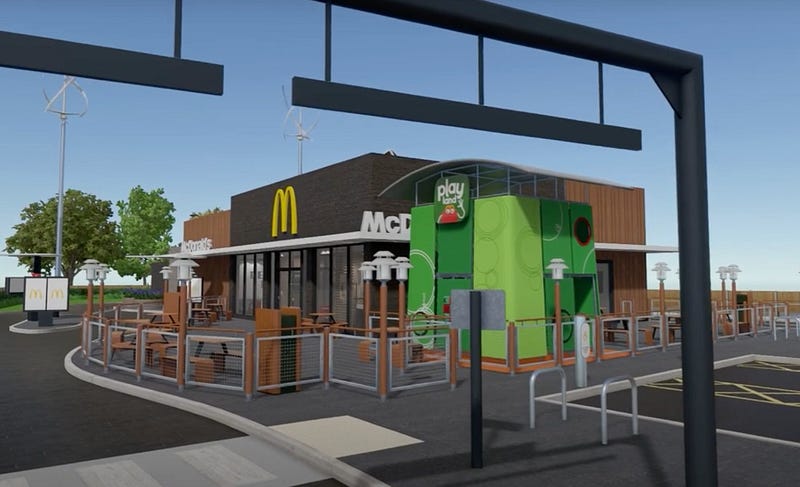
Next time you want to order a burger that has not exacerbated climate change during its production, the McDonald’s outlet in Market Drayton, Shropshire, England, has several to sell to you. The joint is the first net-zero MacDonald in the whole world.

The Market Drayton outlet was also net-zero during its construction. It will serve as a model for other outlets built from 2022 onwards. The business is run on a combination of solar panels and two wind turbines, producing 60,000 kWh per year.

The new MacDonald’s joint used cladding and insulation materials produced from recycled materials. Even the washing machines were rescued from the landfill.

Other recycled materials like tires were used to construct the Drive-Thru. The curbstones came from recycled plastic bottles.

The fast-food joint offers destination chargers for their customers owning electric vehicles. They will sit on chairs made from 100 percent recyclable materials as they await their order or munch on the food they have bought. When the furniture needs to be replaced, it will be recycled again.

Commenting on the opening, Beth Hart, VP of supply chain and brand trust at MacDonald’s, said, “At McDonald’s, we believe that our food needs to be served in restaurants that are sustainable for the future. Market Drayton is a big step towards making that a reality, enabling us to test and put into practice what a net zero emissions building, both in build and use, really looks like. We’ve already started to roll out some of these innovations to other restaurants, but what is exciting about Market Drayton is the fact it will act as a blueprint for our future new builds.”

Simon McWhirter, the UK’s Green Building Council’s director of communications, policy, and places, enthused, “The challenge of decarbonizing the construction industry is a complex one, but McDonald’s commitment to building the first restaurant in the U.K. in line with UKGBC’s net zero carbon buildings framework is a critical first step. We welcome the ambition to achieve net zero emissions for all McDonald’s restaurants and offices by 2030.”

Apart from making its facilities net-zero, MacDonald’s wants to feature more plant-based options on its menu. It will also begin assessing its numerous suppliers on ethics and sustainability. The long-term goal is to attain net-zero in all its 1400 outlets and offices by 2030 in the UK and Ireland, and across all its operations by 2040.

If you have any tip for me, kindly reach me at davidsanmi@outlook.com

Czech city to purchase hydrogen buses from Solano

Public buses are a more environmentally friendly way of transportation because they take many cars, potential sources of pollution, off the road. However, when the buses are not powered by fossil fuels, they are even better, because they do not produce carbon emissions.

The city of Usti in the Czech Republic has made the right environmental move by entering into an agreement with Solaris Bus & Coach for the supply of Urbino 12 buses. The public buses run on hydrogen and do not produce greenhouse gases.

The contract covers eight years and could be extended to 20 mass transit buses. The first buses will be delivered within 420 days of signing the agreement.

Usti is the first city in the Czech Republic to sign a contract for hydrogen-powered buses, even though Solaris has worked with the city before.

Each of the Urbino 12 buses has a double-electric motor system with a total capacity of 250 kW. They can store 1560 liters of hydrogen fuel in five tanks.

With all tanks filled, the Urbino 12 bus can travel 217 miles. The bus also comes with a battery that augments the fuel cell during increased demand.

Other features of the Urbino 12 bus include a passenger counting system, assistance for visually impaired passengers, USB ports for each seat row, etc. A CO2-powered heat pump will provide air conditioning.

Globally, Solano has delivered about 100 Urbino 12 hydrogen-powered trucks to its client in countries like France, Netherlands, Poland, Germany, Italy, etc.

Ford closes booking for the F-150 Lightning after 200,000 reservations

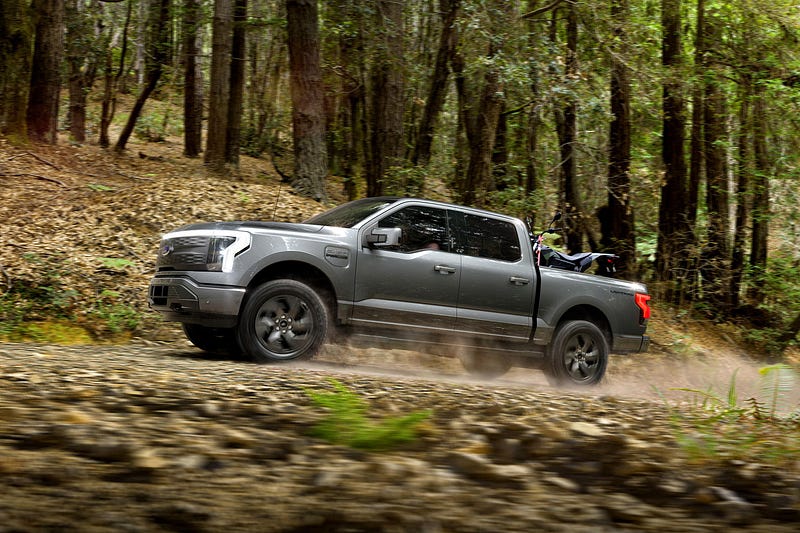
Ford F-150 Lightning: courtesy of Ford

Ford has a problem that most manufacturers hope to have. It has so many reservations for its upcoming F-150 Lightning electric pickup truck that it is forced to stop others from placing orders.

The battery-powered truck has accumulated about 200,000 reservations, and Ford thinks it has to actually start producing the vehicle.

The news of the close of reservation came after the CEO updated the number of buyers waiting to buy the F-150 Lightning.

Production is scheduled to start in 2022, but it appears some people that booked for a unit will wait a couple of years before taking delivery of their vehicle. Ford said it plans to ramp up manufacturing to 80,000 units per year in 2024. If the company does not increase its investment in workforce and production capacity, it might take up till 2024 or even beyond to fulfill all the orders.

The pickup truck is a popular vehicle segment in the US, and the first set of electric pickups will definitely do well in sales as there has been a pent-up demand for the vehicles.

The Lightning is the electrified version of Ford’s best-selling F-150 ICE truck. Ford will sell the Lightning to both consumers and fleet operators.

Ford has been beaten to the market by Rivian, who began delivering its R1T to customers a few months ago. Ford will also compete with models like the Cybertruck from Tesla and Silverado EV from Chevy.

The GMC Hummer EV is also a truck, but the high price means it is not competing with Ford’s offering.

Arrival to set up battery plant in North Carolina with 350,000 module per year output

With demand for electric vehicles expected to increase in the coming years, batteries might soon take center stage in the EV revolution as automakers scramble to secure battery supplies for themselves. British company, Arrival is addressing the looming battery crunch by building a High Voltage Battery Module (HVBM) plant in Charlotte, North Carolina. The facility will cost $11.5 million and will be used for assembly.

Yearly output from the factory will reach 350,000 with 150 direct jobs created.

Arrival produces battery-powered buses and vans and is expanding production into the US after setting up a North American headquarters in Charlotte. It already has a microfactory in the same city to make vans.

The company’s microfactory is a deviation from the norm in automobile manufacturing, but Arrival claims it is a better approach. Arrival designs its own hardware and software in-house to increase production efficiency.

The new Charlotte plant will also produce electric vans, making it the second site in the US where Arrival makes vehicles. The company has a deep relationship with the city, as it is involved in Charlotte’s attempt to power its fleets and facilities 100 percent with zero-carbon emissions by 2030.

CEO of Arrival Automotive, Mike Ableson, commented, “By bringing the assembly of our proprietary High Voltage Battery Modules in house, we’re striving to be as vertically integrated as possible. This will enable us to have even greater control over the functionality and cost of our products and pass those cost savings on to the customer while also working toward our goal of zero waste production. We’re excited to add another facility in Charlotte, as we prepare to open our new North American headquarters building just down the road and continue to work in tandem with the city to develop solutions for their electrification and sustainability goals. This is a big milestone for Arrival as we ramp up operations in the region in advance of production starting in Rock Hill in Q2 next year.”

Arrival had previously announced a partnership with Li-Cycle to set up a battery supply chain that incorporates the recycling of battery materials.

Toyota is joining Arrival in opening a battery plant in the US, and the chosen site is just 100 miles away from Arrival’s location in North Carolina.

Renewables accounted for 20.45% of U.S. electricity production in the first three quarter of 2021

Renewables are gaining ground in the US, according to reports by the US Energy Information Administration (EIA). The agency stated that electricity generated from renewable sources accounted for 20.45 percent of the country’s total output in the first three quarters of 2021.

Breaking the figures down, electricity from solar panels increased by 24.61 percent, while wind-generated electricity increased by almost 11 percent from January to September 2021. The two sources gained 15 percent combined and represented 12.59 percent of total electricity production.

Solar and wind now account for 61.55 percent of renewable electricity, with biomass, geothermal, and hydropower sources making up the rest.

Geothermal production increased too, although at a much lower 2.75 percent, while biomass managed only 1.71 percent.

Hydropower stands out as it actually experienced a reduction in production, at 12.7 percent, which is most likely due to worsening drought conditions. This loss in hydropower was not enough to stall the growth of renewable electricity as a whole, as the category recorded an increase of 3.26 percent, from 20.30 percent last year.

Renewable sources continue to lead nuclear electricity, which was at 18.47 percent. Natural gas was still in the first position but suffered a loss, coming down from 40.75 percent last to 37.57 percent. Coal sadly had a resurgence, bouncing back to second place with 22.60 percent.

However, trends from the last five years project increasing growth for renewable electricity and will gradually displace coal and nuclear stations.

Commenting on the figures, SUN DAY Campaign’s executive director, Ken Bossong, whose organization analyzed the data released by the EIA, said, “Inasmuch as they have maintained an overall faster rate of growth than any other energy sources over the past half-decade and longer, it seems safe to say that solar and wind will eventually become the nation’s primary electrical producers. They now have a growing lead over nuclear power; surpassed coal in 2020 and will likely do so again next year; and are rapidly cutting into natural gas’s current dominance.”

Enel brings its 353 MW onshore wind farm online in Brazil

Courtesy of Luciana Serra

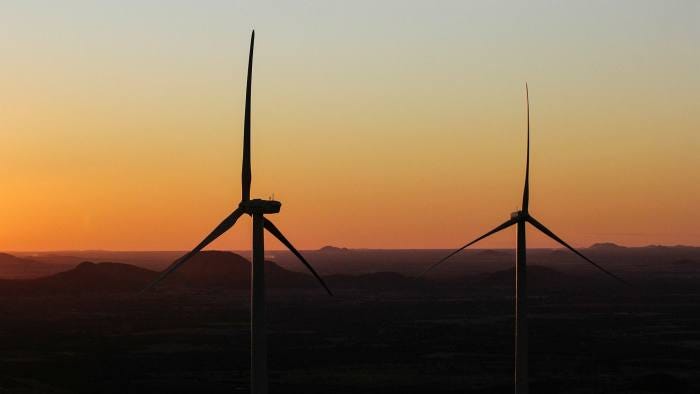
Brazil has notched another win in the renewable energy space as Enel Green Power begins operating its Morro do Chapeu Sul 2 wind farm. The 353 MW capacity onshore farm has started producing energy.

The farm consists of 84 turbines, and about half of them are already supplying power to the National Interconnected System. By January, the remaining turbines will come online too. The farm alone is expected to help Brazil avoid almost one million tons of CO2 emissions annually.

Enel spent more than $300 million on the farm. The energy produced will be sold directly to commercial customers.

The new farm joins an earlier installation in the same region that began operation in 2018 and produces 172 MW.

Enel is involved in three other renewable energy projects in the country; two wind farms and a solar plant.

Speaking on the Morro do Chapeu Sul 2 farm, head of Enel in Brazil, Roberta Bonomi, said, “The start of operations in Morro do Chapéu Sul II reaffirms our commitment to contribute to the diversification of renewable sources in the country, making available to the electricity system a substantial volume of new installed capacity capable of helping the country in view of the current water shortage.

“This is Enel’s fourth renewable project to come into operation in the country in 2021.

“Between 2020 and early 2022 alone, we will have put into operation around 2.6 GW of new wind and solar capacity, contributing to our sustainable growth in the region.”

Mitsubishi unveils the Airtrek SUV with 520 km range

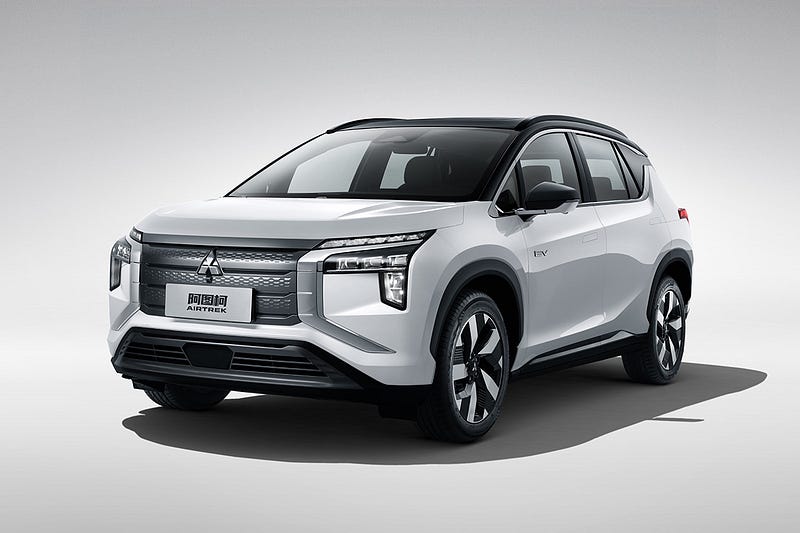
Courtesy of Mitsubishi

The EV options available to buyers keeps expanding, with Mitsubishi Motors Corporation unveiling the all-new Airtrek electric SUV at the Auto Guangzhou.

Mitsubishi built the new SUV on the concept of e-cruising, with the ‘e’ having triple meanings of electric, expanding, and expressive. They mean the car is battery-powered, can help the owner to expand their life, and the Airtrek symbolizes Mitsubishi’s uniqueness.

Inside the Airtrek SUV, the cabin is spacious. It offers an instrument panel that provides a broad field of vision. The finishing is classy and deliberately designed to be comfortable for the whole family as it can seat five. There is a center touch screen that you will use to access the controls.

The Airtrek SUV comes with a 70 kWh battery that delivers about 520 km according to CLTC’s standards. EPA estimates, which are more stringent, will likely be lower.

Mitsubishi boasts the Airtrek has a low center of gravity thanks to the placement of the battery at the center of the floor, leading to excellent front-rear weight distribution.

Courtesy of Mitsubishi

The electric motor, inverter, and reduction drive are made into a single lightweight unit that is still powerful enough to produce high horsepower and torque.

Drivers of the Airtrek will enjoy the nimble handling and smooth ride.

President and CEO of Mitsubishi Motors Corporation, Takao Kato, commented on the Airtrek, “We named the new electric SUV Airtrek so that many customers can enjoy adventurous, active driving with this pure EV, which achieves a maximum driving range of approximately 520 km while emitting zero CO2 in motion. We hope the all-new Airtrek will help expand the horizons of customers in China, where environmental initiatives are accelerating with new energy vehicles, especially EVs.”

Pricing, availability, and more details on the Airtrek will come in the future.

California to make charging electric trucks and buses cheaper with new electricity rate

The state of California in the US is one of the leading figures in zero-emission mobility. However, the state regulators are still making moves to make electric trucks and buses more attractive for fleet operators and persuade them to switch from ICE vehicles. One of such moves is a new charging rate to reduce the cost of refueling.

The new rate is dynamic as it changes by the hour, based on demand. This will allow fleet operators to target periods when electricity is cheaper to charge their vehicles. This could be off-peak times or when the electricity supply is surplus.

Pacific Gas & Electric Company has been approved to offer the new rate, which will enable more cost savings for truck and bus companies, which will result in less total cost of ownership.

All PG&E customers can now request the new rate as long as they are within the utility company’s service territory, which covers northern and central California. The plan is that fleet operators will work out that charging electric vehicles at this new rate is cheaper than running on fossil fuel and will be more motivated to make the switch.

The government has identified key sectors and areas where PG&E is to prioritize with this new charging rate. This includes disadvantaged and vulnerable communities within the state. PG&E is expected to focus its marketing and education effort on these sectors.

California is going as far as mandating PG&E to offer a lower rate when there is excess renewable energy in the system, thereby incentivizing the fleet operators to consume clean energy.

Other methods the state is using to push for clean mobility include new regulations like the Advanced Clean Truck rule and executive orders by the governor, like the one that mandates all new vehicles to be zero-emission in the next 15 years.

Got any tip for me? Kindly contact me through davidsanmi@outlook.com