Major renewable energy news last week

Header image courtesy of Lloyd Thornton – Shutterstock

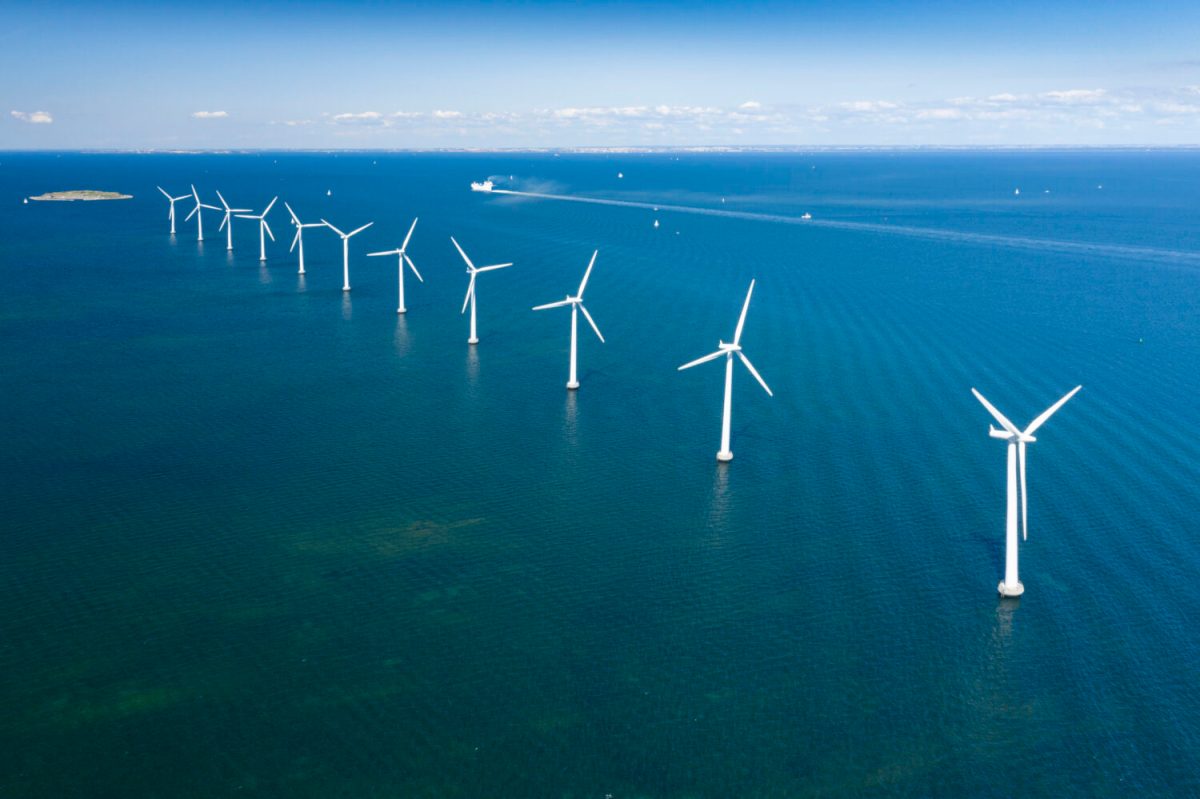
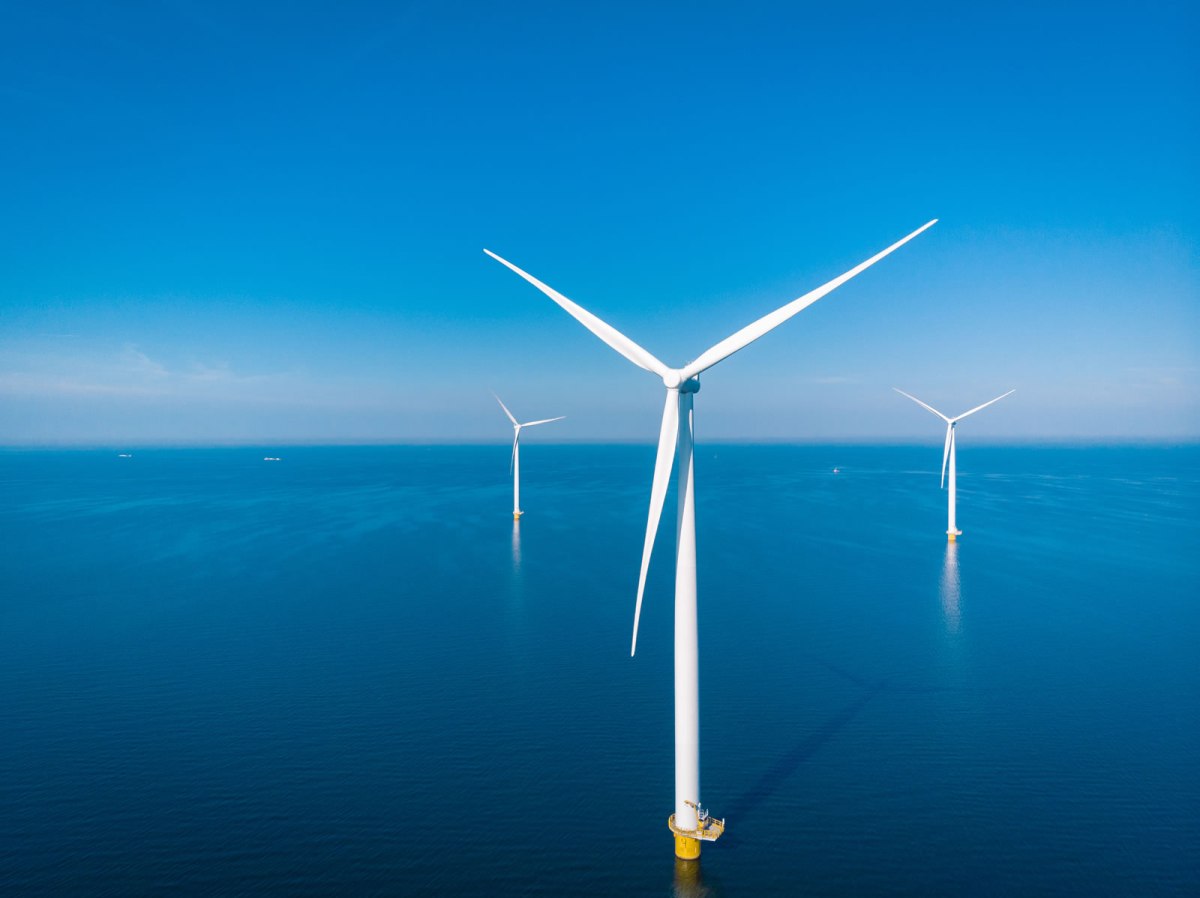
Europe added 2.1 GW of offshore wind energy in H1 2023

Europe built new 2.1 GW of offshore wind capacity in the first six months of 2023. This brought installed capacity to 32 GW, with more than half concentrated in the Netherlands and the rest distributed across the UK, Germany, and Norway.

Read more…

Mainstream and Ocean Winds expand floating wind JV in Scotland

Mainstream Renewable Power and Ocean Winds (the JV between EDPR and ENGIE) will collaborate again to build a floating 500 MW wind farm in Shetland, Scotland. This will bring the total capacity of the Arven offshore wind farm to 2.3 GW. The JV is also developing a 1.2 GW floating offshore wind farm in South Korea and contending in Norway’s upcoming floating offshore wind tender.

Read more…

Germany auctions off 1.67 GW solar energy amid unprecedented interest

Germany’s latest round of solar auctions received unprecedented interest. The bids were worth 1.67 GW, representing a third of the volume the European county plans to auction in 2023. Germany added 3.3 GW of solar capacity in Q2 2023.

Read more…

Siemens opening 800 MW/year solar inverter factory in the US

Siemens has announced plans to increase its manufacturing footprint in the US with an 800 MW per year solar inverter factory. Production is expected to start in 2024. The US is attracting more clean energy manufacturing thanks to tax credits and demand-side incentives.

Read more…

Greece’s renewables crossed 11 GW in June

Greece’s installed renewable energy capacity topped 11 GW in H1 2023. Solar energy contributed over half of the capacity, with 5.79 GW installed capacity. Wind accounted for 4.83 GW, with 281 MW of hydro.
Read more…

Wind turbines to be mined for rare metals in Scotland by SEM and University of Edinburgh

Header image courtesy of Alamy

What happens to wind turbines when they reach end-of-life? They might soon be getting a new life as SEM and the University of Edinburgh are collaborating on extracting rare elements from these spent turbines, as reported by ReNews.

The new technique will target rare metals combined with steel to make the turbines. These include niobium, tantalum, and rhenium, all mined with methods that harm the environment. However, their function in strengthening alloys makes them critical in turbine manufacturing.

The project between SEM and the University of Edinburgh is funded by the Industrial Biotechnology Innovation Centre (IBioIC). It will help manufacturers make new turbines from old ones instead of importing mined materials. The UK currently has no means of extracting these rare metals.

SEM’s DRAM technology works as a filter that makes the process sustainable. It uses co-products from malt whisky distillation. DRAM was initially created to mine metals from waste electronics safely.

Dr. Liz Fletcher, director of business engagement at IBioIC, said, “SEM is a great example of a business taking a bio-based process and applying it to multiple sectors to help companies achieve environmental goals.

“By joining forces with academic experts, SEM has developed potentially game-changing processes for sustainably treating various types of waste. Recycling at an industrial scale will be key to achieving net zero, while also reducing the carbon footprint and environmental damage associated with imported raw materials.”

Turbine installation starts on Dogger Bank offshore wind farm

Header image courtesy of Dogger Bank

Installation work has begun at the Dogger Bank offshore wind farm, as reported by ReNews. The farm will host 277 turbines in three phases when completed off the coast of England.

Each of the 13 MW GE Haliade-X turbines towers 260 m. They will be installed with a vessel lifting up to 3,200 tonnes. The Yorkshire farm will output 3.6 GW, enough green electricity for 6 million homes.

The project is a joint venture between SSS Renewables, Equinor, and Vargronn (another joint venture between Eni Plenitude and Hitec Vision.)

Dogger Bank is expected to produce 400 jobs in the 35 years lifetime of the project. Construction will last three years.

“Our progress here with our joint venture partners Equinor and Vargronn proves offshore wind projects of this size are now mainstream and will help turbocharge the transition to the cheaper, cleaner, and more secure energy system we all want to see. “It is action, not ambition, that will secure our energy future, and this project shows action on a massive scale. But we will need many more Dogger Banks to achieve our goals, and we look forward to working with government to bring forward more projects at pace.”

Energia, Vargronn JV to develop 1.8 GW Irish offshore wind capacity

Header image courtesy of 4fr-Getty Images

Ireland stands to gain up to 1.8 GW of offshore wind energy capacity by 2030, thanks to the partnership between Energia Renewables and Vargronn, as reported by ReNews.

Vargronn is a partnership between Plenitude (Eni) and HitecVision. The JV will initially focus development on the southern and eastern Irish coasts. Energia is already active in these areas, with sites in the North Celtic Sea (900 MW) and South Irish Sea (900 MW).

Seabed surveys of the selected area have been completed, with detailed preparations for EIAs kicked off. The JV is also engaging with the local fishing industry and communities.

Depending on governmental policy, the projects in these areas could be operational by 2030.

Energia Group chief executive Ian Thom commented, “We look forward to working closely with Vargronn and to combining our experience of developing renewable energy projects in Ireland with Vargronn’s extensive offshore wind expertise and supply chain relationships. “Through the development work completed to date, our partnership is uniquely placed to deliver new offshore capacity on the south and east coasts by 2030, and in so doing, make a significant contribution to Ireland’s offshore wind targets.”

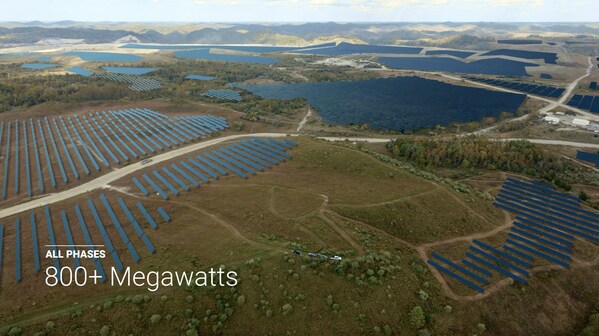
EV maker Rivian and partners converting Kentucky coal mine into $1 billion, 800 MW solar farm

Header image: Starfire Solar Farm courtesy of BrightNight

Electric vehicle manufacturer Rivian has struck a partnership with BrightNight and The Nature Conservancy to convert one of the biggest coal mines in the US into the largest solar plant in Kentucky, as reported by Electrek.

The mine, known as Starfire Mine, will now host “a clean energy project that would accelerate an equitable, science-based clean energy transition that maximizes positive impacts on climate, conservation, and communities.” The site, to be renamed BrightNight Starfire Renewable Energy Center, was selected by Rivian and The Nature Conservancy before BrightNight was brought in as the developer.

The $1 billion solar installation will generate 800 MW, enough to power 170,000 homes per year. In addition, the project will construct a 20-mile-long transmission line that will pave the way for an additional 1 GW of renewable energy in the future.

Phase 1 out of the four phases will commence in 2025, with Rivian purchasing 100 MW via a power purchase agreement from BrightNight, the equivalent of 450 million miles of clean energy driving every year.

The Nature Conservancy has also committed to buying 2.5 MW as a supplement to its own onsite solar farm. Rivian’s CEO RJ Scaringe commented on the proposed solar farm, “Shifting our energy system to carbon neutrality goes beyond electrifying the roughly 1.5 billion vehicles in the global fleet. We must also support the decarbonization of our grid and responsible deployment of renewable energy.”

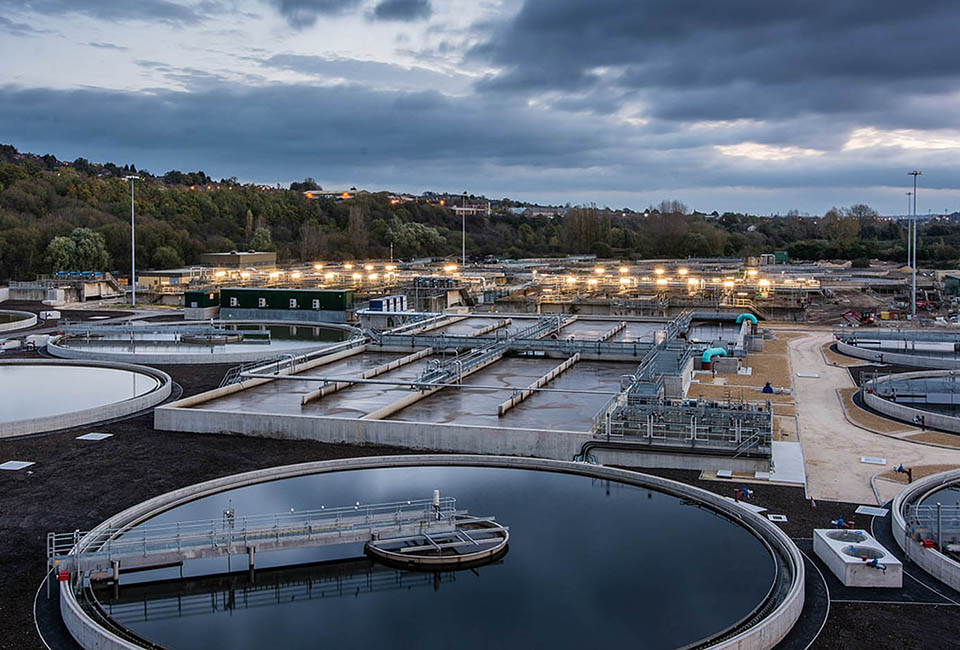
Centrica Energy to heat 10,000 UK homes with sewage power

Header image courtesy of Yorkshire Water

Centrica Energy Trading has struck a deal with Yorkshire Water and SGN Commercial Services that will allow it to extract biomethane from sewage. The 15-year agreement will provide heat for 10,000 homes in the UK, as Energy Live News reported.

The biogas is a by-product of Yorkshire Water’s sewage treatment processes. Centrica Energy will manage the biomethane, including handling, shipping, trading, and balancing.

SGN Commercial Services will handle the biomethane sites’ design, development, and operation. The sites are expected to generate about 125 GWh of biomethane annually, enough to heat 10,000 homes. Kristian Gjerløv-Juel, Director for Renewable Energy Trading and Optimisation at Centrica Energy Trading commented: “Having recently expanded our capabilities to handle trading, nomination, and transportation of green gas in the UK market, we’re working to accelerate biomethane production across Europe and using our capabilities to help businesses deliver on their green procurement strategies and reduce emissions.”

Major renewable energy news last week

Header image courtesy of 4FR / Getty Images

US fixes Gulf of Mexico wind power auction on Aug 29

The US Department of the Interior has set August 29th for the first auction of offshore leases for wind power development in the Gulf of Mexico off the Louisiana and Texas coasts. More than 300,000 acres will be parcelled off, with the potential to generate 3.7 GW of clean energy.

Read more…

Work starts on £2.4bn UK-German interconnector

Construction has started on one of the largest interconnectors in the world, between the UK and Germany. Prysmian started horizontal directional drilling on the UK side on the Isle of Grain in Kent. The interconnector will boost energy resilience and renewable energy integration in Europe’s two largest energy markets.

Read more…

ACWA Power signs MoU for 10 GW wind project in Egypt

ACWA Power has signed an MoU with Egypt’s New and Renewable Energy Authority (NREA) for a 10 GW wind power plant near Sohag. The project will power 11 million households and prevent up to 25.5 million tons of CO2 emission each year, in addition to creating up to 120,000 job opportunities.

Read more…

Chile’s Enel largest solar plant becomes operational

Enel has received final authorization to begin commercial operation of its Guanchoi solar plant. The 1,100 GWh per year output will power more than one million homes and help to avoid 900,000 tons of CO2 being released into the atmosphere. Enel installed 893,508 solar panels to reach the capacity.

Read more…

Madagascar opens bidding for two solar parks of 210 MW combined

Madagascar’s Ministry of Hydrogen and Hydrocarbons has called for tenders for two solar projects of 200 MW and 10 MW. These projects will significantly boost the country’s power generation, standing at 969 MW.

Read more…

Houston’s sundial public artwork to power local community with solar energy

Header image courtesy of Land Art Generator

Sometimes, art is more than just art, as with Houston’s next piece of public art. Billed as the world’s largest sundial, the Arco del Tiempo, or Arch of Time, will produce renewable energy for the local community.

As reported by Digital Trends, the work of Berlin-based artist/architect Riccardo Mariano will be installed in the East End district of Houston in 2024.

The Arco del Tiempo, a 100-foot-tall installation, works to keep time, apart from producing 400,000 kWh of year annually, enough to satisfy the power demand of 40 local homes. It will power the Talento Bilingue de Houston cultural hub nearby.

The public art will beam sunlight on the Guadalupe Plaza Park, with the light patterns changing with the sun’s movement. PV panels on the installation’s surface will harvest sunlight. The space under the arch can host public events at night.

Artist Mariano describes the Arco del Tiempo as “a practical example to illustrate the movement of the earth around the sun in a playful way.”

Mayor Sylvester Turner commented, “This unique artwork is more than a sculpture. It is a renewable energy power plant. It is a monument to a new era of energy.

“The City of Houston has always stood at the vanguard of energy innovation and the Arco del Tiempo artwork stands in that tradition, highlighting Houston’s role as an art city and as global leader in the energy transition.”

Work starts on £2.4bn UK-German interconnector

Header image courtesy of Prysmian.

Construction work has commenced on a crucial link between the two largest European energy markets, as reported by ReNewz. The 1400 MW NeuConnect project will connect the UK and Germany when completed.

Horizontal directional drilling (HDD) works have been kicked off by Prysmian, a cabling contractor on the UK side on the Isle of Grain in Kent. The HDD will link the subsea cables to land. The company has also started working on attenuation ponds and an access road to the new electricity converter station, handled by Siemens Energy.

The first stage of cable installation will start next year. However, the manufacturing of the 725 km of cabling required for the interconnector has started at Prysmian’s Italian factory and Sumitomo’s Japanese plant.

NeuConnect will become one of the world’s largest interconnectors, with electricity flowing both ways between the UK and Germany. The interconnector is expected to boost energy resilience, security, and renewable energy integration in both countries.

The German end of the interconnector is located in the Wilhelmshaven region in Lower Saxony. The cables will pass through British, Dutch, and German waters.

NeuConnect is expected to come online by 2028.

Lord Johnson, UK Minister for Investment, said: “This £2.4bn project doesn’t just demonstrate continued global investor confidence in the UK, but also the successful work we are doing with our European neighbours to drive investment and deliver vital new infrastructure. The first spade in the ground is a significant milestone on a project of national importance, so I offer my congratulations to NeuConnect and its investors.”

Miguel Berger, German Ambassador to the United Kingdom, added: “NeuConnect is a key project to support Germany and the UK in achieving their climate targets and to boost energy security. It is the largest Anglo-German infrastructure project and will enable us to share excess power – preventing renewable energy from being wasted.”

Australian Aboriginal group teams up with Philippine company ACEN on 3 GW renewable energy

Header image courtesy of Lloyd Thornton/Shutterstock

Australia’s Aboriginal group Yindjibarndi has entered into an agreement with Philippine energy firm ACEN on a massive renewable energy project in the iron ore mining region of Western Australia. As reported by Reuters, the project will generate up to 3 GW from land belonging to the community.

The first phase will produce 750 MW from a combination of wind and solar energy and battery energy storage. The projected cost stands at A$1 billion (US$682 million).

The Yindjibarndi Aboriginal Corp (YAC) will own an equity stake of 25%-50% in any project and approve construction on the Yindjibarndi Ngurra, where the tribe exercises native title rights. Native titles recognize the rights of the indigenous people of Australia to control some parcels of land.

In addition to part ownership, businesses owned by the Yindjibarndi people would have preferred bidding rights for contracts, while members of the community would receive free training with job opportunities.

ACEN is a subsidiary of the Ayala Group which plans to expand its renewable energy capacity from 4.4 GW to 20 GW by 2030. The partnership with the Yindjibarndi group has been named the Yindjibarndi Energy Corp (YEC).

YAC Chief Executive Michael Woodley said, “The agreement with ACEN means that the Yindjibarndi people can actively participate in Australia’s renewable energy transition in a significant way that provides long-term economic benefits to our community.”