Saudi Arabia opens bid for 3.7 GW of solar projects

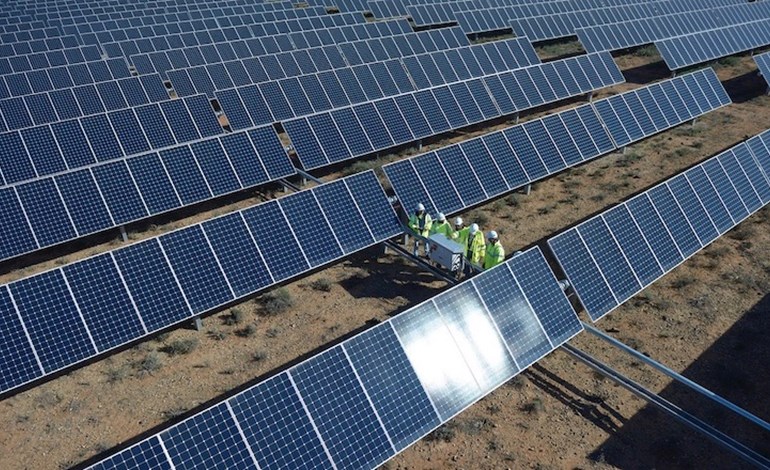
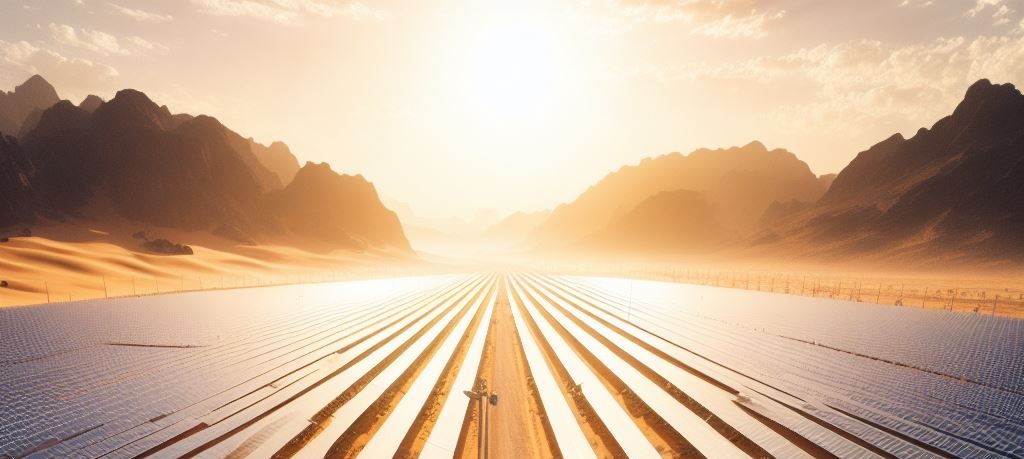
The Arabian kingdom of Saudi Arabia has announced the opening of bidding for four solar projects totaling 3.7 GW, as reported by Renewables Now

According to the Saudi Power Procurement Company (SPPC), developers can now enter into the running for the four solar projects, part of the 5th round of Saudi Arabia’s National Renewable Energy Programme (NREP).

The biggest project of the lot is located in Al Sadawi in the Eastern Province, with a capacity of 2 GW. The Hail Region will host the 1 GW Al Mas’a farm, while Al Henakiyh 2 (Al Madinah Region) and Rabigh 2 (Makkah Region) will host 400 MW and 300 MW farms, respectively. This new bidding comes after Saudi Arabia’s major electricity buyer agreed to offtake deals for the 1,100 MW Al Henakiyah and 400 MW Tabarjal farms.
Caribbean a potential haven for offshore floating solar PVs, research shows

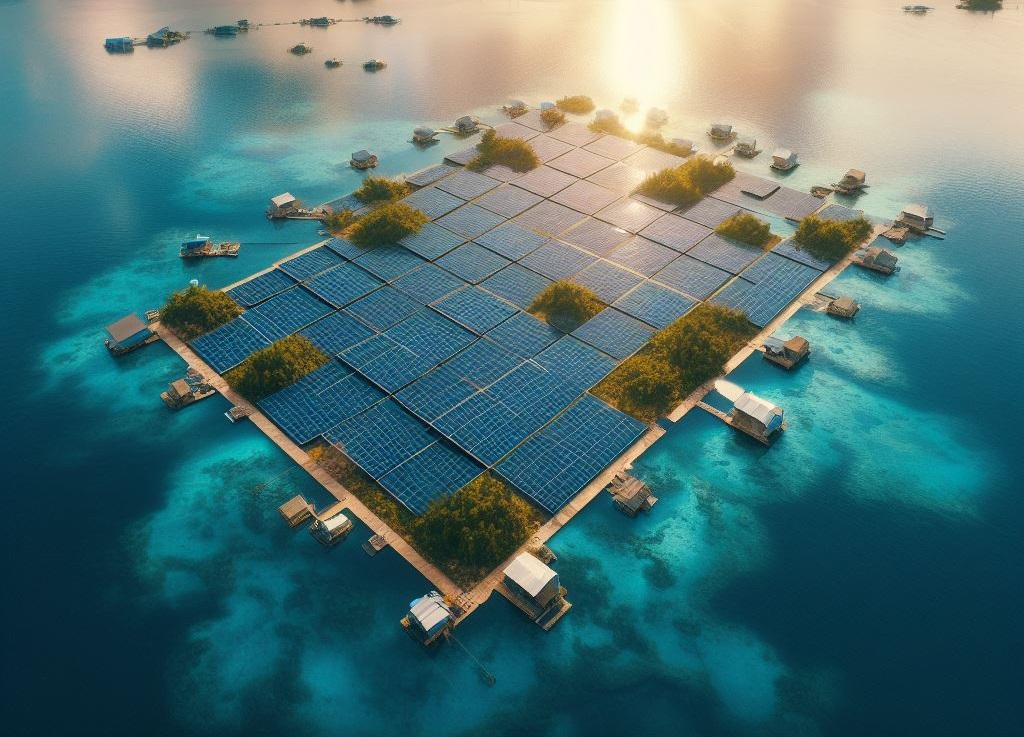
When many people think of the Caribbean, they picture island living. The group of islands, however, might find another use: host for offshore floating solar PVs, according to recently published research.

In what could be a huge boost to renewable energy, the 700 islands of the Caribbean could become a source of clean power by hosting offshore floating solar platforms. This was the conclusion of solar economy professor at LUT University in Finland, Christian Breyer. Speaking to PV Magazine, Breyer said the region could become a global hub for offshore floating solar PV production.

Breyer worked on a paper exploring the possibility of setting up floating solar panels in the Caribbean’s many islands, focusing on the levelized cost of electricity (LCOE) of such platforms in Puerto Rico.

The research discovered that Puerto Rico and the rest of the Caribbean lagged in renewable energy capacity last year. Puerto Rico reported 841 MW of installed renewable energy, with 639 MW contributed by solar.

Breyer’s paper, however, postulated that even though the Caribbean is limited in land resources, its renewable energy strength could lie in floating solar platforms. 

According to the International Solar Energy Society, regions with waves less than 6 m or winds less than 15 m/s in speed can produce up to one million TWh per year. However, offshore floating solar projects in the Caribbean pose some unique challenges, including natural storm protection. Puerto Rico, for example, has weathered 20 hurricanes and storms in the last decade alone.

Polish coal miners training to work on wind farms

As Notes from Poland reports, Polish coal miners have started a major career change by retraining to take up jobs in the wind energy industry. They will train to operate and service wind turbines. This program is part of an initiative to support workers exiting the mining industry in the East European country.

The two-week-long training, accredited by the Global Wind Organization (GWo), is being funded by EDF Renewables Polska to help assuage the concerns of coal miners about the effects of the energy transition to renewables. Coal is still a big business in Poland, generating 70% of the electricity supply. Miners can undergo the training for free.

According to Alicja Chilińska-Zawadzka, general director at EDF Renewables Polska, “In the coming years, the wind energy industry will need tens of thousands of employees, while the specialised staff leaving the mining industry seems to be particularly prepared to find employment in the renewable energy sector after appropriate training.”

Candidates will visit a wind farm to learn about working safely at heights, first aid, fire awareness, and wind farm operation. They will be tested on operating suspended platforms and overhead cranes.

The miners will also meet with potential employees and have their first interviews. A second batch of miners will undergo the program in the first quarter of 2024, with applications already open.

Poland wants to close all its mines by 2049.

The UK renewable energy sector to soar to £46 billion and employ 210,000 by 2035

While the environmental benefits of renewable energy are well known, experts have pointed out that the transition to cleaner energy could also bring economic benefits. The UK is set to benefit as its renewable energy sector could balloon to £46 billion by 2035 while employing more than 210,000 people, according to the Association for Renewable Energy and Clean Technology’s (REA) annual report, Review23.

The projection shows significant growth for the sector, worth £23 billion and employed over 140,700 people last year.

The report, however, notes that the UK’s energy transition faces some challenges. It also posits that the country cannot meet its sustainability challenge without supportive government policies. According to the report, the UK needs to fix policy gaps, support the sector, and recognize the economic advantages of renewables.

Chief Executive of the REA, Dr Nina Skorupska, said: “The urgent need to unlock policy and investment blockages is clear throughout REview23, which shows that in 2022, only 14% of the UK’s total energy consumption came from renewable sources across heat, transport and power according to government statistics.

“While we continued to see the dynamic resilience of the renewable energy and clean technology sector over 2022 through the energy crisis, as well as months of political and policy uncertainty, we are not immune to real-world economic forces.

“Indeed, at times it can feel as if we are wading through treacle when repeatedly being challenged to make the economic case for net zero.”

Renewables developer Q Energy to commence 74.3 MW floating solar farm construction in France in September 2023

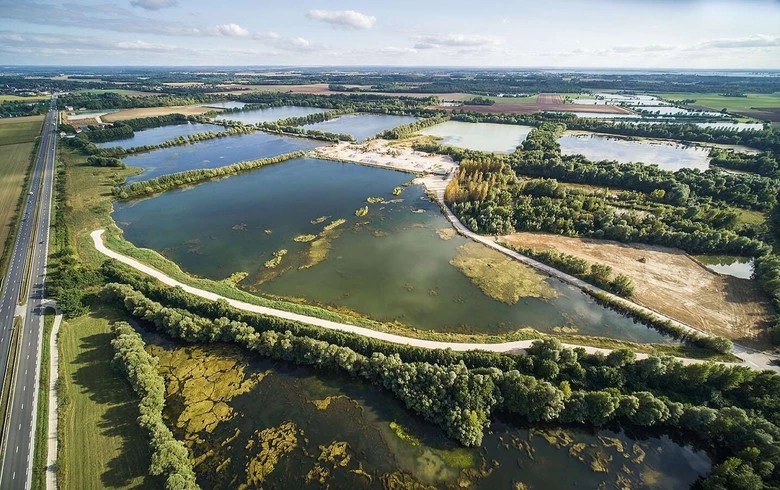
Header Image: Les Ilot Blandin floating solar project site. Copyright of Romain Berthiot, from Q Energy

Q Energy is soon to begin building a 74.3 MW floating farm in France, according to Renewables Now. The farm will be located at Les Ilot Blandin in the Haute-Marne region.

The floating facility will comprise six solar islands on 127 acres of space on disused flooded gravel pits. The islands will host 134,647 solar modules. Les Ilots Blandin will be Europe’s largest floating farm, with enough output to supply 37,000 people.

The project, launched in 2019, involves partners such as Solutions 30 SE, Ciel & Terre International, and Perpetum Energy. Construction will start this month, with commissioning expected in Q1 2025.

Q Energy has a pipeline of about 300 MW worth of floating solar projects.

ROAM reveals locally built electric shuttle bus in Kenya

Header image courtesy of ROAM

ROAM has launched the Move electric shuttle bus, Move, in Kenya. The battery-powered bus is completely built locally and will contribute to decarbonizing the East African country’s road transport sector.

ROAM has been converting ICE public buses to electric but has now built a purpose-built electric bus in Kenya. The ROAM Move comes with a 170 kWh battery pack that can last 200 km between charges. The battery can be fully charged in under 2 hours courtesy of a DC fast charger.

The buses can accommodate 51 passengers with the interior designed for the local conditions, with ample aisles and comfortable seats.

Dennis Wakaba, ROAM sales executive, commented, “We are thrilled to introduce ‘The ROAM Move,’ Kenya’s very own electric shuttle bus. This achievement aligns perfectly with our vision of fostering sustainable transportation solutions that make a positive impact on our environment and our communities. The launch of this electric shuttle bus represents not only a significant step forward in our commitment to sustainability but also a testament to the talent and potential within Kenya’s manufacturing industry.”

Ørsted marks entry into the UK solar market with 740 MW farm

Ørsted is setting up its first solar project in the UK in partnership with PS Renewables. The site, which will include battery storage in Nottinghamshire, will generate 740 MW.

The Danish firm aims to bring the One Earth farm online by 2030, when it expects to reach 17.5 GW of onshore renewable energy capacity globally. It currently has over 5.7 GW of onshore from the US to Europe. Ørsted will submit a development consent application in 2025.

One Earth will be one of the biggest solar farms in the UK, powering up to 200,000 homes.

Ørsted controls 420 MW of onshore wind in the UK and Ireland. It has revealed another solar farm in Ballinrea, Ireland, after buying up the Garreenleen (160 MW) solar project in the same country.

Kieran White, Ørsted’s SVP of onshore in Europe, said: “With a strong Irish onshore portfolio already in place, we are delighted to begin our journey in the UK solar market with PS Renewables, who have been successfully delivering large-scale solar projects for more than a decade.”

Matt Hazell, co-owner of PS Renewables, said: “The One Earth Solar Farm stands to make an important contribution to the national decarbonisation effort. Our expertise in solar energy and Ørsted’s renewables track record make this a compelling project.”

Largest solar farm on Isle of Wight set for approval

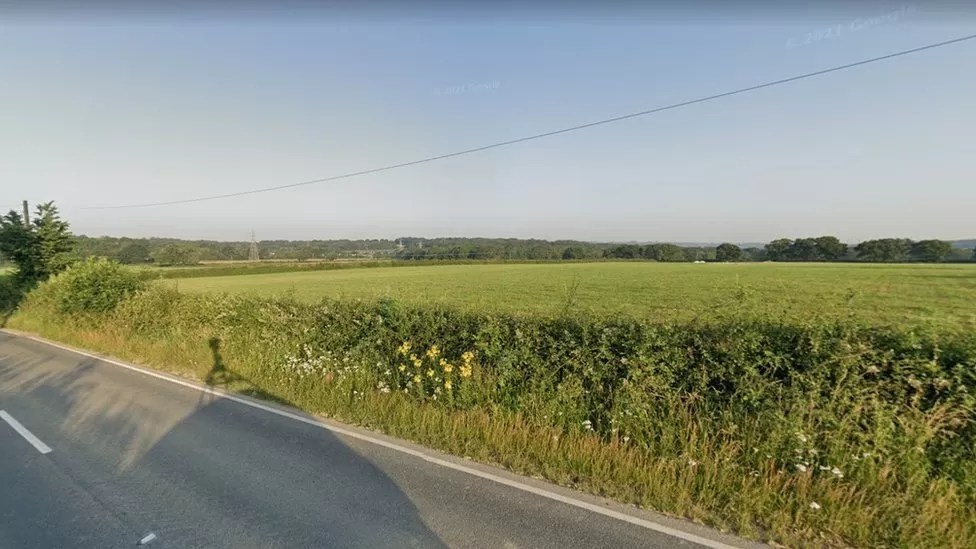
Header image courtesy of Google

Isle of Wight’s largest solar farm, the Sunny Oaks Renewable Energy Park, has received a recommendation for approval, as the BBC reports. The farm will produce enough electricity to supply more than 5,000 homes.

According to campaigners, the 27-hectare facility will industrialize the countryside and take six months to build. Approval could be granted as soon as tomorrow, Tuesday.

The farm will produce about 20 MWh of electricity annually and be operational for 40 years. It will connect to the Wootton Common substation.

The facility will have a battery energy storage system across the road.

Opposing residents, however, argue that the project by Ridge Clean Energy will create a visual impact, generate noise, worsen flood risk, result in biodiversity loss, and project glint and glare into surrounding homes. However, planning officers praise its economic, social, and environmental benefits.

Major renewable energy news this week

Header image courtesy of Lloyd Thornton/Shutterstock

Amprion starts on 8 GW offshore power link in Germany

Germany’s transmission system operator Amprion has begun planning the Windader West energy corridor, which will connect up to 8GW of offshore wind energy to the North Rhine-Westphalia state. The first 2 GW connection is expected in 2032.

Read more…

Kenya Power solicits bids for boosting rural electricity with solar mini-grids

Kenya Power and Lighting Company (KPLC) has called for bids for setting up solar power mini-grids in several counties, representing 20 percent of its population and 72 percent of its land area. The contract covers seven years of operation and maintenance by the successful bidders.

Read more…

DP Energy and SBM planning 400 MW floating wind farm for Nova Scotia, Canada

DP Energy and SMB have formed a joint venture named Nova East Wind to build a 400 MW floating offshore wind farm in Nova Scotia, Canada. The development will be located about 30 km off Goldboro, although the precise location is yet to be determined.

Read more…

Solar drives renewable investment to $358 billion in H1 2023

Global investment in renewable energy soared to $358 billion in the first half of 2023, according to BloombergNEF. This was driven by solar investment in China, thanks to cheaper PV modules and a growing rooftop PV market.

Read more…

Consortium planning 5 GW wind farm for Australia

Elanora Offshore, a consortium of KIMAenergy, Energy Australia, Boskalis, Respect Energy, and Polpo Investments, will build a 5 GW wind farm off Gippsland in Victoria, Australia. Funding has already been secured for the project, with a targeted completion for the first phase in 2032. The farm will supply 40 percent of Victoria’s energy needs.

Read more…

Renewables more profitable than nuclear power; new study

Header image courtesy of Total Energies

Researchers from the European Environmental Bureau (EEB), the Stockholm School of Economics (SSE), and the Potsdam Institute for Climate Impact Research have concluded that renewable energy is more profitable than nuclear energy, especially in the US and the EU, as reported by PV Magazine.

Renewable energy has the upper hand in terms of cost and speed. The research found that nuclear plant investments delay decarbonization. It studied nuclear energy developments in the planning stages and concluded the amounts by which the project costs have increased from the initial plan are significant.

The nuclear projects considered include Flammanville, which jumped from €3.3 billion to €13.2 billion. This did not account for the increase in financing costs, which could add another €4.2 billion, up from €1.2 billion.

The researchers said that even though nuclear energy is presented as a good investment in the fight against climate change, renewable energies compete with it in terms of profitability even more than other energy sources such as coal and gas. The research concludes that nuclear power plants require many years of planning and construction and are capital-intensive. However, the climate crisis demands urgency and requires large investments, making profitability paramount.