


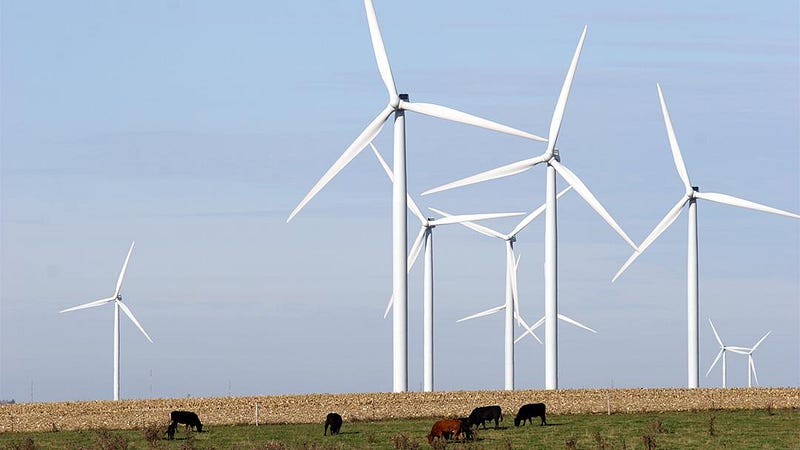
Wind turbines are environmentally friendly in power production. They do not produce any harmful emissions, but have you ever wondered what happens to the enormous blades when decommissioned?
Siemens Gamesa Renewable Energy (SGRE) has been working to make the blades recyclable.
Because of their sizes and unique requirements, the blades are difficult to repurpose, recycle, or dispose of when they reach end-of-life.
The blades made of fibreglass are an anomaly in wind power generation because about 85 percent of an installation’s parts are recyclable, including copper wires, electronics, and steel.
Siemens has now achieved a breakthrough with their 81 m long turbine blades that will easily break into the component materials. The components used as binders resin that dissolves in a mild acid solution. This material choice dramatically simplifies and reduces the time taken for the recycling process.
The common practice in wind turbine production is to join the turbine materials in a method challenging to reverse. Profitability has been due to the low cost of materials, but with these new materials, the manufacturing costs should even be lower.
Apart from Siemens, companies that recycle turbine blades include Veolia North America, which signed an agreement with GE Renewable Energy to shred old blades in Missouri. The resulting product will be used to replace coal, sand, and clay in cement production.
Orsted, Banish wind farm developer, has also committed to reusing, recycling, and recovering all their blades when decommissioned. If it can’t find a good recycling solution, Orsted promised to store the blades.
It is encouraging to see companies engaged in renewable energy production going the extra mile by making provisions for safely handling their equipment post decommissioning.









 Renewable Brief