CEO confirmed Xiaomi bought and ripped apart 3 Tesla Model Ys for analysis

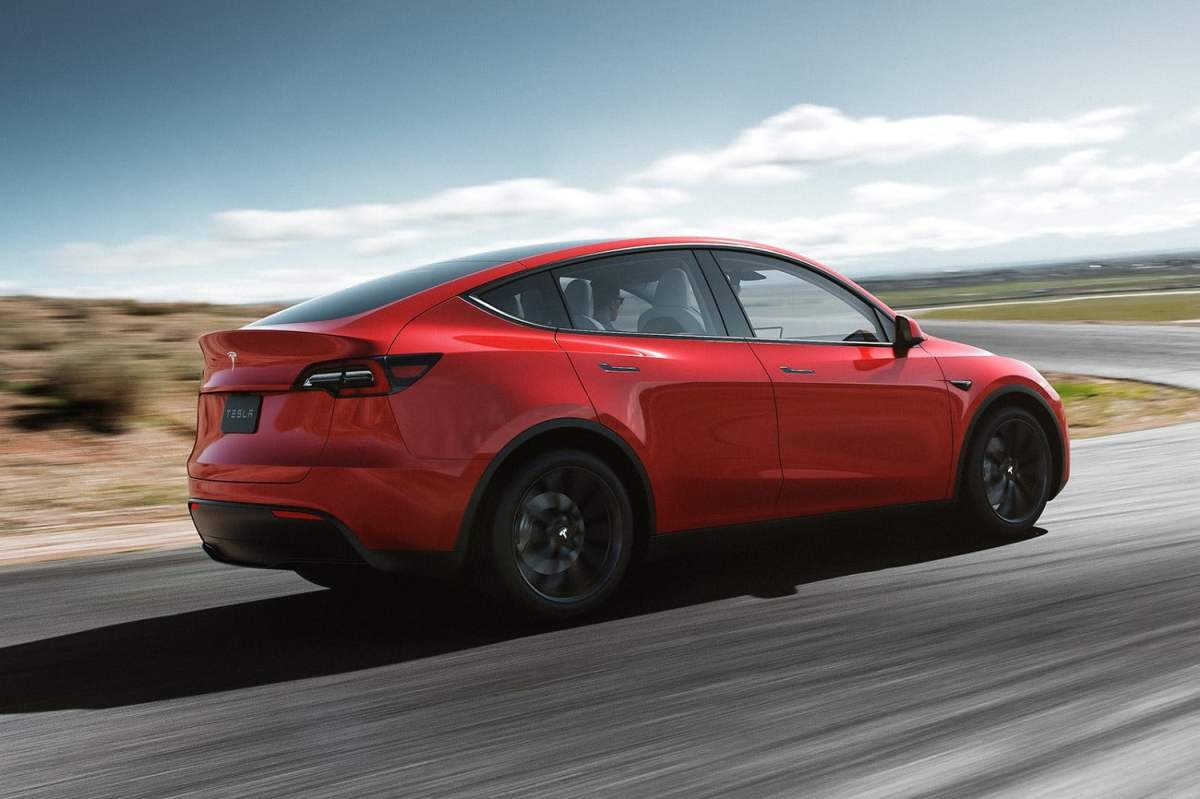
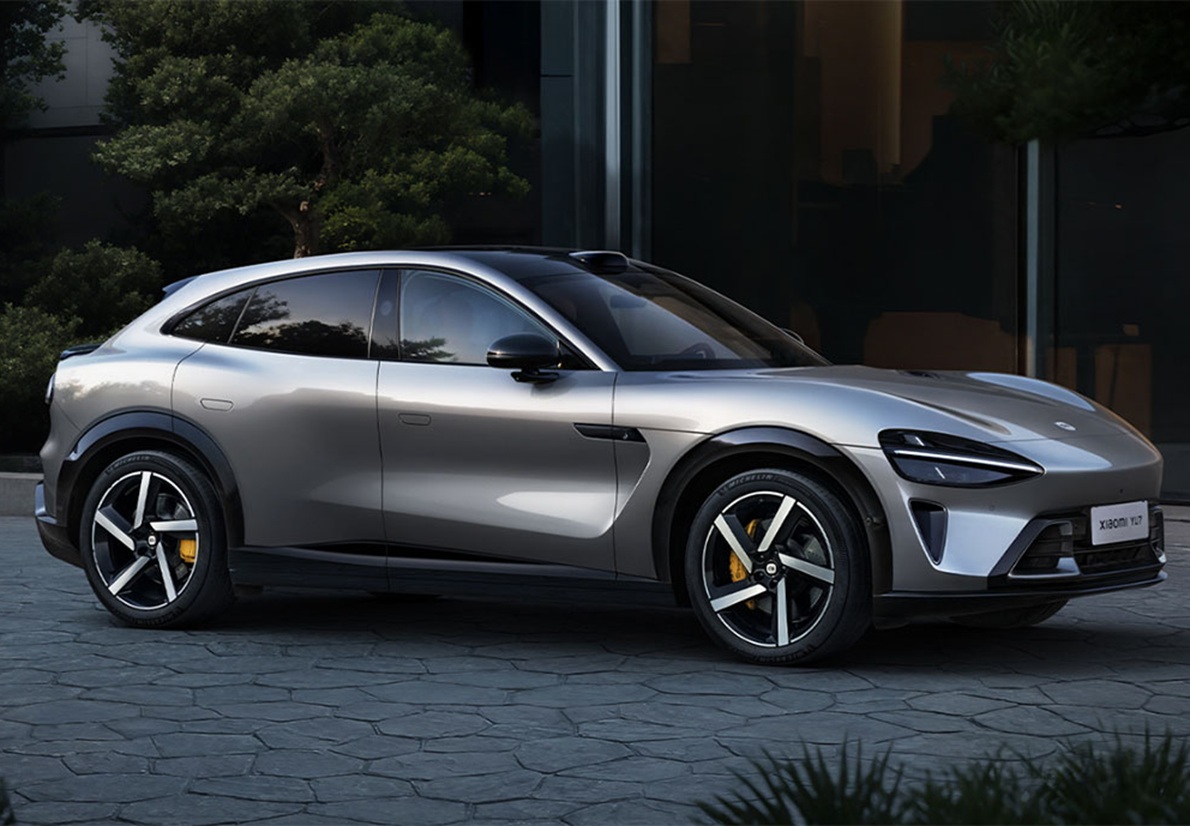
Xiaomi boss Lei Jun has always admired the Tesla Model Y. However, the new EV maker went a step further while developing its own YU7 by buying the former for a complete teardown.

According to Lei, who delivered his annual speech at the Beijing National Convention Center this week, Xiaomi engineers disassembled three Tesla Model Ys and were impressed by what they found. He stated, with a huge screen behind him comparing the two electric SUVs, “We bought 3 Model Ys at the start of this year, disassembling the parts one by one, and studied every component, one at a time.”

Lei recommended the rival Tesla Model Y, saying, “If you don’t choose YU7, you can consider Model Y.” He added, “I’m not criticizing the Model Y. The Model Y is a very, very outstanding car.”

While the CEO revealed that his own team learned from the leader, he asserted that his product “definitely does not lose to the Model Y.” Lei compared the YU7 and Model Y’s batteries and concluded that the former offered excellent value for money.

Lei is on record as encouraging customers to consider the Tesla Model Y. The unusual advice came after his own company was overwhelmed by demand for the YU7, which received more than 240,000 orders following its launch in June. Buyers had to endure a 56-week wait before taking delivery of their car in China.
Tesla Model 3 Long Range RWD surpasses expectations with 408-mile run

Header image courtesy of @dkrasniy on X (formerly Twitter)

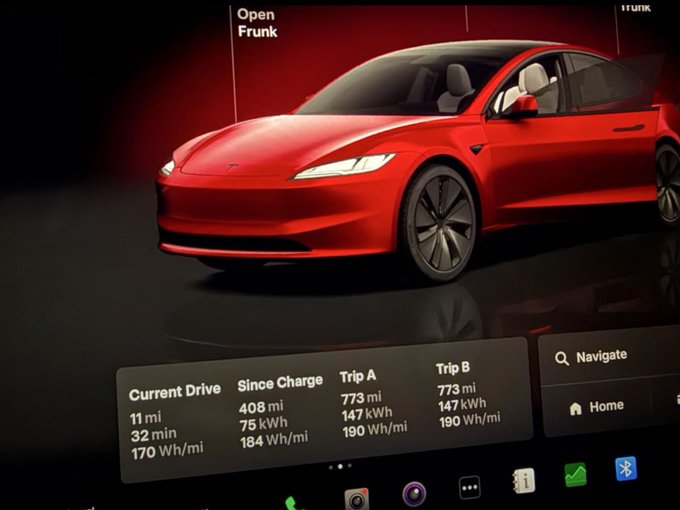
A Tesla Model 3 has reportedly defied the odds by going 408 miles on a single charge, almost 50 miles more than its EPA-approved 363 miles driving range.

Electric vehicle owners are used to real-world driving ranges significantly less than advertised, especially during colder weather. However, a Tesla Model 3 has defied the odds by going almost 50 miles above its rated driving range.

The Model 3, a Long Range Rear-Wheel Drive (RWD) version, belongs to Tesla owner David, who goes by @dkrasniy on X (formerly Twitter). According to David’s post, the electric sedan lasted 408 miles on a single charge, translating to an average energy consumption of 184 Wh/mile. The Environmental Protection Agency (EPA) certifies the car for a 363-mile driving range.

There is little doubt that David adjusted his driving habits to reach the goal; in other words, he hypermiled. Hypermiling is a common concept among EV enthusiasts. It involves driving in such a manner to max out the driving range. Hypermilers usually avoid rapid acceleration and hard braking and turn on regenerative braking to recoup energy otherwise lost. The more hardcore drivers plan their routes to avoid stops and traffic as much as possible to maintain a consistent speed.

However, David’s feat is no less impressive. The Model 3 RWD is Tesla’s least expensive EV, but it is also one of the company’s most efficient. This means the automaker is willing to offer its best tech at the lowest price point.

It goes without saying that most Tesla Model 3 owners will not drive up to 400 miles without stopping for a charge. However, it is reassuring to know that they can eke more miles out of the battery when absolutely necessary, e.g., to get home or to the next public charger.

Vattenfall’s Vesterhav Nord offshore wind farm comes online

Header image courtesy of Vattenfall

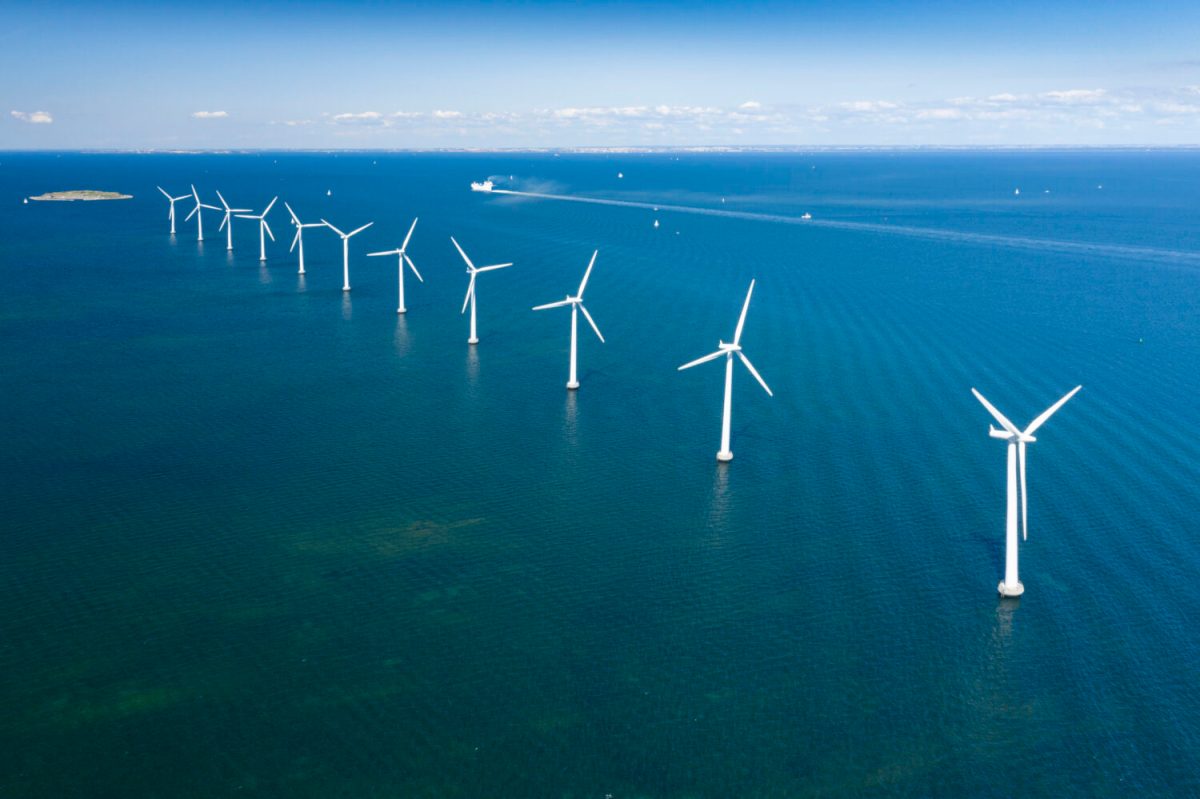
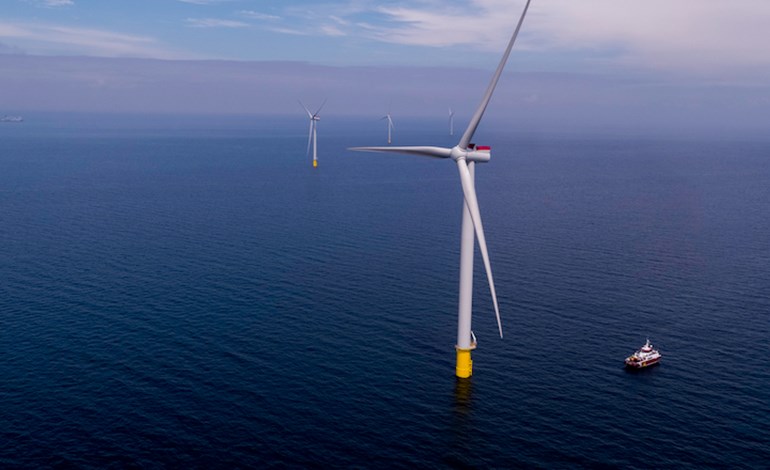
Vattenfall’s Vesterhav Nord offshore wind farm has started sending electricity to the grid, as reported by Renews.biz. The 176 MW came online a month after the company’s Vesterhav Syd began producing electricity.

Vattenfall will connect all 21 wind turbines in the Danish farm to the grid before the end of Q1 2024, with a total output enough to supply 180,000 households with zero-emissions electricity.

The Vesterhav Nord farm experienced a delay to the December 31, 2023, deadline for full connection and is still in talks for an extension with the Danish Energy Agency.

The offshore farm uses a new system for minimizing visual disruption based on radar, meaning the turbines’ warning lights would only come on when the farm is approached by an aircraft. However, the new systems will not be used fully until it gains approval.

Project director Mathilde Damsgaard commented, “It is with great pride that we are now sending the first fossil-free power ashore from Vesterhav Nord as well. It has been an exciting task with many challenges since we won the tender in 2016, and it is great to see the efforts bear fruit thanks to a great effort from the many involved.”

Offshore wind policy consultation starts in Ireland

Header image courtesy of Getty Images

Ireland has commenced consultation on its new framework surrounding offshore wind energy under its Department of the Environment, Climate, and Communication (DECC).

The Offshore Renewable Energy Future Framework Policy (Future Framework for short) presents Ireland’s long-term blueprint for the growth of offshore renewable energy. It will establish the pathway to 20 GW of offshore wind energy by 2040 and 37 GW a decade later.

Ireland targets 5 GW of offshore wind energy by the end of the decade with 2 GW allocated to green hydrogen production.

The Future Framework will encourage investments and maximize financial gains from offshore wind projects. It also considers the potential for transforming excess renewable energy into alternative energy products that can be exported. It will also encourage “collaboration between the State, industry and local communities”, according to Environment, Climate, and Communications Minister Eamon Ryan.

This consultation will allow key stakeholders to give input and collect feedback for the final version of the framework. The final version of the Future Framework will be published in conjunction with the Department of Enterprise, Trade, and Employment in the spring after approval by the government.

Vattenfall’s Vesterhav Syd offshore wind farm connects to the grid

Header image courtesy of Vattenfall

It is a celebration mood at Vattenfall as the company completely connects its Vesterhav Syd offshore wind farm to the Danish grid. Construction on the 20 turbines lasted from July to September last year, with the first power delivered on November 10th, 2023.

Vattenfall had been connecting the turbines from the 168 MW offshore farm to the grid one by one since November.

Mathilde Damsgaard, project director for Vesterhav Syd and Nord at Vattenfall, said, “At Vattenfall, we are always happy when we finish an offshore wind farm and thereby contribute to fossil freedom.

“This time, we allow ourselves to be even more happy, since there is a cold winter in Denmark and Northern Europe where fossil-free and reliable electricity is of the essence.”

The Vesterhav Nord offshore wind farm is about 80 km from Syd and will generate 176 MW on completion. Vattenfall expects to completely connect it to the grid in Q1 2024.

UK’s electric vehicle registration grew 17.8% in 2023

Header image courtesy of Tesla

In a win for sustainable mobility, the number of BEVs registered in the UK grew in 2023 by 17.8 percent, despite a dip in sales in December, according to figures from the SMMT.

Car buyers registered almost 315,000 electric vehicles in the UK last year, out of a total registration of 1.9 million units, a growth of 17.8 percent compared to 2022. This means one in six UK car buyers went electric. The jump is noteworthy because EV sales in December 2023 dropped 34.2 percent to 27,841 from 42,285 in December 2022.

According to the Society of Motor Manufacturers and Traders (SMMT), the surge in EV sales was driven primarily by professional fleets and businesses choosing zero-emission mobility, as only one out of eleven private buyers opted for a BEV.

The number of private EV buyers is expected to rise, however, even though EV subsidies in the UK have ended. This is because carmakers now have to ensure a certain percentage of their sales is purely electric. The percentage will increase from 22 percent this year to 80 percent in 2030 for cars and from 10 percent to 70 percent for vans. The percentage jumps to 100 percent five years later.

Breaking down the UK’s EV sales in 2023, the Tesla Model Y was the fifth best-selling car, with nearly 5,000 sold in December alone and 35,899 for the year. The second-best EV was the MG4 with 21,715 units for the year, followed by the Audi q4 e-tron with 16,757 units sold.

Neoen developing 440 MWp solar farm in NSW, Australia

Header image courtesy of Neoen

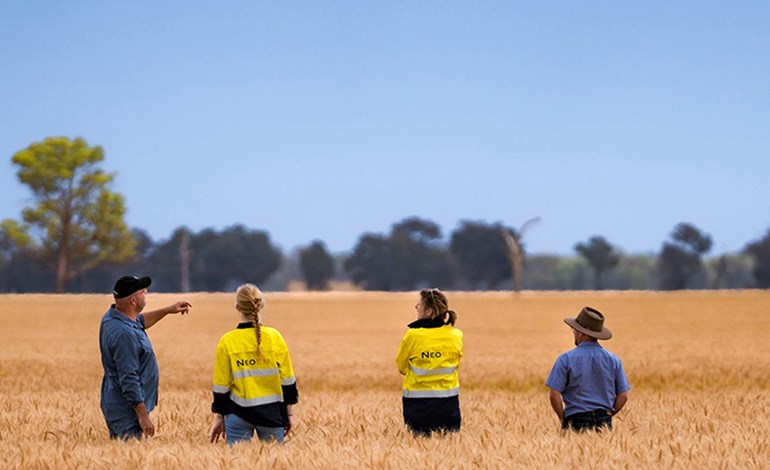
New South Wales in Australia is adding 440 MWp solar capacity through Neoen, which has signaled the beginning of the farm’s construction, as reported by ReNews. The project, known as the Culcairn Solar Farm, is located in Wiradjuri country and will come online in 2026.

The solar farm will be among the largest in NSW and incorporate a 100 MW battery storage component at a later date. It will be Neoen’s second largest globally, after the 460 MWp Western Downs Green Power Hub solar farm in Queensland.

While the majority of the power from Culcairn will be sold on a PPA basis, it will power 160,000 homes. The construction will create more than 400 employment positions, with seven full-time employees needed to keep it running.

Neoen is targeting 10 GW solar capacity in Australia by 2030. It increased its portfolio in the Down Under by 25% to 3.75 GW this year alone.

Neoen Australia chief executive Louis de Sambucy said, “Culcairn is an essential project for Neoen in NSW and in Australia, and we are proud to have been awarded an LTESA contract.

“We have developed a strong pipeline of wind, solar and battery storage projects in NSW designed to help accelerate the State’s energy transition, as it moves towards halving emissions by 2030.”

Greece wants to provide energy security with renewable energy

Header image courtesy of Reuters

Greece is a country with ambitions. According to the Prime Minister, the European country wants to provide energy security to other countries on the continent by expanding its clean energy capacity, as reported by Bloomberg.

PM Kyriakos Mitsotakis revealed this ambition on the sidelines of the ongoing COP28 in Dubai. He said Greece “can significantly expand our green production capacity. We’re going to be a provider of energy security for many European countries.

“We want to be an exporter of green power in the medium to long term. We want to make sure that we can cover the needs of our neighbouring countries in terms of offering them access to natural gas.”

Greece produced 7,047 GWh of solar energy in 2022, 400 percent more than a decade ago, according to BNEF. The country also achieved meeting 100 percent of its energy demand by renewable energy for hours on some days. More renewable projects will come online, including offshore wind farms in the Aegean Sea, set to supply Athens with more than 1.9 GW by the end of the decade.

Greece already exports energy to Bulgaria and Moldova. It is constructing gas pipelines to Europe.

Greece opening first solar/storage tender next year

Header image courtesy of Reuters

Greece is preparing to open tenders for solar-energy storage projects next year, according to reports by Renewables Now. The European country is expected to conclude plans by the end of 2023, for a February 2024 launch.

Unofficial reports claim Greece is parceling off between 200 MW and 300 MW of solar capacity in auctions. They will form a part of a 2 GW of solar project target with behind-the-meter energy storage components. The auctions come with mandatory battery storage capacity development.

The Greek government has decided to focus on battery energy storage in this round of auctions to bolster the grid by reducing renewable energy curtailment.

Greece recorded 11.3 GW of renewable energy capacity as of the end of June 2023. Solar took the lion’s share, with 5.8 GW capacity. 

Amazon boasts renewable energy portfolio that can power 6.7 million homes in the US

Header image courtesy of Amazon

Amazon has presented its latest sustainability scorecard, and the numbers are impressive. The online retail giant boasts renewable energy projects that can power 6.7 million US homes.

The company has invested in 78 new renewable energy projects this year alone, comprising solar and wind, in 26 countries and 21 states in the US. These include its first such project in South Korea.

In total, Amazon has 479 wind and solar projects globally, which can produce more than 71,900 GWh per annum. The American company has directly and indirectly contributed $12 billion in investment in the global economy since 2014 through renewable energy. It generated 39,000 full-time equivalent jobs last year alone.

Amazon aims to achieve 100% renewable energy by 2025. It is converting a coal mine site from a brownfield to a solar farm in Maryland, US, and has announced a wind energy project in South Korea that will create about 2,400 jobs during construction.

“Amazon’s investments in solar and wind projects are helping power our operations, while also providing new sources of clean energy to the grid, spurring economic growth, and supporting jobs in the communities where our customers live and work,” said Adam Selipsky, CEO of AWS. “More than 90% of our operations were powered by renewables last year, but we’re not done. We’re focused on continuing to find innovative ways to bring new projects online, address grid constraints, and work with policymakers to mitigate the impacts of climate change, all of which is helping Amazon move closer to achieving 100% renewable energy by 2025.”