

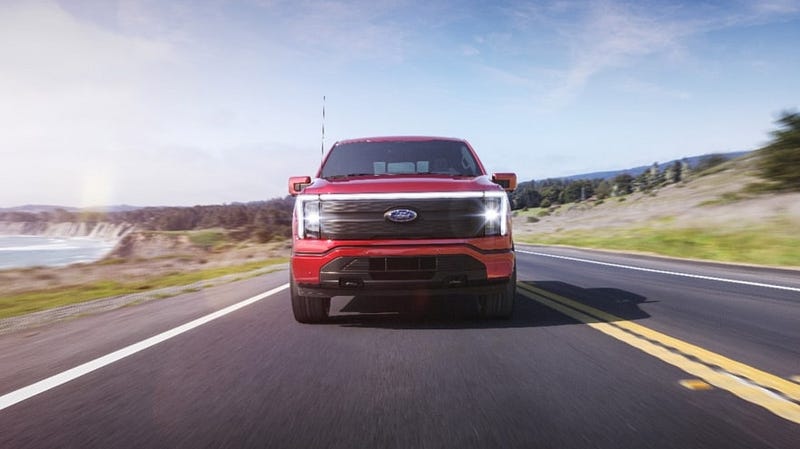
All electric vehicles have a good impact on the environment. However, new research shows that electrifying pickup trucks leads to more significant greenhouse gas reduction in other light-duty vehicles.
The new study was conducted by researchers at the University of Michigan and Ford. It studied the cradle-to-grave GHG emissions of 2020 model year versions of ICEV, HEV, and Bev sedans, in addition to SUVs and pickup trucks.
In the US vehicle market, light-duty autos account for 58 percent of all transport-based emissions. Pickup trucks are a popular category, as they account for 14 percent of light-duty vehicles in the country.
The researchers found that HEV and BEV versions of sedans, SUVs, and pickup trucks have about 28 percent and 64 percent lower life-cycle emissions, respectively than the ICE versions. They considered only the base models.
As a result, a BEV sedan saves 45 tonnes of CO2, an SUV saves 56 tonnes, and a pickup truck saves 74 tonnes over a lifetime.
Other findings from the study include that the CO2 savings remained significant even when the battery size increased, the BEV had a shorter lifetime, and across different drive cycles.
Moreover, when converting ICEs to BEVs, the heavier the vehicle, the more the savings in CO2. This is a direct result of larger vehicles consuming more fuel.
However, as the study shows, production of BEVs produces more greenhouse gases than ICEs. The main culprit is the battery. But the increased emission is offset during the operation of the EVs. By driving an electric SUV for 1.6 years, a driver pays for the carbon emissions during manufacturing. For electric trucks, the payback period is 1.3 years.
“This is an important study to inform and encourage climate action. Our research clearly shows substantial greenhouse gas emission reductions that can be achieved from transitioning to electrified powertrains across all vehicle classes,” said senior study author Greg Keoleian, a professor at the U-M School for Environment and Sustainability and director of the U-M Center for Sustainable Systems. “This study expands upon previous studies that have focused on comparing battery-electric vehicle sedans to their internal-combustion-engine or hybrid counterparts. We report emissions for vehicle production, use, and end-of-life stages on a per-mile basis and over the total vehicle lifetime. In addition, we analyzed the regional variation in emissions considering differences in electricity grid mixes and ambient temperatures, and we also explored the effects of the rate of grid decarbonization on emission reduction.”
“This study can help us to understand the potential impact of electrification from an emissions-reduction perspective, particularly as we introduce new electric vehicles, and how we can continue to accelerate our progress towards carbon neutrality. We’re proud to partner with U-M in this critical work,” said Cynthia Williams, global director of sustainability, homologation, and compliance at Ford.
Source: Ford
 Renewable Brief